Experience the Amazon River like never before aboard a luxury floating hotel in Manaus. This all-inclusive adventure blends nature, culture, and comfort, offering immersive itineraries through the Solimões and Negro rivers.

Manaus stands out as a gateway to one of the planet’s most unique natural wonders.
In the heart of the Brazilian rainforest, where the Solimões and Negro rivers meet near Manaus, Amazon river expeditions are entering a new phase. Combining luxury, ecological awareness and stricter regulations, river-based tourism has become one of Brazil’s most strategic travel segments.
One emblematic experience is the Grand Amazon hotel-ship, operated by Iberostar Group. Designed as a floating resort, the vessel offers all-inclusive itineraries through remote stretches of the rainforest, targeting travelers seeking both comfort and immersion in nature.
This type of tourism has gained momentum amid a broader global demand for experiential travel, especially in biodiversity hotspots like the Amazon — a biome that spans over 5.5 million square kilometers and plays a critical role in global climate regulation.
Luxury Meets the Rainforest
The Grand Amazon operates as a super-luxury floating hotel, featuring private balcony suites, curated Amazonian cuisine, guided excursions and onboard lectures led by specialists. Its itineraries are divided into three main routes:
- Solimões River (3 nights): trekking, visits to riverside communities, birdwatching, piranha fishing and alligator spotting
- Negro River (4 nights): exploration of the Anavilhanas archipelago, pink dolphin observation in Novo Airão and indigenous village visits
- Combined itinerary (7 nights): a comprehensive journey merging both ecosystems
Activities such as photo safaris, rainforest walks and cultural performances aim to provide a holistic understanding of the Amazon’s ecological and social dynamics.
Sustainability and Regulation in Focus
In recent years, Amazon tourism has been increasingly shaped by environmental policies and sustainability commitments.
According to Brazil’s Ministry of Tourism and IBAMA, stricter guidelines have been reinforced between 2024 and 2026 to regulate:
- Wildlife interaction (especially with endangered species like pink dolphins)
- Waste management in river cruises
- Carbon footprint reduction in tourism operations
Brazil has also expanded its National Ecotourism Strategy, aligning with global climate goals discussed in forums such as COP30, scheduled to take place in Belém in 2025. The initiative aims to position the Amazon as a model for sustainable tourism, balancing economic development with conservation.
Data from Embratur indicates that international interest in Amazon tourism grew significantly in 2025, particularly among travelers from the United States and Europe seeking nature-based and climate-conscious experiences.
Community-Based Tourism and Cultural Exchange
Beyond luxury cruises, a growing segment of Amazon tourism focuses on community-based experiences, where visitors engage directly with local and Indigenous populations.
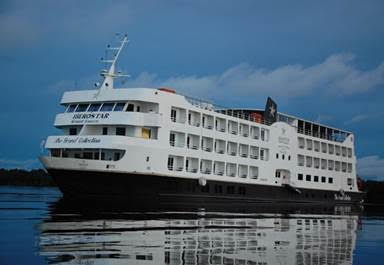
Experience a seamless blend of comfort, culture, and adventure aboard a floating hotel
These initiatives, supported by NGOs and public policies, promote:
- Income generation for riverside communities
- Preservation of traditional knowledge
- Lower environmental impact compared to large-scale tourism
Experts highlight that this model is crucial for ensuring that tourism benefits are distributed locally, rather than concentrated in large operators.
Challenges: Climate, Infrastructure and Preservation
Despite its growth, Amazon river tourism faces ongoing challenges. Extreme weather events linked to climate change — including historic droughts in 2023 and 2024 — have impacted river navigation and biodiversity.
Infrastructure also remains uneven. While Manaus serves as a major hub, access to remote areas still depends on river transport and limited logistics, requiring careful planning by travelers and operators.
Environmentalists warn that unregulated tourism could threaten fragile ecosystems, reinforcing the need for continued oversight and responsible practices.
Conclusion
Amazon river adventures today offer a wide spectrum of experiences — from luxury cruises to immersive, community-based journeys. The ideal itinerary depends largely on available time, whether travelers are accompanied by children, and budget considerations.
What remains constant, however, is the abundance of options. Across the rivers of the Amazon, there is no shortage of extraordinary, memorable adventures, each offering a unique way to explore one of the most important ecosystems on the planet.
* For airfare from the United States to Brazil or Latin America, customized travel packages, alternative accommodations, as well as travel planning consultation please visit our travel agent page or contact Magali da Silva directly by phone or whatsapp: 1(323)428-1963.
FAQ – Frequently Asked Questions
1. What is the best time to visit the Amazon River?
The best period is typically between June and November, when water levels are lower and wildlife sightings are more frequent.
2. Are Amazon river cruises safe?
Yes, especially when operated by licensed companies that follow Brazilian environmental and safety regulations.
3. Can families with children join these tours?
Some cruises have age restrictions (like 10+), but many operators offer family-friendly packages.
4. How sustainable is Amazon tourism today?
Sustainability has improved significantly, with stricter regulations and growing emphasis on eco-friendly practices and community involvement.
5. What should I pack for an Amazon river adventure?
Light clothing, insect repellent, sunscreen, waterproof gear and binoculars are essential.