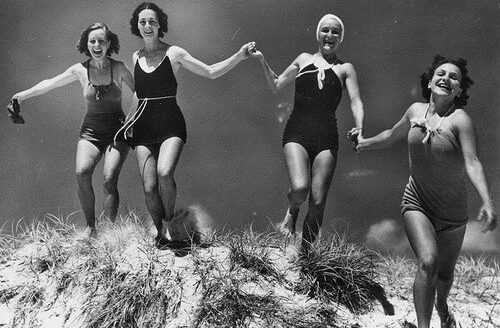
The bikini revolutionized fashion and female expression since its creation in 1946. From scandal to global symbol of sensuality and freedom, it transformed beach culture worldwide. Cinema, Brazilian icons, and evolving materials shaped its journey. Today, the bikini remains a powerful emblem of creativity, audacity, and feminine liberation.
By Livia Caroline Neves
The bikini was created in 1946 and shocked post-war society.
Nothing against scientific geniuses, but if there is one person humanity should truly thank, that person is Louis Réard. On July 3, 1946, the French stylist had the bold idea of creating a swimsuit with several centimeters less fabric than usual — revealing to the world parts of the female body that, until then, were seen only in the privacy of one’s bedroom.
The name “bikini” was inspired by the Bikini Atoll, where the United States conducted nuclear tests in the South Pacific. And indeed, the bikini exploded onto the scene like an atomic bomb in conservative post-war society. Moralists attempted to ban it, and the press predicted it would disappear within fifteen days. They were wrong.
By 2017, the bikini turned 70 years old, having revolutionized swimwear worldwide. The fashion industry has never again launched a trend so powerful using so little fabric.
Cinema, Muses, and Global Fascination
The bikini quickly found its way into cinema, serving as iconic packaging for legendary stars. In 1956, Brigitte Bardot caused a sensation in And God Created Woman. Eight years later, wearing a bikini, she transformed the quiet fishing village of Búzios, south of Rio de Janeiro, into an internationally famous destination.
In 1965, Bardot was photographed wearing a checked bikini with delicate ruffles. Women around the globe rushed to imitate her style, cementing the bikini as a symbol of sensuality and freedom.
The 1960s: The Bikini as a Lifestyle
During the 1960s, the bikini became widely popular as new designs emerged to reveal the female body in ways never seen before. Some designs prioritized sports and freedom of movement over aesthetics, reflecting a new way of life.
This lifestyle was glamorized by light-hearted Hawaiian films celebrating surfing, nature, and sun worship. Bicolor patterns, prehistoric prints, hibiscus motifs, rubber sandals, and long, wild, spray-free hair defined the look. Still, some resisted, clinging to traditional fashion and ignoring the colorful, carefree surfer aesthetic.
Brazil, Sexual Liberation, and Audacity
Gradually, with the arrival of birth control pills and the rise of sexual liberation, the bikini secured its place in Brazil and around the world. Its impact was so provocative that even former Brazilian president Jânio Quadros attempted to ban it.
Yet, the innocent “two-piece-with-yellow-dots,” immortalized in a song by Ronnie Cord, evolved into increasingly daring designs — and even bolder attitudes.
The 1970s: Breaking Moral Boundaries
The 1970s marked a decade of polemics and audacity. Beaches became the ultimate destination, and anything tight or artificial — including bras — was rejected. New bikini models emerged: wire-free tops, no padding, and string tie-side bottoms.
The goal was freedom, comfort, and authenticity.

Dancers/Models Sparrow (American) and Mariza (Brazilian)
Brazilian Icons and the Cult of the Body
And Brazil had Leila Diniz — a symbol of freedom and authenticity. She became immortalized in songs and poetry, embodying a woman at peace with herself and the world. Though she tragically died at 27 in a plane crash in 1972, her image remains etched in cultural memory.
By the 1980s, bikini fashion demanded “perfect” bodies — sculpted in gyms and proudly displayed on summer beaches.
Lycra, Fitness, and the Birth of the “Brazilian Bottom”
The introduction of lycra, developed by DuPont, along with the fitness boom, transformed swimwear design. Bikinis grew slightly wider than the tiny triangles of the 70s, but featured high-cut bottoms, resembling a hang glider.
Thus, the iconic “hang glider bikini” was born — known internationally as the “Brazilian Bottom.”
The decade also embraced floral, abstract, and animal prints, handmade bikinis, and colorful wraps imported from Bali. By the late 80s, minimalism reached its peak with the “dental floss” bikini, immortalized in postcards featuring Rio de Janeiro’s landscapes.
The 1990s and Beyond: Reinvention
The 1990s revitalized beach fashion. Extreme cuts gave way to the Saint-Tropez style. Crochet bikinis made a comeback, sides became narrower, and tops featured underwire or adjustable triangle designs.
This was a health-conscious, sporty generation — bodies remained toned, but with a more athletic aesthetic. Fashion grew increasingly functional.
In later years, designers embraced low-waist bikinis, ring-tied sides, bold color mixes, and diverse patterns. Beachwear continued to evolve, always following the rhythm of the times.

Brazilian Dancers/Models Katia, Sonaria and Patricia at MGM Pool in Las Vegas
A Symbol of Feminine Revolution
Once a mere geographical reference, the bikini became a global symbol of beach audacity and feminine liberation. Despite its age and countless transformations, it remains more fashionable than ever.
The bikini continues to seduce, transform bodies, color beaches, and amaze the world with Brazilian creativity and boldness. Its history is inseparable from the history of the women’s revolution itself.
FAQ – FREQUENTLY ASKED QUESTIONS
1. Who invented the bikini?
The bikini was created by French designer Louis Réard in 1946.
2. Why is it called a bikini?
The name comes from Bikini Atoll, referencing the “explosive” cultural impact.
3. When did bikinis become popular in Brazil?
They gained widespread acceptance during the 1960s and 1970s.
4. What is the “Brazilian Bottom”?
A high-cut bikini style that became internationally famous in the 1980s.
5. Why is the bikini considered a symbol of liberation?
Because it challenged moral norms and reshaped women’s freedom and body expression.