Brazil has emerged as a major global economic player, but sustaining long-term growth depends on structural reforms in infrastructure, education, and public policy. While progress has been made, key challenges remain for the country to transition into a fully developed economy.
y Jose Ricardo Braga Aguilar
Brazil is transitioning from a developing nation to a global economic force
The global economy has evolved far faster than expected over the past decade. After the 2008 financial crisis, confidence in traditional economic powers like the United States and the European Union declined.
At the same time:
- China continues its rapid expansion
- India is growing its workforce at an unprecedented pace
- Emerging economies are advancing faster than developed nations
This shift does not signal the end of traditional powers, but it highlights a new global balance where emerging economies play a leading role.
Brazil’s Rise on the Global Stage
Brazil is now among the top ten largest economies in the world, increasingly asserting itself as a global player.
The country has:
- Participated actively in international diplomacy
- Contributed to institutions like the IMF
- Hosted major global events such as the World Cup and Olympic Games
Brazil is gradually transitioning from a developing nation to an emerging global force.
The Challenge: Sustaining Growth

Social programs helped expand the middle class
While Brazil shows strong economic potential, the key issue is not just growth — but sustainable growth.
To maintain progress, Brazil must address structural challenges in:
- Healthcare
- Infrastructure
- Education
- Tax and political reform
- Government spending
Economic Signals from Culture
Brazil’s football industry reflects broader economic trends.
Brazilian stars like:
- Robinho
- Daniel Alves
- Kaká
have succeeded globally, while domestic clubs are now financially strong enough to retain or repatriate talent.
This indicates:
- Increased consumer spending power
- Growth of the domestic market
Consumers and Economic Expansion
Consumers play a crucial role in Brazil’s economic growth.
Sustaining growth requires deep structural reforms
Key drivers include:
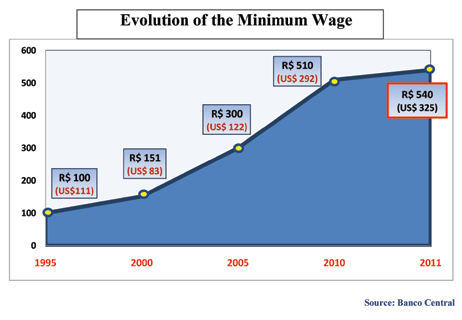
- Rising minimum wage
- Expanded credit access
- Greater job security
Since the presidency of Fernando Henrique Cardoso, the minimum wage has steadily increased, contributing to economic momentum.
However, this must be balanced carefully with inflation risks.
Government’s Role in Growth
Government policies and social programs have significantly influenced Brazil’s development.
During the administration of Luiz Inácio Lula da Silva:
- Brazil moved from the 17th to the 8th largest economy
- Millions entered the middle class
- Social programs expanded economic inclusion
Lula combined social policies with market-oriented strategies, reflecting a model similar to European social democracies.
Biggest Challenges Ahead
Infrastructure
A modern infrastructure system is essential for sustainable growth.
Brazil’s Growth Acceleration Program (PAC) aims to improve:
- Transport
- Energy
- Housing
- Sanitation
Despite billions in investment, challenges persist:
- Poor road conditions
- Inefficient ports
- Airport congestion
- Energy instability
Brazil ranks relatively low in global infrastructure quality, signaling urgent need for:
- Private investment (FDI)
- Public-private partnerships (PPPs)
Education
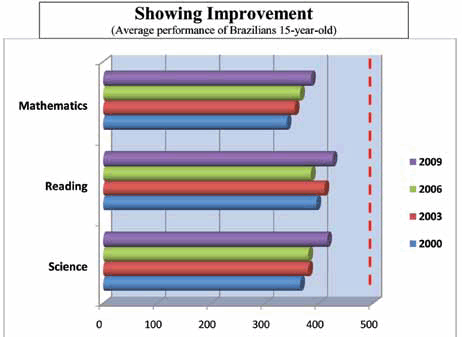
Infrastructure and education are critical bottlenecks
Education remains one of Brazil’s most critical challenges.
Key issues include:
- Weak public education system
- Poor teacher training
- Inequality between public and private schools
Programs like Bolsa Família have increased school attendance, but quality remains a concern.
Brazil’s performance in global education rankings still lags behind developed nations, highlighting the need for:
- Better teacher training
- Improved resource allocation
- Structural reform
Brazil After Lula
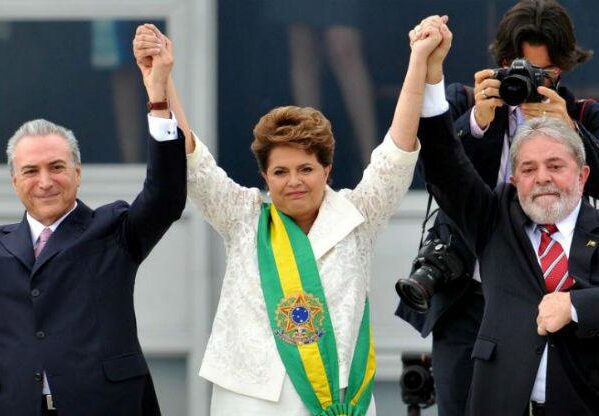
Following Lula’s presidency, Dilma Rousseff took office as Brazil’s first female president.
Her administration inherited:
- Economic stability
- Expanding middle class
- High expectations for continuity
While initially supported by Lula’s legacy, her leadership faced scrutiny regarding:
- Experience
- Policy direction
- Economic management
The Road Ahead
Brazil has demonstrated strong economic potential and social progress, lifting millions out of poverty.
However, long-term success depends on:
- Fixing structural weaknesses
- Improving education and infrastructure
- Attracting investment
The future depends on balancing growth with long-term sustainability
Brazil’s future lies in its ability to combine:
economic policy + social inclusion + structural reform
** Jose Ricardo Braga de Aguilar is a dual citizen (U.S and Brazil) and has a degree in International Business (University of Bridgeport) and MBA in International Economics (NYU).
FAQ – Frequently Asked Questions
1. Why is Brazil considered an emerging economy?
Because of its rapid growth, large market, and increasing global influence.
2. What are Brazil’s main economic challenges?
Infrastructure gaps, education quality, tax complexity, and public spending efficiency.
3. How did Lula impact Brazil’s economy?
He expanded social programs, reduced poverty, and strengthened economic growth.
4. What is PAC in Brazil?
The Growth Acceleration Program aimed at improving infrastructure nationwide.
5. Why is education important for Brazil’s growth?
Because a skilled workforce is essential for sustaining long-term economic development.