Brazilian Day in New York transforms Times Square into a sea of green and yellow, reuniting the Brazilian diaspora in a powerful celebration of culture, identity, and longing. The event blends music, nostalgia, and pride — reminding immigrants that even far from home, Brazil lives within them.
By Julia Melim

For many immigrants, the celebration represents both independence and sacrifice.
Brazilians feel at home again during the New York City version of Brazilian Day, which happens every year and attracts Brazilians from all over the U.S. For one day, we no longer feel like foreigners as Times Square fills up in a powerful wave of yellow and green — the colors of Brazil.
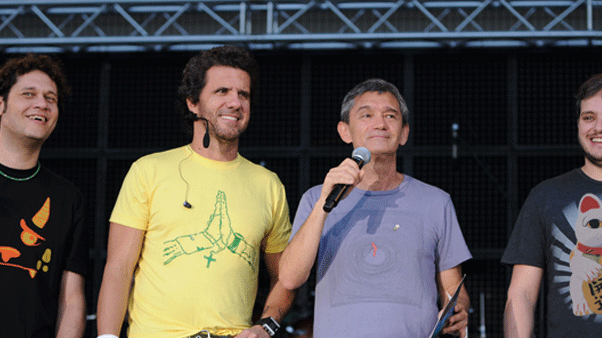
In 2014, TV host Serginho Groisman led the celebration, with performances by Luan Santana and the group Exaltasamba.
“The Brazilian Day in New York is the biggest Brazilian Day in the world that unites the Brazilian community. It’s bigger than Tokyo, Lisboa and Madrid,” says Serginho Groisman.
Independence Abroad: The Immigrant Experience
While Brazil celebrates its Independence Day, Brazilians living abroad celebrate another kind of independence — the courage to leave home and start over.
Who are these brave individuals who left their land behind? Those who sacrificed proximity to family, friends, and familiar traditions in search of opportunity?
Like explorers stepping into the unknown, Brazilian immigrants arrive in the United States each year with dreams, expectations, and different backgrounds. They leave behind birthdays, weddings, graduation parties — pieces of their own history.
“Brazilians have one characteristic in common: their love for life and their strength to keep fighting; we’ve learned how to survive under any circumstances,” says Serginho Groisman.
The Cost of Chasing Dreams
I came to the U.S. after receiving a scholarship to attend an American university — a dream come true. But eight years later, after missing countless family milestones, I began to feel the weight of my decisions.

Brazilian Day strengthens identity and offers emotional comfort to those living far from home.
Many Brazilians share this silent conflict:
-
The guilt of missing family moments
-
The question of “what if I had stayed?”
“Being away from your country is very hard. You have to be a true warrior to face all the struggles and hardships,” says Pinha from Exaltasamba.
There is a point of no return. One part of us feels it’s too late to go back. Another part feels returning would mean giving up. And yet another feels the ache of absence every Christmas and New Year’s Eve missed.
Brazilian Day: A Celebration and a Reminder
“We are here to bring a little bit of Brazil to all the people who are so hungry to feel at home again and miss Brazil so much,” says Thiaguinho from Exaltasamba.
Brazilian Day makes us feel at home — but also makes us miss home even more. It reminds us why Brazil is extraordinary: even in hard times, we laugh loudly and dance until dawn like it’s Carnival.
The event ends with an unofficial anthem:
“Sou Brasileiro, com muito orgulho, com muito amor. (I’m Brazilian, I’m very proud of it, with all my love)”
More than a million Brazilians filled 6th Avenue, from Times Square to Central Park, proudly celebrating their roots.
It’s a day that reminds us: no matter how far we go, we carry Brazil within us.
* Julia Melim is a Brazilian actress, TV host/reporter and writer. She lives between Rio, Los Angeles, New York and Miami, and is a long-time Soul Brasil contributor writer – www.juliamelim.com
FAQ – Frequently Asked Questions
1. What is Brazilian Day in New York City?
Brazilian Day is an annual cultural celebration in New York City that honors Brazil’s Independence and brings together Brazilians living in the U.S.
2. Where does Brazilian Day NYC take place?
The main event happens in Times Square and extends along 6th Avenue toward Central Park.
3. Why is Brazilian Day important for immigrants?
It creates a sense of belonging, cultural pride, and unity for Brazilians living abroad.
4. Who performs at Brazilian Day?
Major Brazilian artists frequently perform. In 2014, Serginho Groisman hosted, with performances by Luan Santana and Exaltasamba.
5. How does Brazilian Day impact the Brazilian community in the U.S.?
It strengthens identity, reinforces community bonds, and offers emotional comfort to those far from home.