American choreographer Linda Yudin found a profound cultural and spiritual connection with Bahia through Afro-Brazilian dance, music, Candomblé, and the orixás. As co-founder and Co-Artistic Director of Viver Brasil Dance Company in Los Angeles, she has dedicated her life to celebrating and teaching Brazilian culture in the United States.
By Katia Moraes | Translation: Andrea Alves
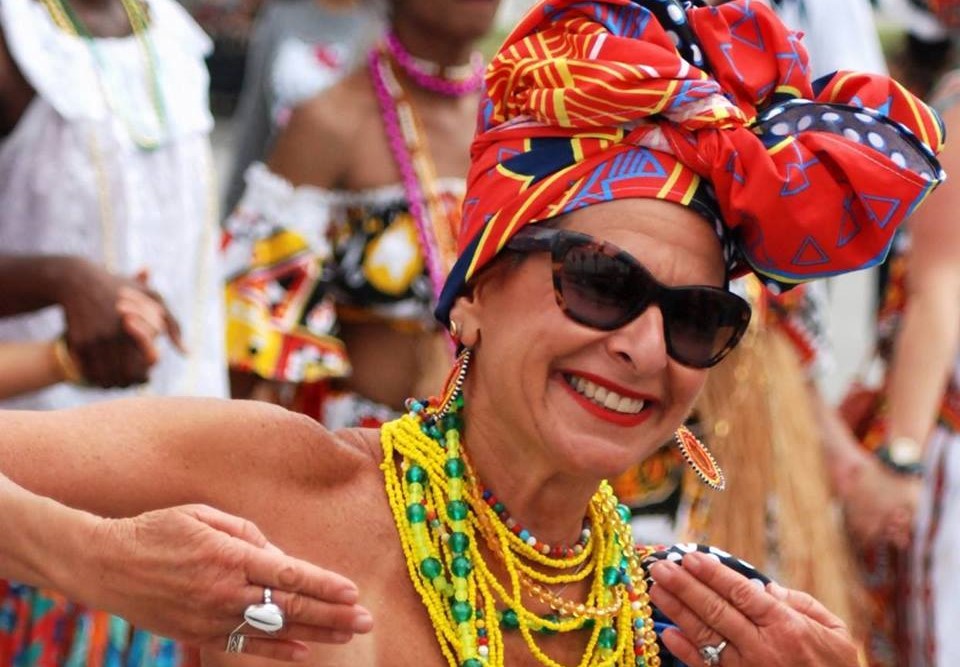
Coreographer Linda Yudim of Viver Brasil Dance Company
Linda Yudin believes her orixá dolls dance during the night, giving her energy while she sleeps. Each doll tells a different story about Bahia and keeps her passion for Brazil alive.
The Co-Artistic Director of Viver Brasil Dance Company, alongside Luiz Badaró, was born into a Jewish family in Danville, Illinois, and today lives in Los Angeles, California. She studied ballet, jazz, and tap dance as a little girl and has always been drawn to strong colors such as hot pink, red, and golden yellow.
How Linda Yudin Discovered Brazilian Culture
Linda’s first contact with Brazilian culture came through an LP of MPB, or Brazilian Popular Music, recorded by Israeli singers. She discovered the music during visits to Israel between 1977 and 1981.
A few years later, Linda read an article about the political importance of Bahia’s Blocos Afro, the Afro-Brazilian Carnival groups that have played an important role in the cultural and political identity of Salvador.
While studying at the University of Illinois, Linda attended a dance concert performed by dance anthropologist Pearl Primus, who introduced African culture through movement and performance. At the time, Linda was studying Psychology and Dance. After watching Primus perform, however, she understood that discovering other cultures, exploring the world, and communicating with people from different backgrounds would become a permanent part of her life.
One day, someone told Linda that her birthplace had been a geographical error. She smiles when telling the story, and when asked what immediately comes to mind when she hears the word Brazil, she answers without hesitation: “Orixá, the ocean, Salvador.”
A Life-Changing Connection With Salvador, Bahia
Two years after arriving in Los Angeles to study dance ethnology at UCLA, Linda had another life-changing experience while taking a course called Dance in Latin America with Susan Cashion.
She also had the opportunity to see Bahia Magia, a show presented by Reni Flores and Rita da Silva in Irvine, California. That same year, Linda traveled to Salvador, Bahia, where she experienced the warmth of Reni and Rita’s home.
From that point forward, Linda immersed herself more deeply in dance and Brazilian culture. She learned from Brazilian friends, teachers, and people she came to regard as family, including Mestre King, Augusto Omolu, Rosangela Silvestre, Mãe Alice, Joselita Moreira Cruz da Silva, Luiz Badaró, and many others – too many names for such a small article.
Viver Brasil Dance Company and Afro-Brazilian Dance in Los Angeles
In addition to serving as Co-Artistic Director of Viver Brasil Dance Company, Linda became a member of the dance faculty at Santa Monica College, where she teaches Afro-Brazilian Dance.
She was especially proud when Viver Brasil received a Lester Horton Dance Award in 2000 for best achievement in a company performance in the non-Western dance category.
The Alliance for California Traditional Arts, the Durfee Foundation, and the Los Angeles County Arts Commission have also recognized the work of Viver Brasil.
Between 1993 and 1999, Linda served as Co-Director of Cheremoya Escola de Samba, or Cheremoya Samba School in Hollywood, together with Lee Cobin. The group was formed by young dancers and musicians who participated in an after-school program, and Linda remains very proud of the group and its accomplishments.
Orixás, Candomblé and Linda’s Spiritual Connection With Brazil
Linda’s orixás are Oxum, the river goddess associated with yellow, and Oxossi, the hunter associated with green and blue. For Linda, these connections reflect her determination to pursue what she wants, her faith in making things happen, her leadership capacity, and her love of beautiful things.
Through Candomblé and the traditions of the orixás, Linda discovered that her native Jewish religion also shares a strong connection with nature.
Today, she understands that she can experience transformation through prayers and songs from the Jewish tradition just as she can while attending a Candomblé ceremony and witnessing devotees manifesting the orixás.
This relationship between spirituality, nature, movement, and identity has become an important part of her connection with Afro-Brazilian culture.
Learning to See Brazil Through Brazilian Eyes
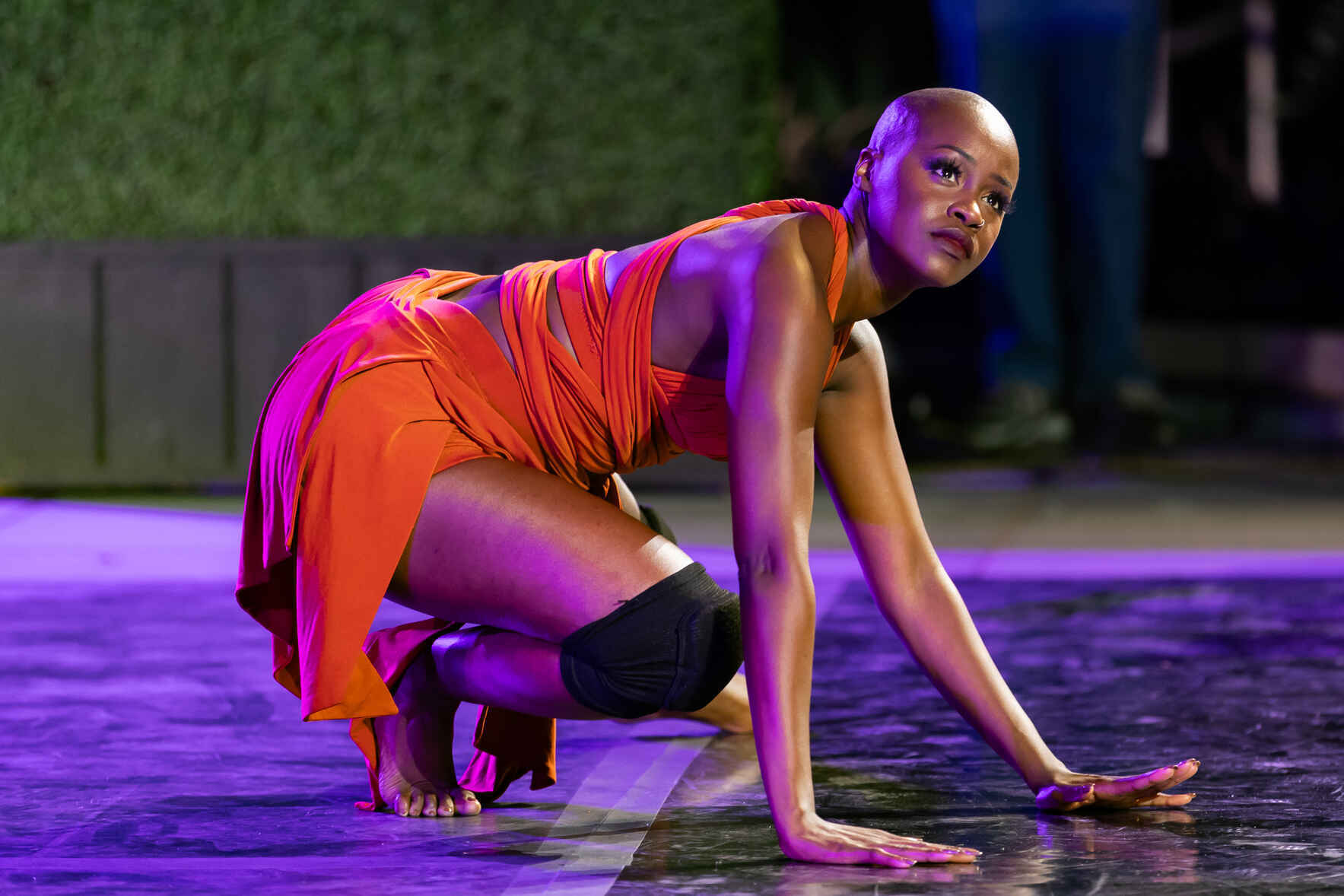
Viver Brasil Dance Company, project Rezas e Folhas
Linda considers herself an adoptive daughter of Brazil, both proud of and challenged by the experience of embracing another culture.
Communication has been one of those challenges, whether in friendships, romantic relationships, research, or business. For Linda, Brazilian and North American sensibilities can represent two very different worlds.
“We have to learn another value system, another way of the world, to understand Brazilians. I am finally learning to listen carefully to understand better. No matter how much I think I know or understand on a deep level, I have to remember that I am a foreigner even with all the love I have for the culture and its people.”
That awareness has become an important part of her philosophy: loving another culture also requires listening to it, respecting its values, and understanding that cultural immersion does not erase the perspective of an outsider.
Bringing Dance and Music Students to Bahia
Patience is also necessary when Linda brings groups of dance and music students to Brazil.
After working with the Caribbean Music and Dance Program for three years, Linda decided to launch her own educational tour with Viver Brasil.
The Viver Brasil Dance and Music Program offered two trips to Salvador, Bahia, each year. One, held in July, was called Woman To Woman and was organized in collaboration with the DeAlmas Women’s Group from New York.
Another program, held in August, was called Bahia Folklorica, Roots of Brazilian Dance and Music. The two-week experience was designed for people interested in deepening their understanding of Brazilian culture through intensive study of dance and music.
“One of my desires is to see people respecting another culture without comparing it with their own,” Linda says.
Teaching Afro-Brazilian Culture Around the World
Linda has visited numerous universities as a dance ethnologist and instructor, including Florida A&M University, the University of North Carolina at Charlotte, the University of Cape Town in South Africa, Stanford University, the University of California, Riverside, Moorpark College, and UCLA.
Through her teaching, research, performances, and cultural exchange programs, she has helped introduce students and audiences to the richness of Brazilian and Afro-Brazilian traditions far beyond Bahia.
The Woman Behind the Choreographer
Linda may be petite, but she describes herself as strong as a bull. Born on May 3 under the sign of Taurus, she has received an individual artist grant from the City of Los Angeles Cultural Affairs Department and has served on the board of directors of the Dance Resource Center of Greater Los Angeles.
If she could bring only one CD to a desert island, Linda would choose Gilberto Gil.
For food, she would bring cozido com pimenta, a vegetable and meat stew with hot sauce. To read, she would choose Mama Day by Gloria Naylor. To nurture her inner child, she would bring an orixá doll.
And in her heart, she would carry the love and respect Luiz Badaró has for her.
Viver Brasil: Connecting Los Angeles and Bahia Through Dance
Viver Brasil Dance Company was co-founded in 1997 by Linda Yudin and Luiz Badaró. The award-winning dance company is firmly rooted in the traditional and contemporary forms and techniques of Salvador, Bahia, Brazil. Its work brings to life the beautiful and complex stories of the orixás – African sacred energies deeply connected to Afro-Brazilian culture – while also presenting jubilant samba, contemporary Afro-Brazilian dance, and Carnival traditions.
Through Viver Brasil, Linda Yudin’s personal connection with Brazil has become something larger: a cultural bridge between Bahia and the United States, built through dance, music, spirituality, education, and respect.
FAQ – Linda Yudin, Viver Brasil and Afro-Brazilian Dance
Who is Linda Yudin?
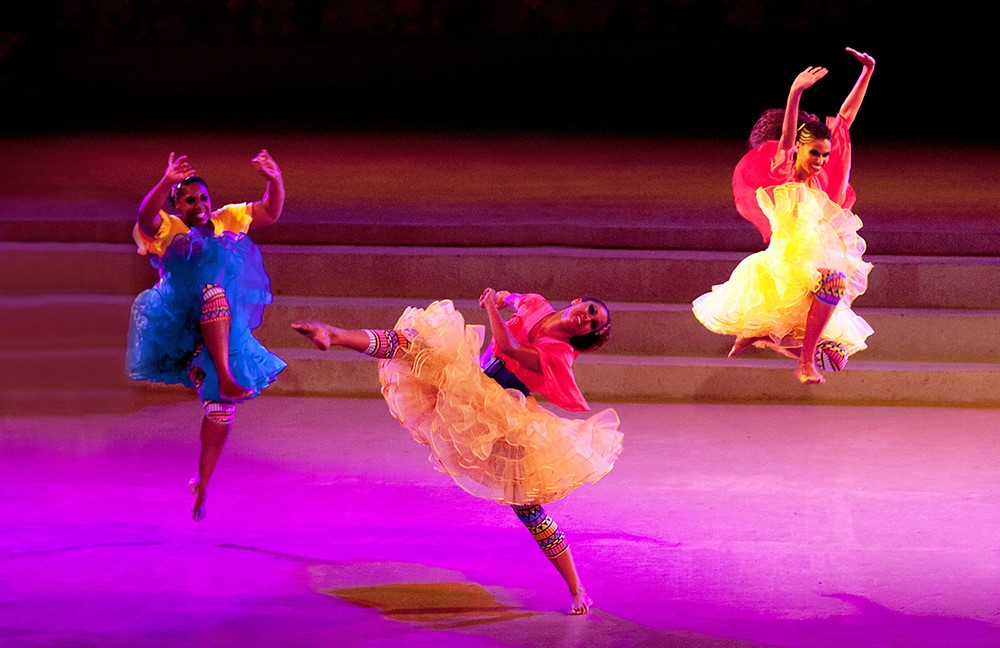
Viver Brasil Dance Company. Photo by Gennia Cuijpg
Linda Yudin is an American choreographer, dance ethnologist, educator, and Co-Artistic Director of Viver Brasil Dance Company. Born in Danville, Illinois, she has spent decades researching, teaching, and performing Afro-Brazilian dance and culture.
What is Viver Brasil Dance Company?
Viver Brasil Dance Company is an award-winning dance company co-founded in Los Angeles in 1997 by Linda Yudin and Luiz Badaró. Its work is rooted in traditional and contemporary dance, music, and cultural expressions from Salvador, Bahia.
How did Linda Yudin become interested in Brazilian culture?
Her first contact with Brazilian culture came through Brazilian Popular Music during visits to Israel between 1977 and 1981. Later experiences with African dance, Bahia’s Blocos Afro, Brazilian teachers, and a trip to Salvador deepened that connection.
What role do orixás and Candomblé play in Linda Yudin’s work?
Orixás and Candomblé are important elements of the Afro-Brazilian traditions Linda has studied and experienced. She has also found parallels between Candomblé’s connection with nature and aspects of her Jewish spiritual background.
What is the connection between Viver Brasil and Bahia?
Viver Brasil draws its artistic foundations from the traditional and contemporary dance and music of Salvador, Bahia. Through performances, education, and cultural exchange, the company helps introduce Afro-Brazilian traditions to audiences in the United States and beyond.
* Katia Moraes is a singer, songwriter, and artist from Rio de Janeiro. She is a long-time Soul Brasil magazine contributor and lives in Los Angeles since 1990. To know more about her, visit: www.katiamoraes.com