Alex Lexa, a German-born DJ and producer, discovered Brazilian music after moving through different countries and eventually settling in Los Angeles. His encounter with Brazilian radio host Sergio Mielniczenko led him deeper into Samba, Bossa Nova and Brazilian rhythms — inspiring him to create Samba da Mudança.
By Lindenberg Junior

His exploration of Bossa Nova eventually led him to develop a deep appreciation for Samba and its many variations.
It’s a pleasure to see how some “Gringos” have incorporated Brazilian culture into their lives in different ways. Alex Lexa is one of those people.
Originally from Germany and of German and Arab heritage, Lexa has lived in Germany, Switzerland, Spain, Iraq and different parts of the United States. He has worked in the music industry for more than 30 years, primarily as a DJ and producer specializing in Electronic Dance Music.
But his connection with Brazilian culture began to grow after he started working at KPFQ 90.7 FM in Los Angeles about eight years before this article was originally published. There, he met Brazilian host and producer Sergio Mielniczenko, from the Brazilian Hour program.
That encounter opened the door to a much deeper relationship with Brazilian music.
“Sergio exposed me to all of the many diverse and different types of music that comes from Brazil. This piqued my musical curiosity and as I explored deeper and deeper into the roots of Bossa Nova, I developed a deep appreciation and excitement for Samba and all the variations,” said Ali.
Discovering Brazilian Music Through Bossa Nova and Samba
As Lexa explored Brazilian music more deeply, his interest expanded from Bossa Nova to the many forms and variations of Samba.
He eventually had the opportunity to play with several Brazilian music masters and musicians in California, including David de Hilster, Kirk Brundage, Lula Almeida, Rodney de Assis and Carlinhos Pandeiro de Ouro.
For a musician whose professional background was largely connected to Electronic Dance Music, Brazilian rhythms offered a different musical universe — one that would eventually become a central part of his creative work.
The Creation of Samba da Mudança
Samba da Mudança performed at the Soul Brasil 100th issue celebration party at Samba Redondo.
In February 2012, Ali Lexa created “Samba Da Mudança”, a project designed to share positive energy and fellowship through Samba drumming and dance.
The project was heavily inspired by Dudu Fuentes, director of Bloco Bangala Fumenga, and Marcus Santos, creator of the Grooversity Brazilian drumming project.
Lexa’s idea was to create a group that would meet regularly to explore traditional and progressive Samba music and rhythms while encouraging people to pick up a drum or shaker and experience the joy of Samba.
The concept was simple: create a welcoming place where anyone could come together to play Samba, dance and make music.
Rather than limiting Brazilian percussion to professional musicians, Samba da Mudança was designed to make the experience accessible to people regardless of their musical background.
Samba in Los Angeles
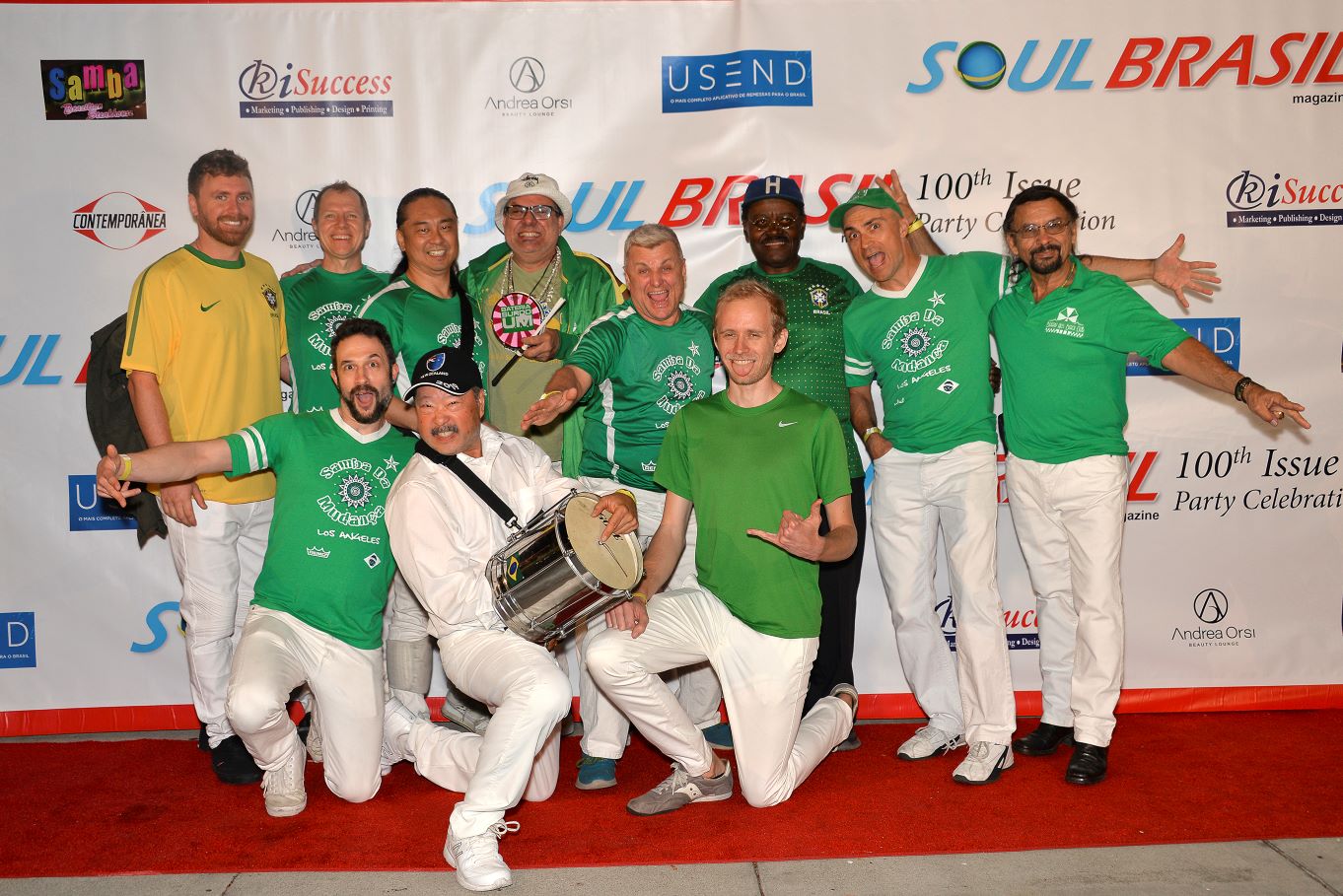
Samba da Mudança have performed at the Soul Brasil 100th issue celebration party at Samba Redondo
The group developed into a community centered around Brazilian percussion, dance and music.
At the time of the original article, Samba da Mudança held regular public rehearsals every Thursday evening at the Youth Justice Coalition, located at 1137 E. Redondo Blvd, Inglewood, California 90302.
“We are delighted to be part of this wonderful non-profit organization that offers numerous social, educational, musical and legal assistance programs for the youth in Los Angeles,” said Ali Lexa.
The connection between Samba da Mudança and the Youth Justice Coalition reflects one of the project’s central ideas: using music and culture as a way to bring people together and create community.
A Brazilian Rhythm With a Universal Message
Alex Lexa’s story illustrates how Brazilian music can travel far beyond Brazil’s borders and become part of the lives of people from completely different cultural backgrounds.
What began with a meeting at a Los Angeles radio station eventually developed into a deeper exploration of Bossa Nova and Samba — and ultimately into a project dedicated to sharing Brazilian rhythms with the wider community.
For Lexa, Samba became more than just another musical genre. Through Samba da Mudança, it became a way to connect people through rhythm, movement, dance and positive energy. To learn more about the project and its activities, visit the Samba da Mudança Facebook page.
FAQ — Frequently Asked Questions
1. Who is Alex Lexa?
Alex Lexa is a German-born DJ and music producer who has worked in the music industry for more than 30 years, primarily in Electronic Dance Music. After moving through several countries and living in the United States, he developed a strong connection with Brazilian music.
2. How did Alex Lexa discover Brazilian Samba?
Lexa was introduced to Brazilian music after meeting Brazilian radio host and producer Sergio Mielniczenko while working at KPFQ 90.7 FM in Los Angeles. Mielniczenko introduced him to the diversity of Brazilian music, including Bossa Nova and Samba.
3. What is Samba da Mudança?
Samba da Mudança is a project created by Ali Lexa in February 2012 to promote positive energy and community through Samba drumming and dance.
4. What inspired Samba da Mudança?
The project was inspired in part by Dudu Fuentes, director of Bloco Bangala Fumenga, and Marcus Santos, creator of the Grooversity Brazilian drumming project. Lexa wanted to create a place where people could regularly practice Samba music, percussion and dance.
5. Can people participate in Samba da Mudança?
The project was created with an open and inclusive approach, encouraging people to pick up a drum or shaker and participate in Samba drumming and dance. Readers interested in the group’s activities can check the Samba da Mudança Facebook page for information.