The Brazilian community in Los Angeles began growing in the late 1980s and has shaped the city’s culture through Brazilian restaurants, Brazilian Jiu-Jitsu (via the Gracie Academy), Capoeira, soccer traditions, music, and annual events like Brazilian Day. Today, an estimated 70,000 Brazilians live in L.A. County.
By Lindenberg Junior
The Brazilian community in Los Angeles began growing in the late 1980s, when thousands of Brazilians were already being attracted to Southern California by its wonderful climate, beaches, surf culture, skateboarding scene, and, of course, Hollywood. Some were also inspired by the music of 1990s superstar Lulu Santos and his song Toda Forma de Amor, while others identified with the dream expressed in the lyrics of Garota, Eu Vou Para a Califórnia: becoming a movie star and finding success in the entertainment industry.
It was a very different time. There was no internet, international phone calls to Brazil could cost more than US$1 per minute, and there were very few places to purchase Brazilian products in Los Angeles or Southern California. Residents often had to bring these products from Brazil or ask family members to send them by mail or through friends traveling to the United States. Toasted cassava flour, essential for making farofa, and palm oil, used to prepare a traditional Brazilian shrimp moqueca, were among the products considered luxuries because they were so difficult to find locally.
Over the decades, this situation changed considerably. Brazilian businesses, restaurants, cultural organizations, artists, and community gatherings helped transform Los Angeles into an important center of Brazilian life on the U.S. West Coast.
Today, the Brazilian presence can be experienced across several parts of Los Angeles County, from Brazilian restaurants and supermarkets to martial arts academies, music performances, soccer gatherings, and cultural celebrations.
Brazilian Markets and Grocery Stores in Los Angeles
During the 1990s, access to Brazilian products began to improve gradually. After 2000, more businesses started serving the growing Brazilian community. Kitanda Brazilian Market opened in Sherman Oaks but closed years later, while Supermercado Brasil operated in Culver City. A few years afterward, Hi Brazil Boutique in Redondo Beach and Brazil Mania in Torrance also became part of the local Brazilian retail scene.
After 2005, a growing number of Latino grocery stores began carrying Brazilian products on their shelves, making it easier for residents to find familiar ingredients without having to import them from Brazil. Among the businesses mentioned by members of the community were El Mambi in Glendale, El Camaguey in Culver City, Continental Gourmet in Hawthorne and Lomita, Carniceria Argentina in North Hollywood, and Latimex Market in Chino, east of Los Angeles.
Some of these Latin American grocery stores also offered Brazilian-style meat cuts, including picanha, as well as Brazilian beer and other products. Today, availability varies by location, so shoppers should check directly with individual stores before making a trip.
For Brazilians living in Southern California, these markets represent more than places to shop: they help preserve familiar food traditions and make it easier to prepare traditional dishes such as farofa, churrasco, and moqueca.
Brazilian Restaurants in Los Angeles: From Traditional Food to Churrascarias
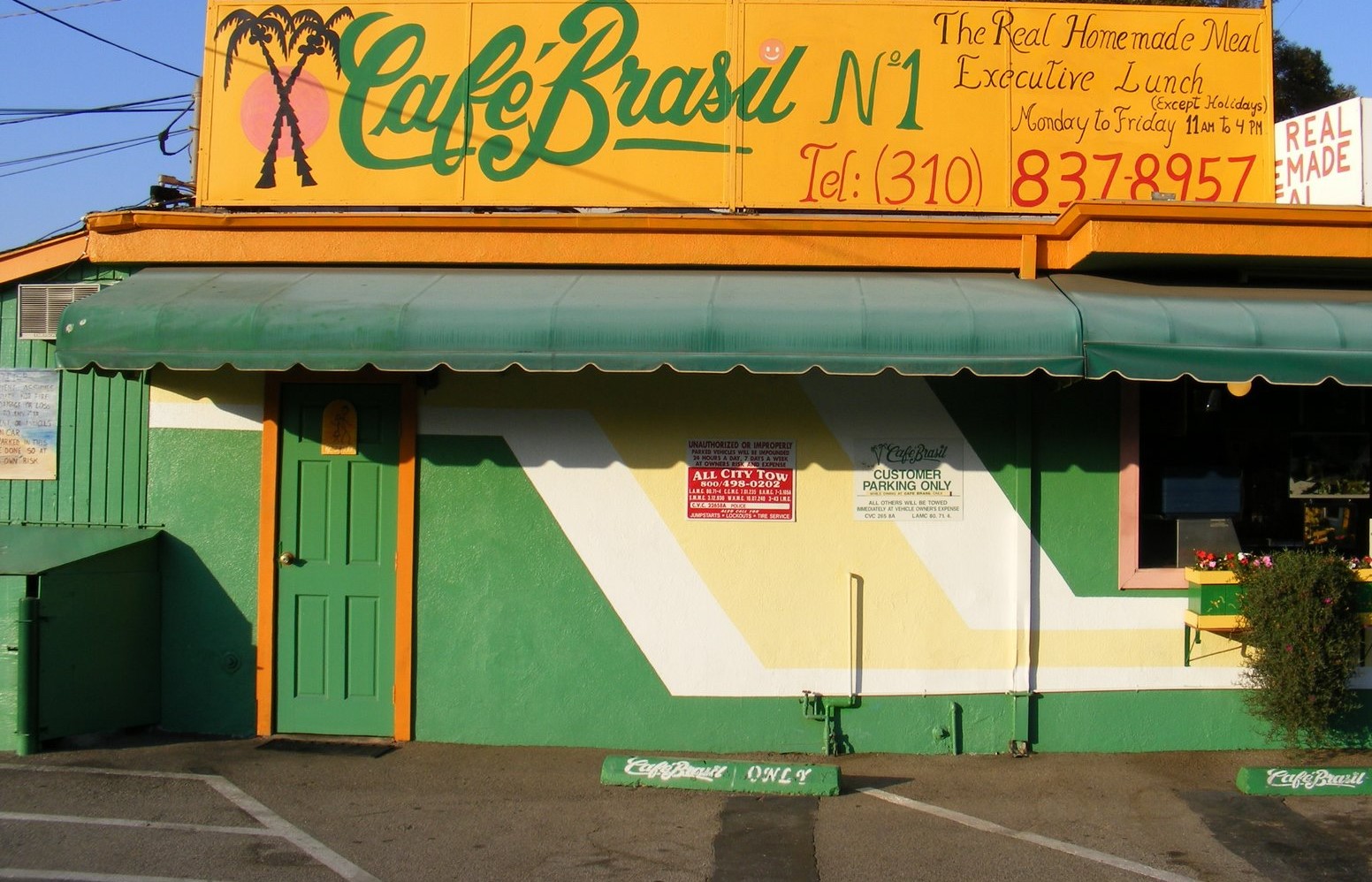
The first and original Cafe Brasil was established for years on Venice Blvd, corner of Westwood Blvd in Culver City and was the first Brazilian restaurant in L.A.
The beginning of the 1990s also marked the arrival of the first Brazilian restaurants in the Los Angeles area. Brazil by the Bay, in Torrance, was a pioneer of the all-you-can-eat Brazilian dining experience, while Café Brasil in Culver City helped introduce local residents to à la carte Brazilian cuisine.
Over the years, the restaurant scene expanded, with Brazilian steakhouses becoming particularly popular. One of the best-known names is Fogo de Chão , which operates multiple locations and offers the traditional Brazilian rodizio experience, with servers bringing different cuts of grilled meat directly to the table. Its Los Angeles restaurant location provides information about menus, reservations, and dining options.
Another important name in the local Brazilian food scene is Pampas Grill. Located inside the historic Farmers Market, the restaurant helped popularize the Brazilian barbecue by-the-pound concept, allowing customers to select their food and pay according to its weight. Following its success, a second location opened in Culver City. Read more about its history in The Success Story of Pampas Grill in Los Angeles and Cezar Brelaz and the Pampas Grill Restaurants.
Other businesses have also contributed to the diversity of Brazilian cuisine in Southern California. Bossa Nova, with several locations in the Los Angeles area, and Silvio’s Brazilian BBQ became known for combining Brazilian flavors with an American dining experience. Chef Silvio Correa brought a California surf-culture atmosphere to his restaurant in Hermosa Beach, which later changed ownership and became known as Panelas HB.
Whether visitors are looking for a traditional churrascaria, Brazilian barbecue, pão de queijo, or a more contemporary interpretation of Brazilian cuisine, the Los Angeles area offers several ways to experience the country’s culinary traditions.
Capoeira in Los Angeles: Brazilian Martial Arts and Cultural Heritage
Capoeira is one of Brazil’s most recognizable cultural expressions, combining martial arts, music, dance, rhythm, and history. Its influence has also reached Hollywood, where its movements have appeared in movies and entertainment productions.
One example is the movie Catwoman, in which actress Halle Berry learned traditional Capoeira movements to perform some of the film’s action sequences. Master Boneco, from the Capoeira Brasil group in Culver City, served as Berry’s private trainer and described the growing presence of the art form in American culture as an exciting development.
Another traditional group in the Los Angeles area is Capoeira Batuque, also associated with Culver City. Its founder, Master Amen Santo, was among the pioneers who helped introduce Capoeira to Southern California and establish connections between Brazilian culture and Hollywood. His work was also connected to the movie Only the Strong, starring Jean-Claude Van Damme, which helped introduce American audiences to Capoeira and its Brazilian roots.
Today, several Capoeira groups operate throughout Los Angeles County, offering classes and opportunities for people interested in learning the movements, music, instruments, and traditions behind this Brazilian art form. For newcomers, participating in a class or attending a Capoeira roda can be an engaging way to experience Brazilian culture beyond food and music.
For additional background, read Capoeira: More Than a Martial Art and learn about the Brasil Brasil Cultural Center.
Brazilian Jiu-Jitsu in Los Angeles: The Gracie Family’s Legacy
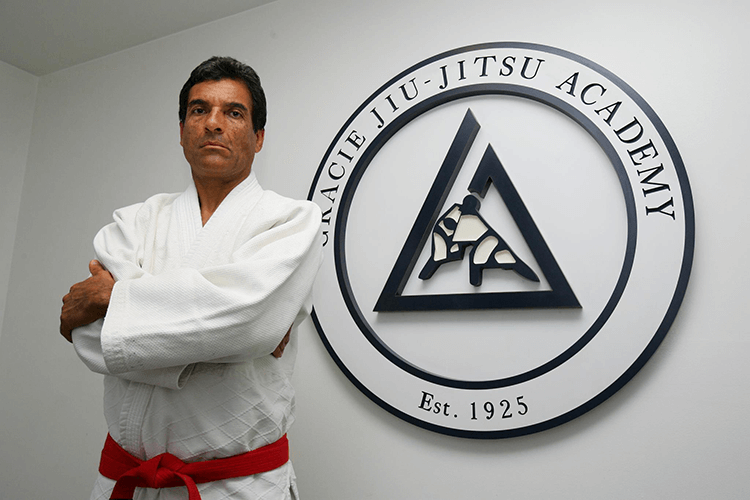
Rorion Gracie at Gracie Academy Founded in Torrance in 1989
Brazilian Jiu-Jitsu became internationally recognized through the Gracie family, whose members played a fundamental role in introducing and popularizing the martial art in North America. For many years, the family was established in Southern California, where its techniques attracted martial artists, athletes, and eventually Hollywood professionals.
Rorion Gracie arrived in Southern California in 1978 and initially taught classes from his garage. In 1989, he and his brothers established the first Gracie Jiu-Jitsu Academy in America in Torrance, California, marking an important milestone in the expansion of Brazilian Jiu-Jitsu in the United States.
Hollywood producers also recognized the potential of the sport, incorporating martial arts techniques into action films and fight choreography. The original article highlights the final fight scene in Lethal Weapon, starring Mel Gibson, as an example of the influence of martial arts on American cinema.
Several well-known celebrities have practiced Brazilian Jiu-Jitsu, including Chuck Norris, Vin Diesel, and Guy Ritchie. The sport’s popularity has continued to grow, and today there are numerous academies throughout Los Angeles where residents and visitors can train.
The Gracie Academy in Torrance, founded by Rorion Gracie, remains an important reference for the history of Brazilian Jiu-Jitsu in the United States. Its connection to the legendary Hélio Gracie and the development of the martial art makes it a significant destination for anyone interested in Brazilian sports history.
For more information, read Brazilian Jiu-Jitsu and Its Influence on Fighting and Hollywood.
Brazilian Soccer in Los Angeles: A Tradition That Started in 1979
Soccer is deeply connected to Brazilian identity, and Los Angeles has its own long-standing story of Brazilian soccer gatherings. In 1979, a group of Brazilians began organizing weekly Saturday soccer games at Glendale College, initially as a way to relieve stress, enjoy the sport, and spend time with fellow Brazilians.
Six years later, the gathering moved to Pasadena High School. Throughout that period, several Brazilian soccer legends visited the group while in Los Angeles, including Pelé, Jairzinho, Marinho Chagas, Paulo César Caju, and Júnior. Their visits reinforced the importance of this informal Brazilian community gathering.
The tradition continued through different locations and generations, supported by Almir Santer, one of its founders, and other longtime Brazilian residents who helped keep the group active. The gatherings became more than soccer matches: they were opportunities to reconnect with Brazilian friends, speak Portuguese, share stories, and enjoy a traditional barbecue.
Known as uma pelada, the informal soccer match traditionally took place on Saturday afternoons, followed by a Brazilian barbecue, or churrasco. In 2025, the soccer gathering was taking place in Culver City, while the barbecue was held at Mother’s Beach in Marina del Rey.
This combination of soccer, food, and friendship reflects an important aspect of Brazilian community life in California. More information about this tradition and the country’s passion for soccer can be found in Brazilian Mania and Churrasco: The Brazilian Barbecue.
Surf, Skateboarding, and Southern California Beach Culture
Brazilian culture and the Southern California lifestyle have several things in common, particularly their connection to the outdoors, sports, and the beach. In Brazil, spending time at the beach often means relaxing, playing footvolley, throwing a frisbee, swimming, surfing, or simply enjoying the sun with friends.
In Los Angeles, many Brazilians have traditionally gathered around Redondo Beach and Hermosa Beach, continuing a social tradition that, during the 1990s, was also strongly associated with the area near the Venice Beach Pier.
Surfing and skateboarding have likewise attracted Brazilians to Southern California for decades. The region’s coastline, skate parks, outdoor lifestyle, and proximity to the entertainment industry have helped attract Brazilian athletes, entrepreneurs, and professionals working in these fields. Some of the most recognized Brazilian names in surfing and skateboarding have lived or worked in Los Angeles and neighboring Orange County.
For many Brazilian residents, the combination of beaches, mountains, parks, and an active outdoor lifestyle remains one of the strongest attractions of living in Southern California.
Brazilian Music and Dance in Los Angeles: Samba, Bossa Nova, and Local Artists
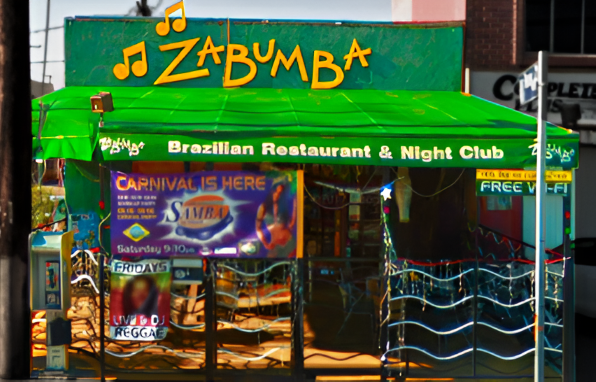
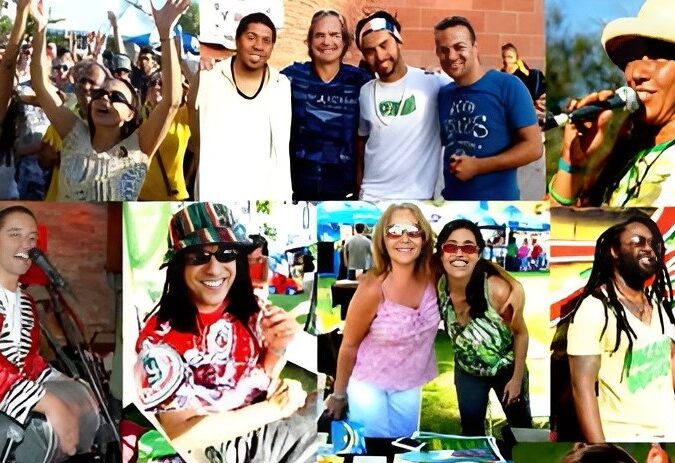
Zabumba’s Saturday nights marked a generation for more than 20 years and were the stage for several musicians who arrived in L.A. in the 90’s and 2000’s
Brazilian music has maintained a strong presence in Los Angeles through radio programs, live performances, local musicians, and dance events. Two radio programs hosted by Sergio Mielniczenko have helped introduce Brazilian music to audiences in the United States: Brazilian Hour, an online radio show, and Global Village, broadcast on Fridays through KPFK 90.7 FM.
Los Angeles has also been home to many Brazilian musicians who have contributed to the city’s cultural landscape over the years. Among them are internationally recognized artists such as Sérgio Mendes, who passed away in 2024, and percussionist Airto Moreira and his wife, singer Flora Purim.
Airto Moreira once described one of the challenges of living in Los Angeles with a sense of humor: “with the heavy traffic, everything is too far away and seems that I’m always late.” Despite the city’s traffic, he appreciated the natural beauty of the area, particularly the different canyons connecting the San Fernando Valley to the coast.
There are many talented Brazilian musicians in Los Angeles. Soul Brasil has featured more than 60 of them in its Local Brazilian Musicians series. Among the pioneers who arrived during the 1980s and 1990s are Lula Almeida, Luisinho do Samba, Katia Moraes, Sonia Santos, Ana Gazola, Flavio Ribeiro, and Kleber Jorge.
For many Brazilians, Saturday nights at Zabumba Restaurant and Bar, on Venice Boulevard in Culver City, remain an important memory. The venue hosted Brazilian music and gatherings for more than 20 years, providing a stage for musicians who arrived in Los Angeles during the 1990s and 2000s. Friday samba nights at Café Danza, led by Rio de Janeiro native Luisinho do Samba, also became part of the social life of an entire Brazilian generation.
Where to Experience Samba and Brazilian Dance in Los Angeles
For those interested in learning samba, improving their dancing skills, or simply discovering Brazilian rhythms, Los Angeles has a long history of Brazilian dance classes, performers, and cultural events.
Several samba dancers helped establish Brazilian dance on local stages, including performances at the former annual Brazilian Carnival at the Palladium and other venues. Among the pioneers were Marisa Alyrio, Christiane Calill, Valeria Trindade, Katia Neves, and Jonia Queen.
Their work helped introduce Brazilian dance to American audiences and strengthen the connection between the Brazilian community and the city’s broader performing arts scene. Readers interested in the history of these performers can explore Seven Samba Dancers Who Helped Shape the Brazilian Dance Scene in California.
For current performances, samba gatherings, concerts, and Brazilian cultural celebrations, the Soul Brasil Calendar is a useful resource for finding events throughout Los Angeles and Southern California.
Brazilian Faith and Religious Communities in Los Angeles
 Religion is another important part of Brazilian cultural identity, and religious communities have helped many immigrants establish social connections after moving to the United States.
Across Los Angeles, Brazilian residents have found places of worship and community through Evangelical churches, Baptist, Methodist, Assembly of God, and Adventist congregations, as well as Spiritist centers and Umbanda communities.
These organizations provide more than religious services. They create opportunities for socializing, building friendships, celebrating Brazilian traditions, and maintaining connections with people who share similar cultural backgrounds.
For immigrants adapting to a new country, such communities can also help reduce feelings of cultural isolation and loneliness while providing emotional support and a sense of belonging.
Brazilian Media in Los Angeles: The History of Soul Brasil
Anyone who lived in Los Angeles in the early 2000s may remember the arrival of Brazil Explore, a magazine created by Marcelo Gomes. Less than two years later, during the summer of 2002, Soul Brasil was established in California, becoming another important platform for Brazilian culture and community news.
Over the years, Brazilian media has played an important role in connecting residents, promoting local professionals, publicizing cultural events, and sharing information about life in the United States.
To learn more about the publication’s origins and its development over the years, read A Brief History of Soul Brasil.
Brazilian Professionals, Artists, and Entrepreneurs in Los Angeles
The diversity of Brazilian professionals in Los Angeles has become increasingly visible over the years. Beyond the traditional occupations associated with Brazilian immigrants, such as babysitters and valets, the community includes hair stylists, personal trainers, event promoters, real estate agents, travel and insurance agents, lawyers, psychologists, dentists, doctors, therapists, artists, actors, and filmmakers.
The entertainment industry has been particularly attractive to Brazilian professionals, given Los Angeles’ position as an international center for cinema, television, music, and creative production. Brazilian actors, filmmakers, musicians, and other artists have contributed to the city’s multicultural environment while building careers in the United States.
Bakari Santos, an artist, craftsman, and cultural promoter well known among Brazilians in California, arrived in Los Angeles during the 1980s. He explained some of the reasons why the region attracted so many Brazilians:
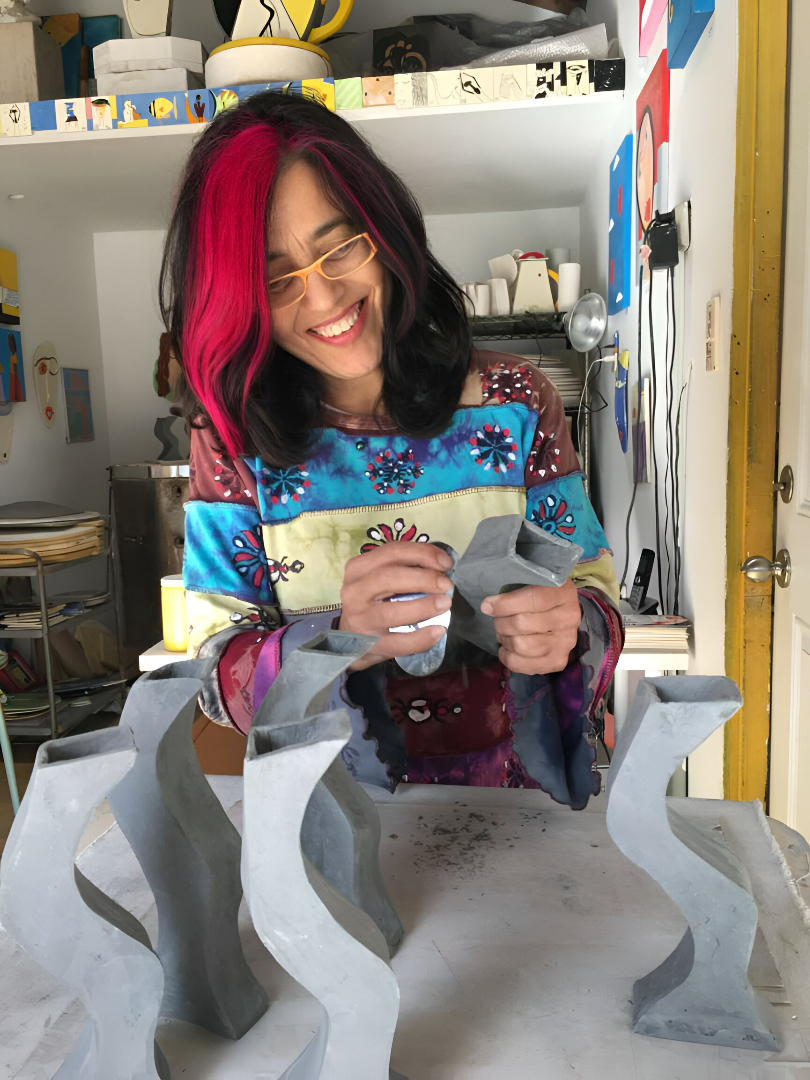
Artist and Ceramist Sandra Zebi lives in Los Angeles since late 80s
“I think the desert climate with hot days and cool evenings, the many options to join beach, mountains and parks, the beauty and diversity of its people together and the cosmopolitan vibe of this city attract a lot of us, Brazilians, as well people from all over the world.”
Other Brazilian artists who arrived in Los Angeles during the 1980s and 1990s include Sandra Zebi and Rose Lobo, whose professional and artistic experiences reflect the diversity of the Brazilian creative community.
Another important development is the emergence of younger generations of American-Brazilians who were born and raised in Los Angeles. These individuals are helping introduce Brazilian traditions, perspectives, and artistic influences to new audiences while creating their own identities within American society.
Brazilian entrepreneurs have also played an important role in the region’s development. Real estate professional Vladimir Bellemo, another pioneer among Brazilian business professionals in California, has pointed out the challenges created by rising housing costs and real estate speculation. He observed that the growing interest in moving to Los Angeles has contributed to higher rents and property values, a situation also experienced in major cities such as New York and San Francisco.
For readers interested in the people behind this community, Soul Brasil also features the series Brazilian Professionals in California, highlighting Brazilian entrepreneurs, business leaders, and professionals who have established themselves in the region.
Brazilian Day in Los Angeles and Ambassador Thereza Quintella
Brazilian cultural celebrations have played an important role in bringing the community together and introducing Brazilian traditions to the broader American public.
Years ago, I had the opportunity to interview the then Brazilian ambassador in Los Angeles, Thereza Maria M. Quintella, at her office at the Brazilian Consulate General. During our conversation, she discussed her diplomatic experiences in London and Moscow, her affection for Rio de Janeiro, and her work representing Brazil in Los Angeles.
She spoke enthusiastically about the positive image of Brazil among Americans in the city, observing:
“I see a great reaction from Americans when someone mentions being Brazilian.”
She also commented on the growing interest in Brazilian culture:
“I think that Los Angeles is a city with a growing demand in search of Brazil and its culture, and actually it would be a good idea for airlines to offer more options of direct flights connecting this city to our country.”
During the same conversation in 2007, I asked Ambassador Quintella what she considered the best and worst aspects of living in Los Angeles. Her answer was that the best part was living in a city primarily composed of houses rather than apartment buildings, along with enjoying its fantastic weather. The biggest disadvantage, in her opinion, was the city’s chaotic daily traffic.
Her observations were consistent with the results of an interview conducted that same year with 100 Brazilian residents of Los Angeles, 90% of whom expressed similar opinions.
Ambassador Quintella was also instrumental in creating the first annual Brazilian Day in Los Angeles, an event initially organized in September to coincide with the month of Brazil’s Independence Day. The celebration was pioneering for Los Angeles and the entire U.S. West Coast, taking place for six consecutive years.
The event eventually stopped, partly because of Brazil’s economic crisis and reductions in government funding. Although a return was announced for 2025, Brazilian cultural celebrations in the region have continued to evolve through other community-organized events.
One example of the current community calendar is Brazilian Family Day, organized by the PIBBLA community. Its 2026 Christmas edition is scheduled for December 5, featuring Brazilian food, music, local vendors, and family activities in Los Angeles. Details and registration are available through the official Brazilian Family Day website.
How Many Brazilians Live in Los Angeles? Understanding the Population Estimates
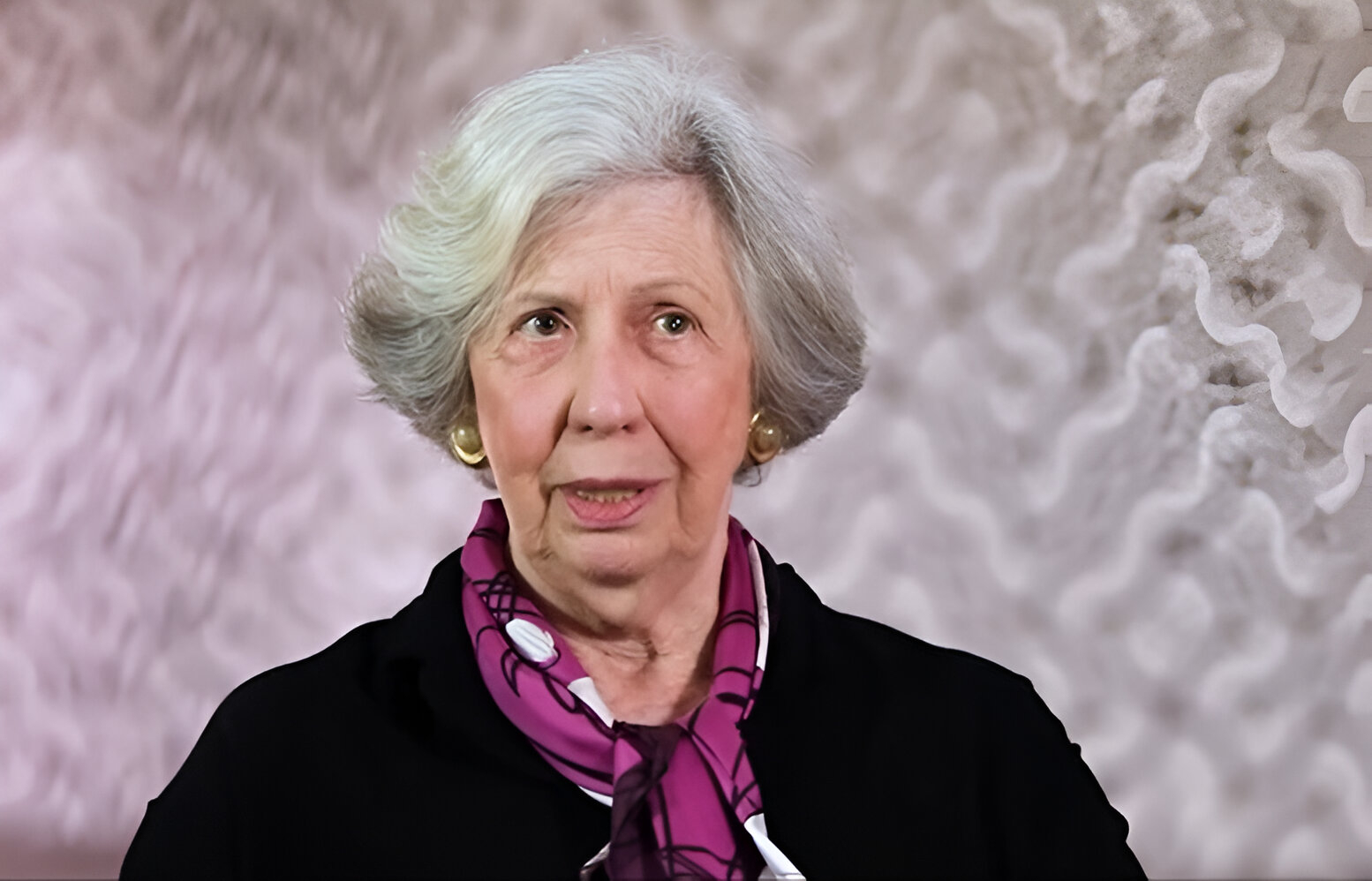
The Brazilian ambassador Thereza Quintella was in charge of the Brazilian General Consulate of Los Angeles between 2005 and 2008
The Brazilian community in Los Angeles has continued to evolve, particularly following the COVID-19 pandemic, when more Brazilians became interested in moving to Southern California. This included people who were already living in other parts of the United States, particularly Florida and Massachusetts.
However, estimating the actual size of this community requires distinguishing between Brazilian-born immigrants, people who identify as having Brazilian ancestry, and U.S.-born children of Brazilian parents.
The original estimate of more than 70,000 Brazilians living in Los Angeles County reflects a broader community estimate, but it should not be presented as an official Census figure. According to the 2024 American Community Survey, approximately 13,824 Los Angeles County residents were born in Brazil. Separately, an analysis of the ACS 2020–2024 five-year estimates identifies approximately 13,379 residents with Brazilian ancestry or origin in the county. These measurements use different definitions and should not be added together.
The figures also do not necessarily capture everyone with Brazilian family connections, especially people whose ancestry is not recorded as Brazilian in Census responses. Therefore, the wider Brazilian-American community may be larger than the number of Brazil-born residents.
FAQ – Frequently Asked Questions
1. How many Brazilians live in Los Angeles?
The 2024 American Community Survey estimates that approximately 13,824 Los Angeles County residents were born in Brazil. Broader estimates of the Brazilian-American community may be higher because they also include U.S.-born descendants of Brazilian immigrants.
2. Where can I find authentic Brazilian food in Los Angeles?
Visitors can explore Brazilian restaurants and steakhouses such as Fogo de Chão and Pampas Grill, as well as other restaurants serving traditional Brazilian dishes, barbecue, and regional specialties. Restaurant locations and menus should be checked before visiting.
3. Where can I learn Capoeira or Brazilian Jiu-Jitsu in Los Angeles?
Los Angeles County has several Capoeira groups, including Capoeira Brasil and Capoeira Batuque. For Brazilian Jiu-Jitsu, the Gracie Academy in Torrance is one of the most historically significant training centers in the United States.
4. Are there Brazilian music and samba events in Los Angeles?
Yes. Los Angeles has a long history of Brazilian music performances, samba gatherings, and local musicians. The Soul Brasil Calendar is a useful resource for finding upcoming Brazilian concerts, dance events, and cultural celebrations.
5. Does Los Angeles have Brazilian cultural festivals and community events?
Yes. Brazilian cultural celebrations and community gatherings take place throughout the year. Brazilian Family Day, organized by PIBBLA, is one example of a community event featuring Brazilian food, music, vendors, and family activities. Check the Soul Brasil Calendar for upcoming events.