From Los Angeles to Abu Dhabi, these four remarkable buildings challenge the limits of architecture with bold designs, optical illusions, and futuristic forms. More than landmarks, they are cultural icons that inspire travelers and prove that architecture can be as emotionally powerful as art.
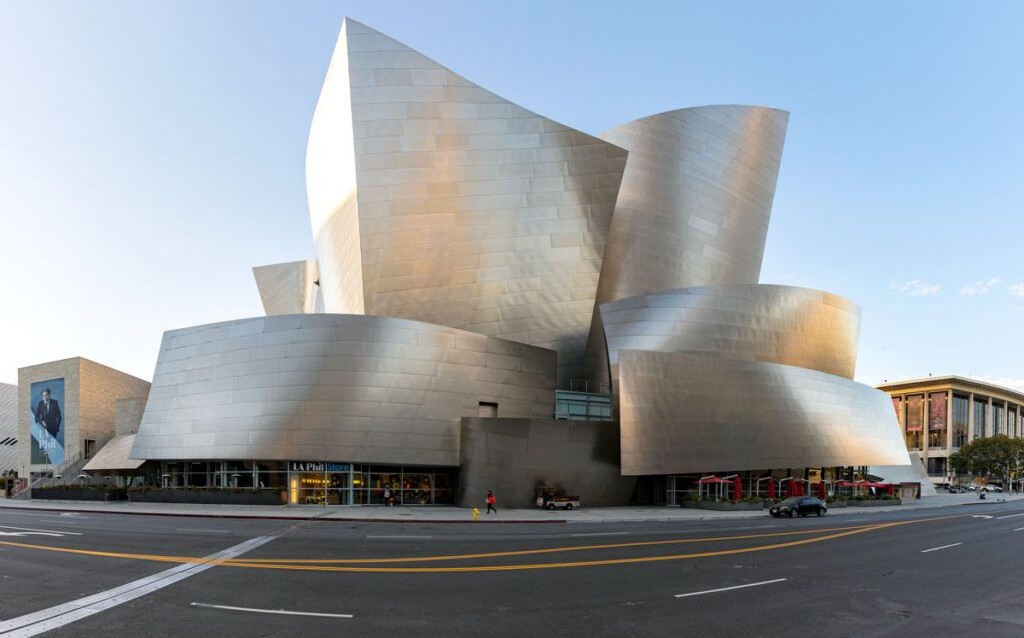
Walt Disney Concert Hall blends Frank Gehry’s bold architecture with one of the world’s finest concert halls.
In a world where many buildings blend into the urban landscape, extraordinary architecture has the power to surprise, inspire, and spark conversation. Whether they appear to defy gravity, create mesmerizing optical illusions, or captivate with unconventional shapes, these architectural masterpieces remind us that great design is meant to be experienced as much as admired.
1. Walt Disney Concert Hall, Los Angeles
The Walt Disney Concert Hall is one of architect Frank Gehry’s most celebrated creations and a defining landmark of downtown Los Angeles. Known for his deconstructivist approach and flowing, sculptural forms, Gehry transformed stainless steel into an artistic medium, creating a building whose reflective exterior glitters under the Southern California sun.
The project shares many characteristics with Gehry’s iconic Guggenheim Museum in Bilbao, Spain, particularly its dynamic curves and innovative use of metal cladding. However, the concert hall is much more than a visually striking structure.
Inside, visitors discover one of the world’s finest concert venues, renowned for its exceptional acoustics. Gehry famously designed the building from the inside out, ensuring that every architectural element enhances the musical experience. The result is a joyful, emotionally engaging space where architecture and music work together to create unforgettable moments.
2. Zayed National Museum, Abu Dhabi
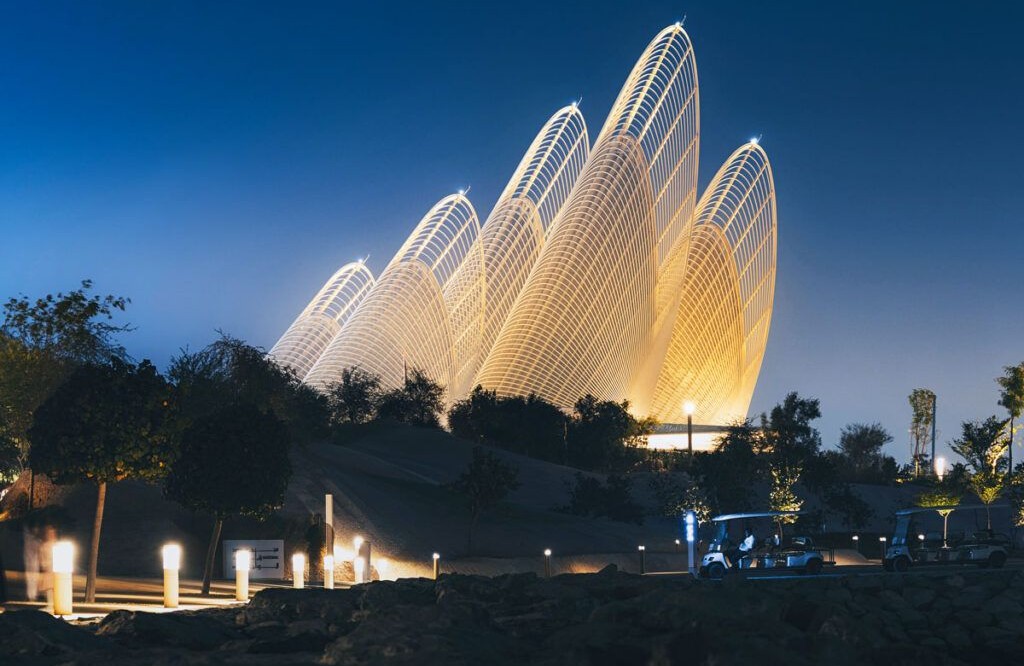
Zayed National Museum combines falcon-inspired design with traditional Emirati cooling technology.
The Zayed National Museum in Abu Dhabi demonstrates how architecture can blend art, engineering, and cultural heritage into one extraordinary landmark.
Designed by Foster + Partners, the museum serves as the centerpiece of the Saadiyat Cultural District. Its five elegant towers are inspired by the wings of a falcon—an enduring symbol of Emirati culture—and instantly create an unforgettable silhouette against the skyline.
Beyond their beauty, the towers perform a practical function. They form part of the building’s natural ventilation system, drawing inspiration from the traditional barjeel wind towers that have cooled buildings across the Emirates for centuries.
The museum’s low-profile structure reflects the gentle contours of the surrounding desert landscape, while its carefully selected sand-colored exterior and landscaped gardens reinforce the deep connection between nature, history, and modern design.
3. Inntel Hotels Zaandam, Amsterdam
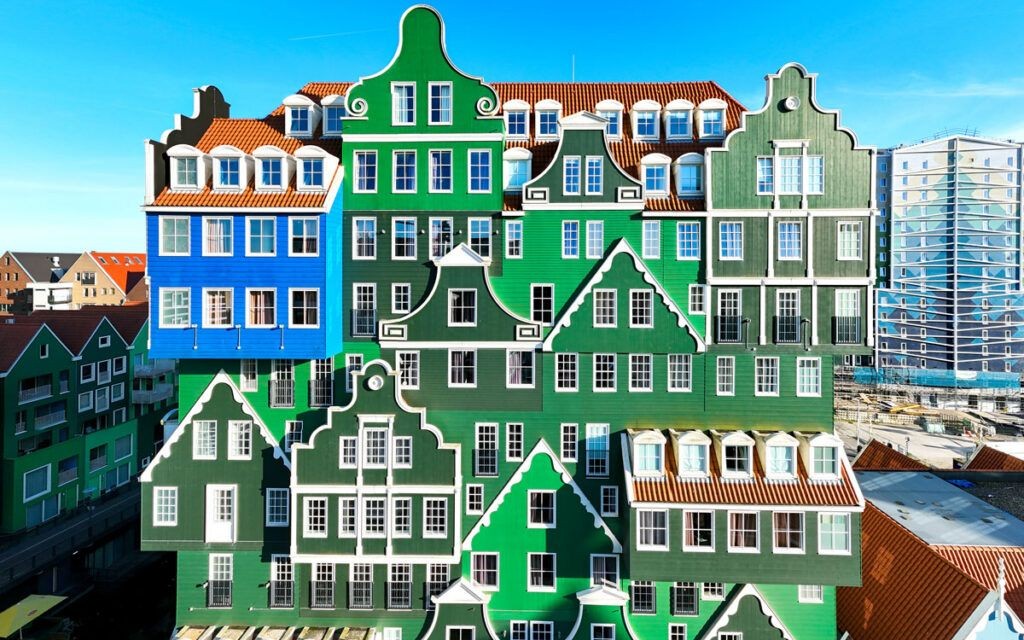
Inntel Hotels Zaandam transforms classic Dutch houses into one of Europe’s most eye-catching hotels.
At first glance, the Inntel Hotels Zaandam appears to be a playful optical illusion rather than a functioning hotel.
Designed by WAM Architecten, the building celebrates the architectural heritage of the Zaan region in the Netherlands by stacking dozens of traditional green wooden house façades into one spectacular composition.
Among the many green structures, a single blue “house” pays tribute to Claude Monet’s famous painting The Blue House (Het Blauwe Huis), adding an artistic layer to the design.
The dramatic stacked appearance creates the illusion that the building is balancing impossibly on itself. Yet despite its unconventional form, the hotel preserves classic Dutch architectural elements, including traditional gabled roofs, successfully merging local history with contemporary creativity.
4. Heydar Aliyev Center, Baku
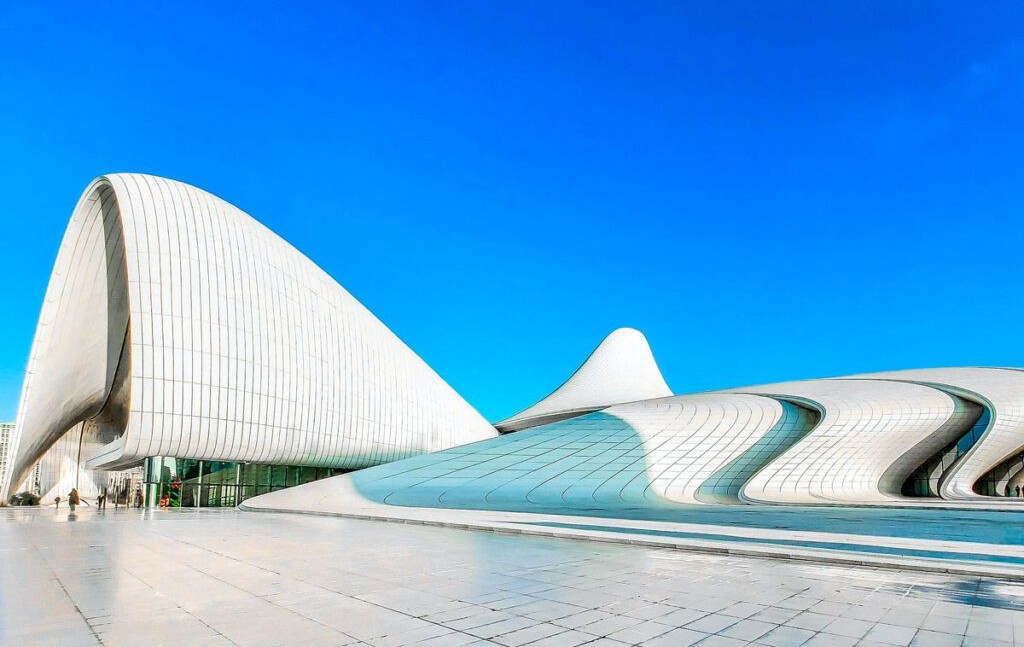
Heydar Aliyev Center captivates visitors with futuristic curves that make the building appear to flow.
The award-winning Heydar Aliyev Center, opened in 2012, has become one of the world’s most recognizable examples of contemporary architecture.
Designed by the internationally acclaimed Zaha Hadid Architects, the cultural center symbolizes Azerbaijan’s embrace of a modern identity following its independence from the Soviet Union in 1991.
Its flowing white curves appear almost liquid, eliminating the traditional distinction between walls, roof, and surrounding public spaces. Rather than imposing itself on the city, the building seems to emerge naturally from the plaza, inviting visitors to explore, relax, and appreciate its sculptural beauty.
Today, the center hosts exhibitions, performances, and cultural events, making it not only an architectural icon but also one of Baku’s most vibrant public destinations.
Final Thoughts
These four extraordinary buildings demonstrate that architecture is far more than the construction of functional spaces—it is an artistic expression capable of telling stories, preserving cultural identity, and inspiring emotion. Whether through futuristic curves, gravity-defying forms, or designs rooted in local traditions, each landmark transforms the ordinary into the unforgettable, making them must-see destinations for travelers who appreciate creativity, innovation, and world-class design.
* For airfare from the United States to Brazil or Latin America, customized travel packages, alternative accommodations, as well as travel planning consultation please visit our travel agent page or contact Magali da Silva directly by phone or whatsapp: 1(323)428-1963.
Frequently Asked Questions (FAQ)
1. What are some of the world’s most unusual buildings?
The Walt Disney Concert Hall in Los Angeles, Zayed National Museum in Abu Dhabi, Inntel Hotels Zaandam in the Netherlands, and the Heydar Aliyev Center in Baku are among the world’s most visually unique architectural landmarks.
2. Who designed the Walt Disney Concert Hall?
It was designed by world-renowned architect Frank Gehry, famous for his deconstructivist architectural style.
3. Why is the Zayed National Museum shaped like falcon wings?
The towers were inspired by falcon wings, an important symbol of Emirati heritage, while also functioning as part of the museum’s natural ventilation system.
4. What makes Inntel Hotels Zaandam so unique?
Its exterior is made up of stacked traditional Dutch houses, creating an optical illusion while celebrating the architectural history of the Zaan region.
5. Why is the Heydar Aliyev Center famous?
Designed by Zaha Hadid Architects, the building is celebrated worldwide for its fluid, futuristic design and has become one of Azerbaijan’s most iconic cultural landmarks.