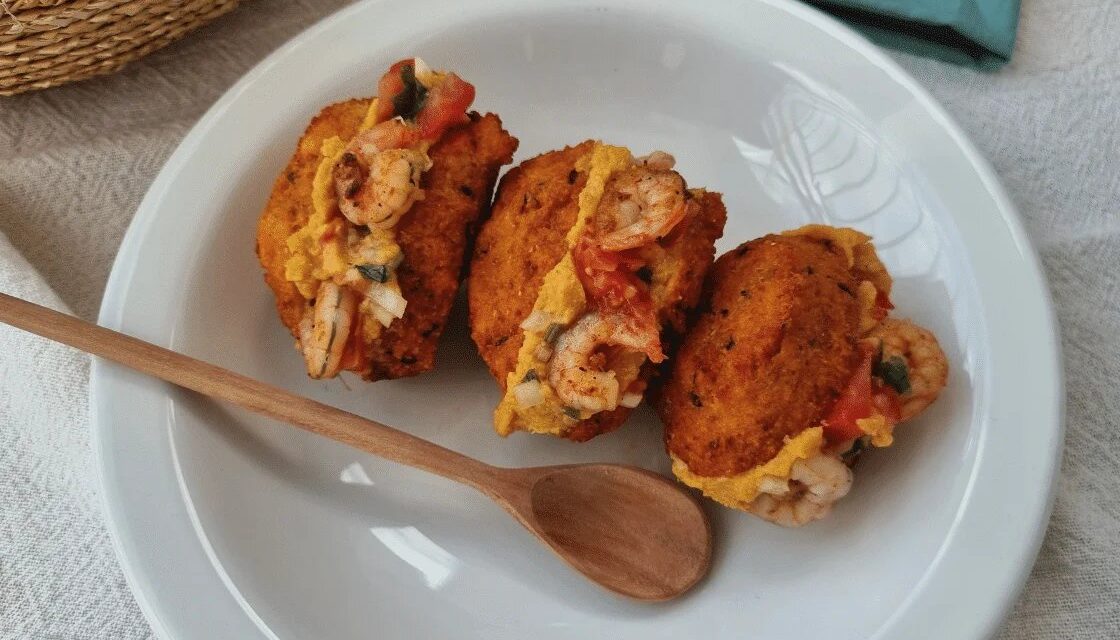
Acarajé is one of Bahia’s most iconic foods, made from black-eyed peas and traditionally fried in palm oil. Learn how to prepare an easy homemade version while discovering the cultural traditions behind this Afro-Brazilian dish.
By Lindenberg Junior | English Edition by Ann Fain
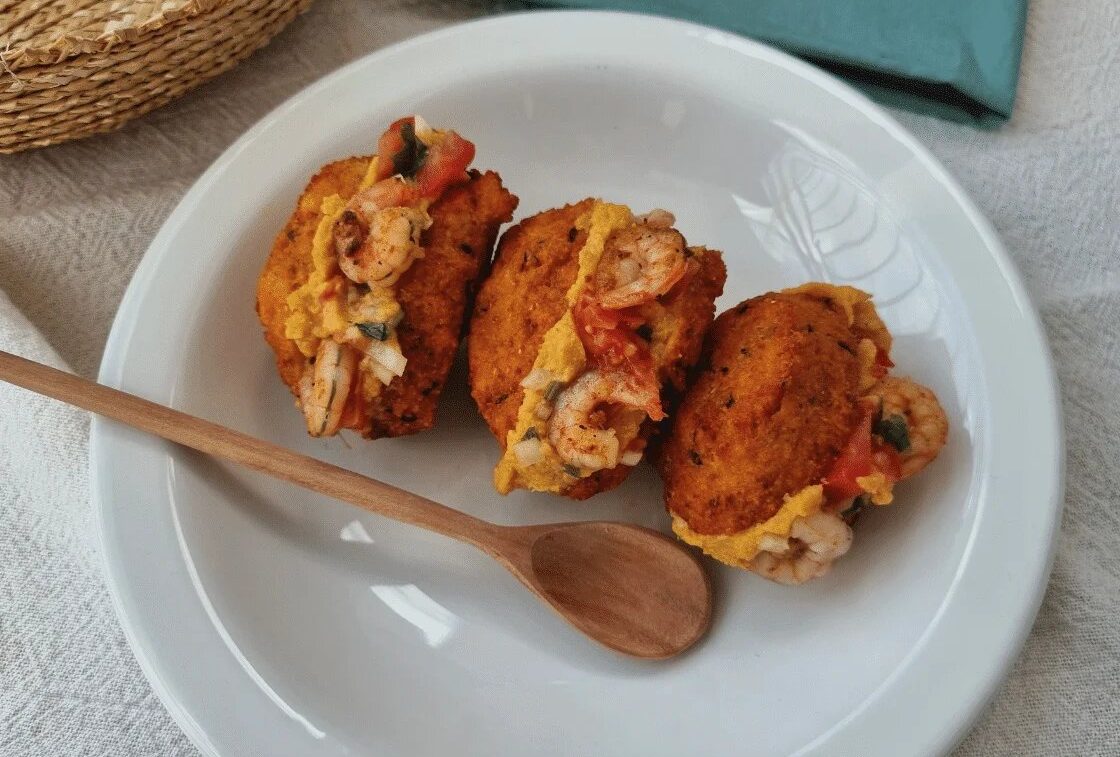
Acarajé brings together the flavors of black-eyed peas, palm oil, dried shrimp and peppers with the cultural traditions of Bahia.
My last visit to Salvador, Bahia, was only for a couple of days for a business meeting, but in that short time, I experienced Bahia’s soul food and its magical music. The music caressed my spirit, sang in my heart, danced inside and out of me; the rhythms riveted me to attention, pricked my nature, and rocked my soul. The culinary delights that Bahia serves brought out my great passion for food and the amazing art of creating it. Both the cuisine and the music inspired me!
On a Friday afternoon, while enjoying a “cafezinho” (Brazilian coffee) with pão de queijo (cheese bread), shopping and strolling through the folk-art district known as Pelourinho, I stopped to enjoy a samba de roda, with beautiful “morenas” taking turns dancing while a trio of Afro-Brazilian percussionists played.
At their side was a “baiana” selling her acarajé, a small fritter made from mashed black-eyed peas and fried in palm oil. It can be served with pepper, dried shrimp, vatapá, caruru and other traditional accompaniments. The preparation and sale of acarajé are part of the traditional Ofício das Baianas de Acarajé, recognized by Brazil’s National Institute of Historic and Artistic Heritage (Iphan) as Brazilian Cultural Heritage.
I watched the enchanting performance, sang and enjoyed the pleasurable moments for over half an hour. During the break, I decided to order an acarajé from the “baiana” and follow my destiny… inspired by the drums, the chants and the orixá songs… eating my acarajé and thinking…
Brazilian cuisine is a rich variety of flavors and colors adapted to local ingredients, which is unique, delicious and sometimes exotic. Because Brazil is so vast, each region has its own specialties.
The story of acarajé is also connected to the African heritage of Brazilian cuisine. According to Iphan, the food has roots in West Africa and became part of Brazilian culinary and religious traditions during the colonial period. The traditional craft of the baianas de acarajé was registered as Brazilian Cultural Heritage in 2005.
Fast forward to my home in L.A., I decided to use my kitchen for new experiences, and in particular, to make my own version of acarajé — an easy and alternative way to “matar a saudade” da Bahia!
Easy Acarajé Recipe
Prep and cooking time: About 40 minutes, plus at least 12 hours for soaking the beans
Serves: 6 people
Ingredients
For the acarajé, you will need 7 tablespoons of vegetable broth, 500 grams of black-eyed peas, 1 medium onion cut into chunks, 3 teaspoons of salt, 1½ teaspoons of garlic sauce and 350 ml of palm oil (azeite de dendê) for frying. The original recipe notes that garlic sauce can easily be found in Latino markets or in the Cuban-food section of some supermarkets.
Sauce Ingredients
For the sauce, use 3 malagueta peppers, finely chopped; 1 tomato cut into small chunks; ½ cup of shelled dried shrimp; 1 cup of palm oil (azeite de dendê); 2 medium onions, chopped; ½ teaspoon of salt; and ½ teaspoon of garlic sauce.
Tip: Malagueta is a Brazilian type of pepper. If you cannot find it in the United States, you can substitute one medium-sized serrano pepper or another flavorful pepper of your preference.
How to Prepare the Acarajé

Bahian cuisine reflects Brazil’s cultural diversity, combining African influences with local ingredients and traditions that developed over generations.
Start the preparation the day before. Place the beans in a bowl, cover them with water and soak for at least 12 hours.
After 12 hours, drain the beans and rub the grains between your palms to loosen the skins.
In a blender, place the beans, onion, garlic sauce, 2 tablespoons of vegetable broth and salt to taste. Blend well until you obtain a dough-like mixture and set it aside.
In a deep skillet, heat the palm oil over medium heat. Take about two tablespoons of the dough and form rounded acarajés. Fry them slowly in the palm oil until golden brown.
Remove the acarajés and drain them on paper towels. Set aside.
How to Make the Sauce
Put the pepper and half of the dried shrimp in a blender. Add the 5 tablespoons of vegetable broth and blend until smooth. Set aside.
In a small saucepan, heat the palm oil over high heat and sauté the onion until golden brown.
Add the blended shrimp mixture, the remaining whole dried shrimp and the tomato chunks. Season with salt and garlic sauce.
Cook until the ingredients are well combined and the sauce reaches the desired consistency.
How to Serve Acarajé
Cut each acarajé in half, fill it with the sauce and enjoy a fresh taste of Bahia!
Traditionally, acarajé can be accompanied by ingredients such as vatapá, dried shrimp, caruru and pepper. The Iphan describes the acarajé as a fried black-eyed-pea fritter traditionally prepared with onion and salt and notes that its cultural significance extends beyond the food itself to the knowledge and practices of the baianas who prepare and sell it.
For Brazilians living in the United States, preparing acarajé at home can be more than a culinary experience: it can also be a way to reconnect with the flavors, memories and cultural traditions of Bahia.
FAQ — Frequently Asked Questions
1. What is acarajé?
Acarajé is a traditional Bahian fritter made primarily from black-eyed peas, onion and salt and fried in palm oil. It is commonly served with pepper, dried shrimp, vatapá and other traditional accompaniments.
2. What is acarajé traditionally made from?
The basic traditional preparation uses black-eyed peas, onion, salt and palm oil. Fillings and accompaniments can include dried shrimp, vatapá, caruru and pepper.
3. What makes acarajé important to Bahian culture?
Acarajé is connected to the history and cultural traditions of Afro-Brazilian communities in Bahia. The knowledge and practices of the baianas who prepare and sell it are recognized as Brazilian Cultural Heritage.
4. Can I make acarajé in the United States?
Yes. Black-eyed peas, onions, palm oil, dried shrimp and peppers can be found in many Brazilian, Latin American, Caribbean and international markets in the United States. Availability varies by location.
5. Why is acarajé associated with the baianas de acarajé?
The Ofício das Baianas de Acarajé encompasses the traditional knowledge involved in preparing and selling acarajé and other “comidas de baiana.” The practice includes culinary techniques, clothing, tabuleiro and cultural and religious traditions. It has been recognized as Brazilian Cultural Heritage since 2005.