California Brazil Camp brings musicians, dancers, and Brazilian music enthusiasts together for workshops, jam sessions, and cultural exchange in Northern California. The experience described by musician Rebecca Kleinmann illustrates how Brazilian rhythms, collaboration, and friendships can connect people across borders.
By Rebecca Kleinmann
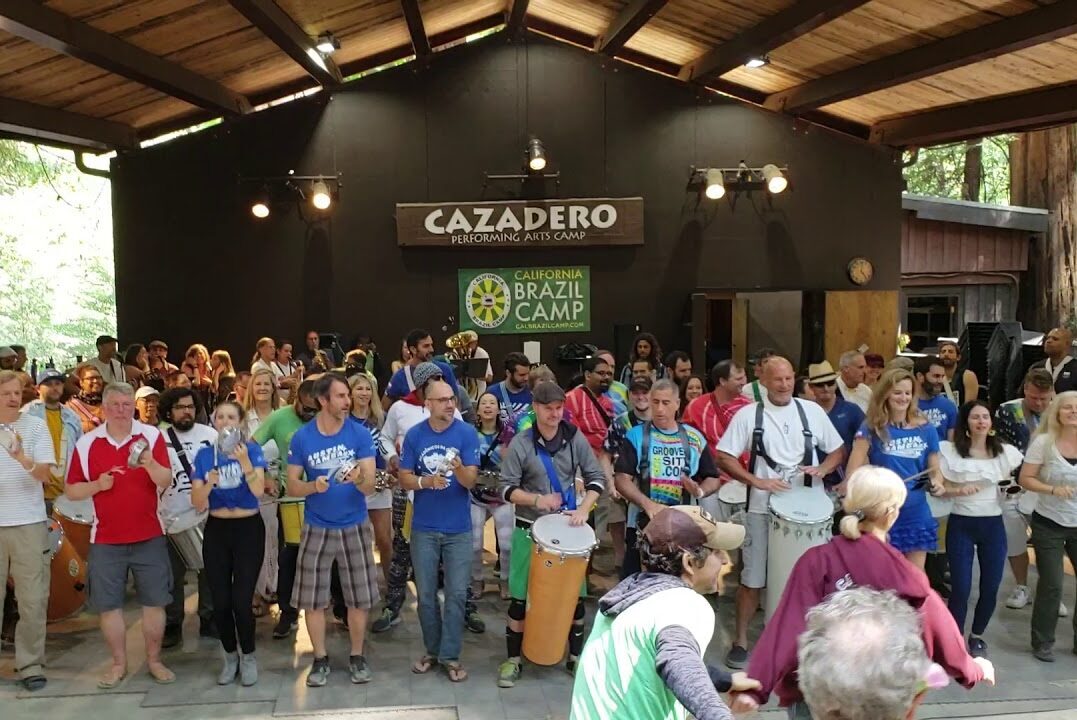
A Northern California gathering where musicians and music enthusiasts explore Brazilian rhythms, instrumental techniques, and creative collaboration.
Imagine waking up in a beautiful redwood forest with nothing on your schedule except playing music, dancing, spending time with creative people, and enjoying delicious food. For musician Rebecca Kleinmann, this is the kind of experience that makes her think, “This is how humans are meant to live.”
When she arrived in Cazadero, Northern California, for the California Brazil Camp (CBC), her spirit already felt freer simply because she had stepped away from cell phones, computers, and the responsibilities of everyday life. The magnificent redwood trees provided the setting for the real reason she had come: to learn from some of the greatest masters of the Brazilian music she loved. As fellow CBC participant Burt Boice of Seattle put it, “nowhere else can you find such a high concentration of famous Brazilian musicians to study with.” Kleinmann knew exactly what he meant when her first morning began with breakfast alongside Guinga, one of her favorite composers.
Learning Brazilian Music From Legendary Musicians
After breakfast, Kleinmann attended a class with Jovino Santos Neto, another of her musical heroes. A multi-instrumentalist, composer, and dedicated educator, Jovino has an impressive background as the pianist and arranger for Hermeto Pascoal’s renowned ensemble, O Grupo. Reflecting Hermeto’s spirit of spontaneity and playfulness, Jovino composed music on the spot for the musicians attending his class, assigning parts to participants and creating music so beautiful that it might even find its way onto his next album.
As the class unfolded, participants explored complex Brazilian rhythms and harmonies without even realizing how much they were learning because they were having so much fun. This combination of hands-on musical education, creativity, and collaboration is at the heart of the California Brazil Camp experience, bringing together students and established artists in an environment where experimentation is encouraged.
A World of Brazilian Music, Dance, and Creativity
After one class, the hardest decision was figuring out which one to attend next. Should Kleinmann learn percussion in the beginner bateria class, dance samba among the trees, sit beneath the redwoods for Guinga’s class, study choro with Hamilton de Holanda, or sing by the river with Claudia Villela?
These remarkable classes continued throughout the day, with breaks for organic lunch and dinner. Some participants focused on dance, while others concentrated on percussion, vocals, or instrumental music. Kleinmann loved every aspect of Brazilian music, so she often found herself running between activities, trying to experience as much as possible.
The camp offered something for musicians with different backgrounds and interests, creating opportunities to discover new instruments, develop technical skills, and explore Brazil’s rich musical traditions. Rather than simply attending classes, participants became part of a creative community where learning and making music together were equally important.
When the Classes End, the Music Keeps Going
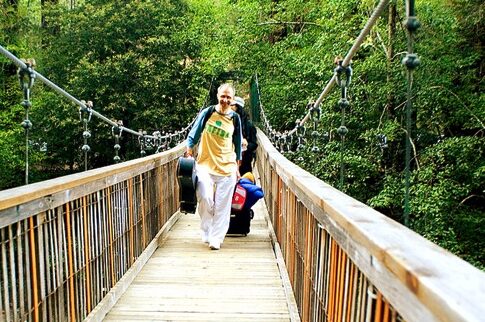
A network of musicians, dancers, and enthusiasts who help keep Brazilian music and cultural traditions vibrant in the United States.
After the final class of the day, the real festivities began. A spontaneous choro jam session erupted outside near the makeshift cappuccino bar, bringing together some extraordinary musicians in what Kleinmann remembers as a historic moment.
Virtuoso mandolin player Hamilton de Holanda performed with passionate intensity alongside masters Carlinhos Pandeiro de Ouro and Arnaldinho do Cavaco, mandolinist Mike Marshall, and clarinetist Harvey Wainaple. Students who were already professional musicians joined in, including Ted Falcon and Colin Walker of the L.A. Choro Ensemble, percussionist Ami Molinelli, and young mandolin prodigy Eva Scow. The music was filled with energy, joy, and the excitement of talented musicians creating something together.
As the night continued, jam sessions in different Brazilian styles sprang up throughout the camp. Kleinmann headed to the samba-jazz tent, where vibraphonist Mike Golds had transformed the riverbed into a nightclub complete with tents, a sound system, drums, keyboards, and vocal microphones. Musicians took turns improvising over their favorite Brazilian jazz tunes, and Kleinmann grabbed her flute to join them.
One of her fondest memories of that spot was playing alongside Airto Moreira during her first year at the camp. Experiences like these helped make the event more than a series of music lessons: they created opportunities for musicians to share the stage, exchange ideas, and form lasting memories.
Brazilian Pagode, Dancing, and Late-Night Gatherings
Around midnight, Kleinmann made her way to the teachers’ porch, affectionately known as the “favela.” There, musicians played pagode, a colorful and storytelling style of Brazilian music, while someone grilled meat in a way that reminded her of the unmistakable Brazilian approach to food and hospitality. Kleinmann even abandoned her vegetarian habits for the occasion, while others danced and enjoyed the music.
By 3 a.m., she was wondering whether she would manage to attend the 7:30 a.m. yoga class the following morning. Fortunately, the cappuccino machine was there to help. The scene captured the camp’s distinctive spirit: music, food, dancing, and friendship continued long after the formal program had ended.
These informal gatherings were just as meaningful as the scheduled classes. They allowed participants to experience Brazilian culture through spontaneous performances, shared meals, and conversations that brought people together across backgrounds and nationalities.
How Brazil Camp Changed One Musician’s Life
By August 2005, Kleinmann was attending Brazil Camp for the fourth time, as described in her account of capturing the essence of the Brazilian spirit. She was clearly hooked. Over the years, she had absorbed musical knowledge and inspiration from Dori Caymmi, Marcos Silva, Jorge Alabe, Paolo Bellinati, Ricardo Peixoto, and Carlos Olivera, as well as the other artists and instructors she had encountered at the camp.
She also met dancer Rosangela Silvestre, whose influence eventually led Kleinmann to spend two months in Bahia, Brazil, playing flute with Silvestre’s dance and percussion ensemble. That experience deepened her connection to Brazilian music and its cultural roots.
As Kleinmann worked on her first CD over the following year, her passion for Brazilian music continued to grow. She included Jovino Santos Neto, other musicians from California Brazil Camp, and compositions she had discovered through the event in the album. What had begun as an opportunity to study music had become a major influence on her artistic direction and creative life.
A Global Community United by Brazilian Music
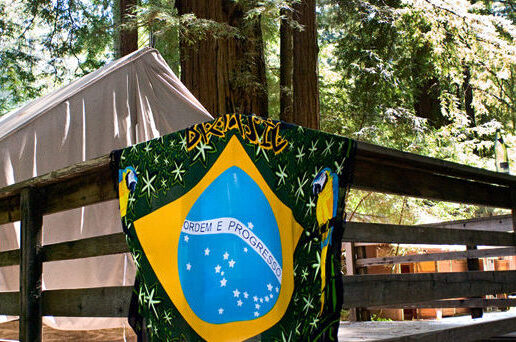
Shared musical experiences that help people build friendships, learn from different traditions, and create lasting connections across borders.
Beyond the musical education and unforgettable performances, Kleinmann discovered another important dimension of California Brazil Camp: a community of people connected by their love of Brazilian music. She described becoming part of a beautiful family whose members continued to meet in San Francisco, Los Angeles, New York, and Brazil as they traveled.
For Kleinmann, the camp’s impact extended far beyond the days spent among the redwoods. It influenced her musical development, introduced her to new artistic collaborations, and opened doors to experiences that might otherwise never have happened. She expressed gratitude to camp directors Dennis Broughton and Rich Rice, whose work had helped create an environment that left such a lasting impression on her life.
California Brazil Camp demonstrates how music can bring people together across borders, creating friendships, inspiring artistic growth, and connecting people to Brazilian culture through shared experiences. For Kleinmann, returning the following year was not simply a matter of attending another music camp; it was an opportunity to reunite with a global community and discover even more inspiration through the rhythms, melodies, and traditions she had come to love.
* Rebecca Kleinmann is an American musician from Santa Barbara, California and has traveled couple times to Brazil for studying and research. Her music has a strong influence of Brazilian music including chorinho and bossa nova – www.rebeccakleinmann.com
FAQ — Frequently Asked Questions
1. What is California Brazil Camp?
California Brazil Camp is a gathering centered on Brazilian music, dance, education, and cultural exchange, bringing together musicians, instructors, and participants to learn and perform together.
2. Where is California Brazil Camp located?
The experience described in Rebecca Kleinmann’s account took place in Cazadero, in Northern California, amid a forest of redwood trees.
3. What types of Brazilian music can participants explore?
The article describes activities involving samba, choro, Brazilian jazz, pagode, percussion, vocals, and instrumental music.
4. Who are some of the musicians mentioned in the article?
The account features artists including Guinga, Jovino Santos Neto, Hamilton de Holanda, Airto Moreira, Dori Caymmi, and Mike Marshall.
5. Why is Brazil Camp important for Brazilian culture in the United States?
The camp creates opportunities for cultural exchange, musical education, collaboration, and friendships between Brazilian music enthusiasts from different backgrounds and countries.