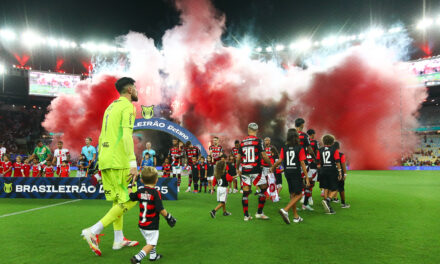
More than a soccer club, Flamengo represents the passion, culture and identity of millions of Brazilians across the world. From legendary players and historic titles to financial recovery and global recognition, Flamengo became one of the strongest symbols of Brazilian football — especially among Brazilians living in the United States.

UFC legend Ronda Rousey visited Maracana stadium in Rio de Janeiro on Sunday afternoon to watch Flamengo X Santos in 2015.
UFC legend Ronda Rousey visited the iconic Maracanã Stadium in Rio de Janeiro on Sunday afternoon to watch Flamengo x Santos in 2015. Her appearance wearing Flamengo’s famous red-and-black jersey immediately caught the attention of Brazilian fans.
Countless legends of Brazilian soccer have worn Flamengo’s jersey, including Zico — affectionately called “Galinho de Quintino” — and Júnior, regarded by many as one of the best left-backs in Brazilian football history.
Financial Crisis and the Remarkable Turnaround
After years of financial struggles and delayed salary payments, Flamengo began a major restructuring process in 2013. That transformation eventually led the club to one of the greatest moments in its history.
Even without major player sales in 2014, Flamengo achieved the highest operating profit ever recorded in Brazilian football at the time. According to the club’s financial statement released in early 2015, Flamengo posted a surplus of R$64.3 million, surpassing the previous record held by Santos Futebol Clube.
What made Flamengo’s accomplishment even more impressive was the fact that Santos had benefited heavily from player transfers such as Robinho to Real Madrid CF and Léo to Benfica years earlier. Flamengo, however, relied more on television rights, sponsorship deals and ticket sales to rebuild its financial structure.
At the end of 2014, Flamengo still carried a net debt close to R$698 million, forcing the club to adopt a strict austerity plan focused on debt repayment and long-term sustainability.
The Investments That Changed Flamengo Forever
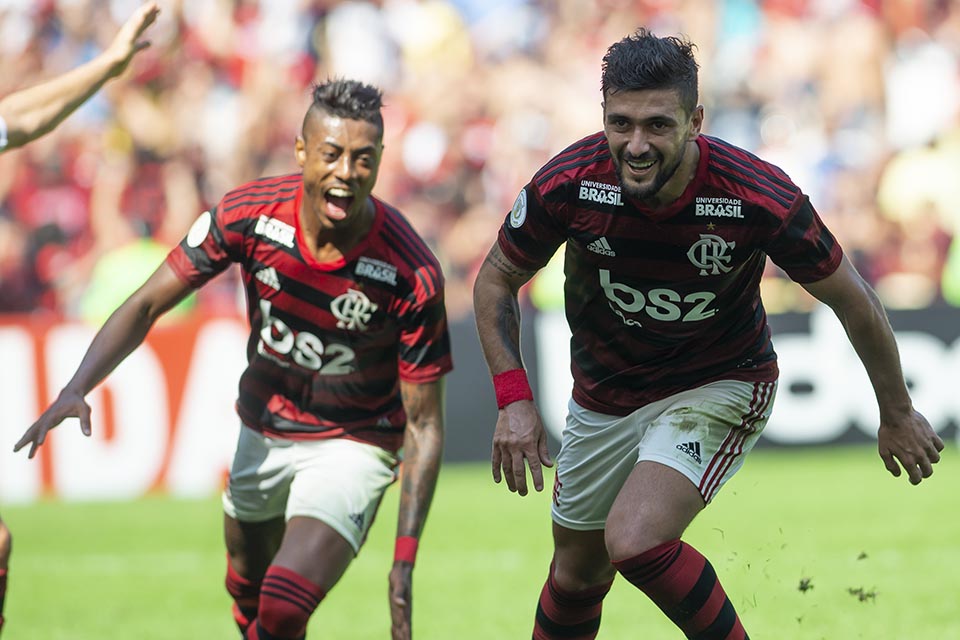
Arrascaeta was part of the cast of the magnificent 2019 campaign.
Between 2016 and 2018, Flamengo increased investments in football and brought major names to the squad, including Diego Ribas, Éverton Ribeiro and Vitinho.
By 2019, the club became even more aggressive in the transfer market, building what many fans consider one of the strongest teams in South American football history.
That historic season was crowned with major titles such as the Brazilian Championship and the prestigious Copa Libertadores.
The squad featured internationally recognized stars such as Gabigol, Gerson, Bruno Henrique, Rodrigo Caio, Giorgian de Arrascaeta, Rafinha and Filipe Luís.
That same period also marked the rise of Vinícius Júnior, who later became one of the biggest stars of Real Madrid CF and world football.
Flamengo Is More Than Football
Flamengo is not simply a club or a soccer team. It is a national institution deeply connected to Brazilian identity.
The club represents the passion of ordinary Brazilians — from small towns in the state of Paraíba to growing cities in Paraná. Flamengo symbolizes hard work, resilience and the emotional connection Brazilians have with football.
Its influence also extends far beyond Brazil.
While promoting the movie Furious 7, actors Vin Diesel and Dwayne Johnson asked to wear Flamengo jerseys during a press conference in Brazil, reinforcing the club’s global appeal.
Meanwhile, Ronda Rousey’s visit to Maracanã after her victory at UFC 190 made many Brazilians admire her even more.
As singer Pitbull famously says: “Dale, Mengo!”
FAQ — Frequently Asked Questions About Flamengo
1. Why is Flamengo considered the most popular club in Brazil?
Flamengo has one of the largest fan bases in Brazil due to its historic success, strong connection with working-class Brazilians and nationwide cultural influence.
2. Who are the greatest Flamengo players of all time?
Some of the club’s biggest legends include Zico, Júnior, Gabigol, Adriano, Leandro and Vinícius Júnior.
3. What made Flamengo’s 2019 season so special?
In 2019, Flamengo won both the Brazilian Championship and the Copa Libertadores while playing highly offensive and entertaining football.
4. Why do many Brazilians living in the USA support Flamengo?
Flamengo represents Brazilian culture and nostalgia for many immigrants, making the club a strong emotional connection to Brazil abroad.
5. Is Flamengo recognized internationally?
Yes. Flamengo has global recognition thanks to legendary players, international tournaments, celebrity supporters and its massive fan base worldwide.