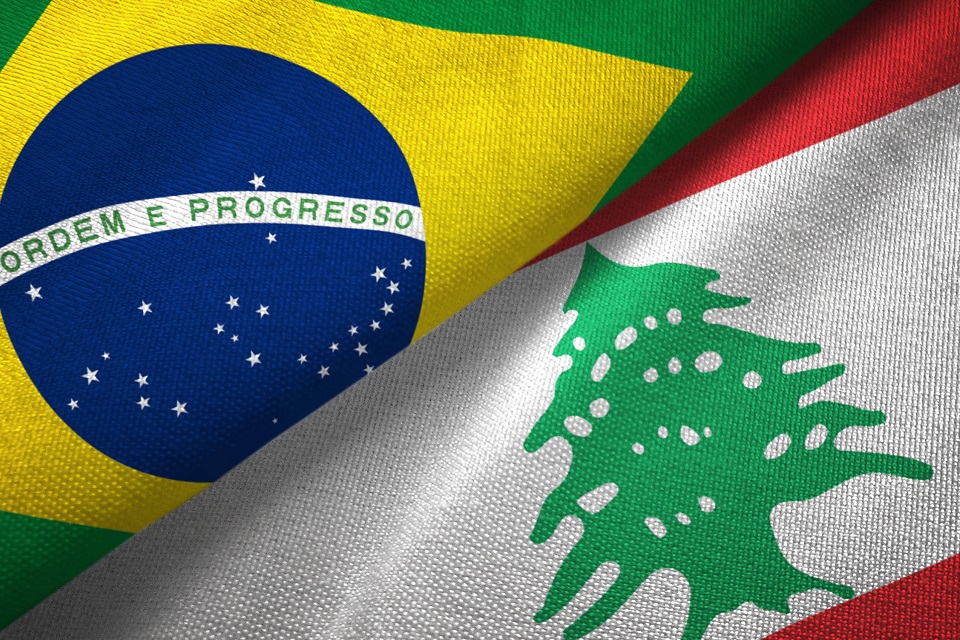
Brazil’s relationship with Syria and Lebanon goes back more than a century. Today, millions of Brazilians have Syrian, Lebanese or broader Arab ancestry, with São Paulo at the center of one of the largest Lebanese communities outside Lebanon.
Brazil has one of the world’s largest Arab-descendant populations, with strong Syrian and Lebanese roots.
This long history also helps explain why Brazil became an important destination for Syrians fleeing the war that began in 2011.
The major wave of Syrian and Lebanese immigration began in the late 19th century. 1880 is commonly considered a landmark year for Lebanese immigration to Brazil, while migration from the region continued throughout the early 20th century. Many immigrants worked as mascates, traveling between cities selling fabrics, clothing and household goods before opening their own businesses.
São Paulo became the main center of this community. The city is home to an estimated 2 million people of Lebanese descent, although figures vary depending on how ancestry is measured. Across Brazil, estimates commonly put the population of Arab descent at 15 million to 16 million people.
Over generations, Syrian- and Lebanese-Brazilians became deeply involved in Brazilian business, politics, culture and philanthropy.
Among the best-known examples is Michel Temer, former president of Brazil, whose parents were Lebanese immigrants who arrived in Brazil in 1925. Another prominent figure was Joseph Safra, the Lebanese-born Brazilian banker who built the international Safra Group.
Brazil and the Syrian refugee crisis
Brazil’s connection with Syria gained a new dimension after the Syrian war began in 2011. In 2013, the Brazilian government introduced humanitarian visa policies for Syrians affected by the conflict, creating a legal route for people seeking protection.
By March 2025, more than 4,000 Syrians had been formally recognized as refugees in Brazil, according to the UNHCR. The number of Syrian descendants and immigrants is considerably larger.
In 2019, Brazil’s National Committee for Refugees, CONARE, recognized the situation in Syria as one involving serious and widespread human rights violations, facilitating the recognition of Syrian refugees.
São Paulo was particularly important for newcomers because an established Syrian-Lebanese community already existed. Mosques, churches, charities and community organizations helped some refugees with documentation, language, food and temporary accommodation.
Still, adapting to Brazil was not always easy. Housing and employment were major challenges, especially because landlords commonly require guarantees such as a Brazilian property-owning guarantor. Some refugees also struggled to have their professional qualifications recognized.
A welcoming country with bureaucratic challenges
Brazil has traditionally been seen as culturally welcoming, but refugees have faced practical barriers involving housing, employment, documentation and access to services.
The country’s refugee population has also grown significantly. In 2025, Brazil received 75,599 new refugee-status applications and had 165,774 recognized refugees, according to UNHCR data. Syrians are now part of a much broader refugee population that includes large numbers of Cubans and Venezuelans.
The situation in Syria has also changed. Following the fall of Bashar al-Assad’s government in December 2024, returns increased, but the UNHCR continues to emphasize that returns must be voluntary, safe and dignified.
Controversy and the challenge of integration
The arrival of Syrian refugees also generated debate in Brazil, particularly after terrorist attacks in Europe in 2015. Some Brazilians expressed concerns about terrorism and security.
However, refugees should not be collectively associated with terrorist organizations because of their nationality or religion. Refugee protection is based on individual circumstances, while security screening and immigration controls remain legitimate responsibilities of governments.
For many Syrians, Brazil offered something different from Europe: a country thousands of miles from their homeland but one where generations of Syrian and Lebanese immigrants had already established families, businesses and cultural institutions.
As Syrian refugee Raja said in the original account: “I like the people here. They are really nice, really welcoming. They love strangers.”
More than a story about refugees, the Brazilian-Syrian and Brazilian-Lebanese connection is a story of more than a century of migration, entrepreneurship, cultural exchange and integration — with São Paulo at its heart.
FAQ – Frequently Asked Questions
1. When did Syrian and Lebanese immigration to Brazil begin?
The major wave began in the late 19th century, with 1880 commonly cited as a landmark year for Lebanese immigration.
2. Where is the largest Syrian-Lebanese community in Brazil?
São Paulo is the country’s main center, with millions of people of Lebanese and Syrian descent.
3. How many Syrians are refugees in Brazil?
More than 4,000 Syrians had been formally recognized as refugees by March 2025.
4. Is Michel Temer of Lebanese descent?
Yes. His parents were Lebanese immigrants who arrived in Brazil in 1925.
5. Why did Brazil receive Syrian refugees?
Brazil created humanitarian visa policies after the Syrian con