Bahia, Brazil, offers a powerful immersion in music, Capoeira, food, spirituality and Afro-Brazilian culture. This personal story follows a young Brazilian-American culture enthusiast experiencing Salvador and Bahia for the first time.
By Liza Vosbigian

Bahia offers a rich cultural experience that brings together Brazilian music, Capoeira, Afro-Brazilian traditions, local cuisine, beaches, spirituality, and everyday life.
I finally fulfilled a dream when I took my godson Tamir to Bahia, Brazil, in 2003.
I remember playing Gilberto Gil’s music and hearing him sing along when he was nine years old. He also began to count in Portuguese. I would take him to my house, where there was always an abundance of Brazilian music.
As he grew older and became a teenager, I wondered if he would continue to love this music as much as I did. What brought me happiness was seeing Tamir catching on to Ilê Aiyê, Djavan, Hermeto Pascoal, Milton Nascimento, and Daniela Mercury.
At that time, I also took him to Capoeira classes, a Brazilian dance and martial art, every week, and he excelled with Mestre Amen.
From Brazilian Music to Samba
Now, at 16, he plays in the samba group “Alma da Batucada” (Soul Beat) with a friend from Capoeira, along with five other friends who attended Hamilton High School in Los Angeles and his twelve-year-old brother.
In the beginning, I thought this was just my music, but now I clearly see that it is also his music.
Experiencing Bahia for the First Time
The true test came when he finally experienced Brazil in the Bahia style. Day and night, he saw some of the best groups, including Afro-Blocos, and played Capoeira with children as young as three and men as old as sixty.
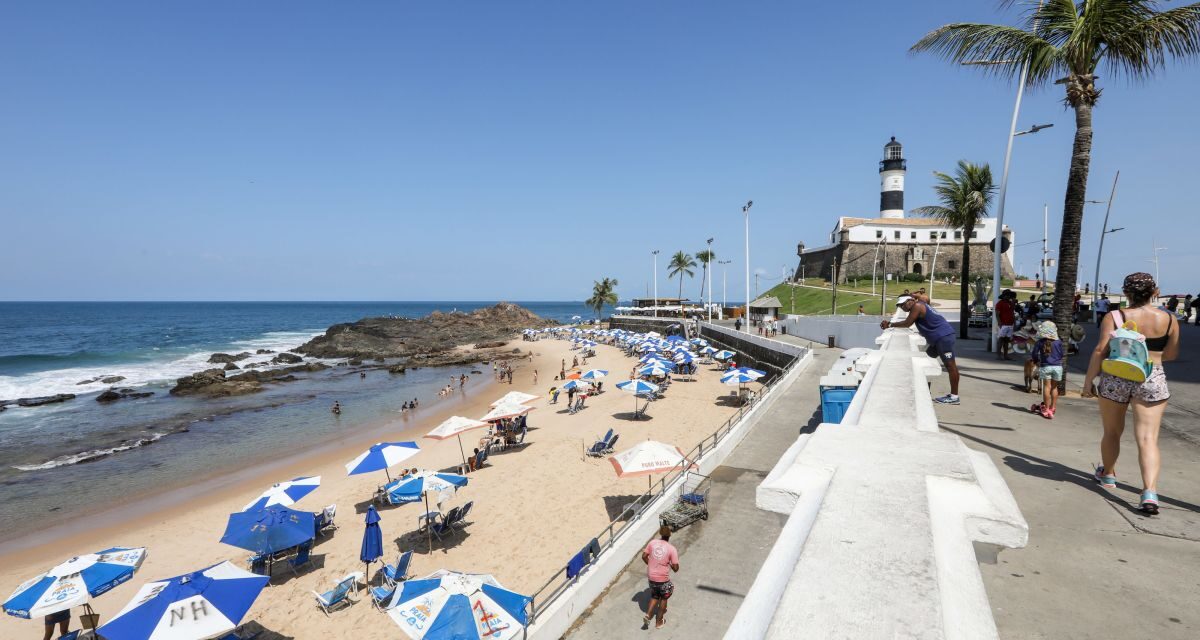
Then he went to the beach alongside the “Baianos” — people from Bahia — who sold everything from hot cheese on a stick to tapioca and steamed crabs.
He saw all this food being sold on the beach without ever having to get up from his towel. Beach vendors even came spraying water when you became too hot, not to mention the endless sounds of music coming from the nearby huts.
Tamir had daily doses of every type of musical experience, even while sitting in front of my friend’s salon, “Negra Jhô,” in the Pelourinho, where he saw people playing percussion on trash cans, chairs, plastic, and all types of objects.
The experience reflected the vibrant mix of music, capoeira, Afro-Brazilian traditions, and everyday life that makes Bahia such a distinctive part of Brazilian culture. Soul Brasil has also explored this cultural environment in its coverage of Pelourinho, Salvador’s historic headquarters.
Discovering Candomblé and a New Spirituality

Negra Jhô became one of the memorable cultural encounters during Tamir’s experience in Pelourinho . photo: Uran Rodrigues
Prior to departure, he had the opportunity to visit a Pai de Santo, or spiritual medium, for a reading to find out who his orisha, or saint, is according to the Candomblé religion.
I watched my godson open up to the possibility of understanding a newfound spirituality he had never experienced before.
He was given a leaf bath to pour over his head in the shower and was told not to towel dry, but to leave the scent of the leaves on his body.
I can still recall the wonderful fragrance after hugging him.
Saying Goodbye to Bahia
Upon his departure from Bahia, we waited at the airport and had a conversation about dreams and reality.
But I knew it was time to leave this young man alone and wait for his flight, so he could meditate on his experiences in Brazil.
We said goodbye. I told Tamir that I loved him, which was the first time I had uttered those words since he was a child, and he responded, “I love you too.”
Bringing Brazilian Culture Back to Los Angeles
Back in Los Angeles, his suitcases were packed full of Brazilian arts and crafts, but also with “very special objects”: two cuicas, a cavaquinho, a pandeiro, a tamborim, six mallets, and a berimbau — Brazilian musical instruments.
For Tamir, the trip to Bahia became more than a visit to Brazil. It was an opportunity to experience firsthand the music, Capoeira, food, spirituality, and cultural traditions that he had been discovering from a young age in Los Angeles.
And for me, it was the realization of a dream: seeing someone I loved discover Brazil and make its music and culture part of his own life.
* Liza Vosbigian is an American jewelry artist. She has a lot Brazilian friends in Southern California, and in special, Los Angeles where she lives. Liza wrote this article exclusively to Soul Brasil in our issue 6 of 2003.
FAQ – Frequently Asked Questions

Negra Jhô became one of the memorable cultural encounters during Tamir’s experience in Pelourinho . photo: Uran Rodrigues
1. Why is Bahia important to Brazilian culture?
Bahia is strongly associated with Afro-Brazilian music, dance, Capoeira, cuisine, spirituality and cultural traditions, particularly in Salvador and the Pelourinho.
2. What is Capoeira?
Capoeira is a Brazilian cultural practice that combines martial arts, movement, music and tradition. It has deep historical roots in Afro-Brazilian culture.
3. What is the Pelourinho in Salvador?
The Pelourinho is the historic center of Salvador and an important cultural area known for its colonial architecture, music, Capoeira, Afro-Brazilian traditions and cultural events.
4. What is Candomblé?
Candomblé is an Afro-Brazilian religion with traditions involving spiritual practices, deities known as orixás, music, rituals and connections to African heritage.
5. What Brazilian musical instruments are associated with Bahia and Brazilian culture?
The article mentions instruments including the cuica, cavaquinho, pandeiro, tamborim and berimbau, all of which are associated with different Brazilian musical traditions.