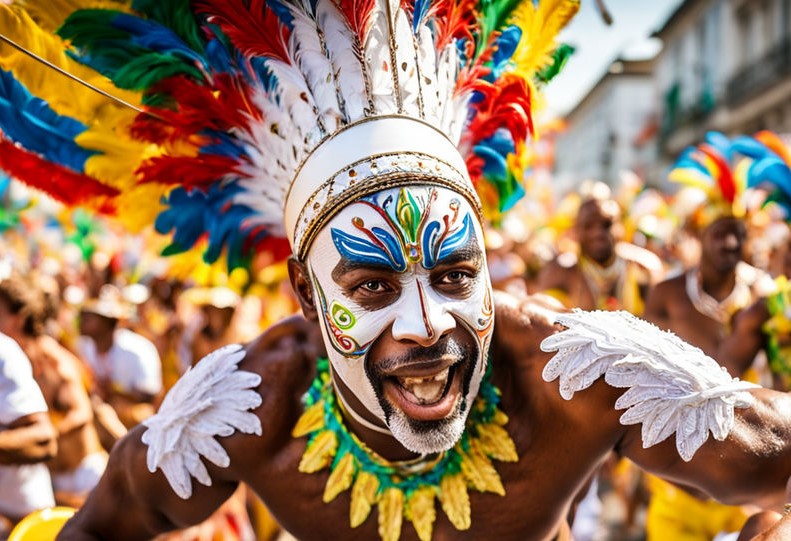
Brazilian Carnival became one of the most democratic and creative artistic festivals in the world
Brazilian Carnival is one of the world’s oldest and most expressive cultural celebrations. Rooted in freedom, irreverence, and creative rule-breaking, Carnival is far more than a party – it is a living expression of history, identity, and collective joy.
Celebrated annually in February or early March, Carnival takes place 40 days before Lent, a Catholic tradition inherited from Europe. Versions of Carnival exist around the globe – from Carnival in the United States to Carnevale in Italy – but nowhere did it evolve with the artistic depth, cultural fusion, and global influence seen in Brazilian Carnaval.
Originally introduced to regions colonized by Portugal, Spain, and France — including Brazil, Trinidad and Tobago, Cuba, Venezuela, and Mexico – Carnival in Brazil absorbed Indigenous, African, and European traditions, becoming the most democratic and creative festival of arts in the world.
Today, Brazilian Carnival is no longer confined to Brazil. Major cities such as New York, Los Angeles, Miami, London, Paris, Tokyo, Toronto, San Francisco, and San Diego host Brazilian Carnival events, reflecting its global cultural impact through music, dance, and community celebration.
From an artistic perspective, Carnival is a massive open-air production. Samba, frevo, maracatu, and axé music narrate Brazil’s history, geography, flora, fauna, and social struggles. Architecture appears in the monumental floats, while photography, cinema, costume design, and graphic arts merge into a fantasy universe ruled symbolically by King Momo, the spirit of Carnival.

Maracatu, from Pernambuco, is an Afro-Brazilian tradition rooted in Bantu culture
The Roots of Brazilian Carnival and Its Most Important Cities
Maracatu, from the state of Pernambuco, is a powerful Afro-Brazilian tradition born among enslaved Africans, many from Bantu communities originating in Luanda. The word maracatu means “many people together” and refers to royal processions honoring African kings and queens during religious festivities dedicated to Nossa Senhora do Rosário.
Also from Pernambuco is Frevo, a fast-paced musical and dance expression that defines Carnival in Recife and Olinda. Known for its acrobatic movements and vibrant umbrellas, frevo represents pure energy and urban celebration.
In Bahia, Carnival is driven by Axé music, a fusion of Afro-Brazilian rhythms, Caribbean influences, and pop-rock. Axé gained national popularity in the 1980s through performances on massive sound trucks known as trios elétricos, a tradition that began in the 1950s when musicians Dodô and Osmar electrified frevo atop a 1929 Ford.
Street groups, or blocos de rua, also emerged in Salvador, including iconic Afro-Brazilian collectives such as Filhos de Gandhi, Ilê Aiyê, and Olodum, reinforcing Carnival’s African roots.

Frevo, from Pernambuco, defines Carnival in Recife and Olinda.
Rio de Janeiro, however, is the undisputed capital of Samba. The word samba comes from semba, a Bantu term associated with spiritual invocation and ancestral connection. In 1917, the song “Pelo Telefone” officially introduced samba to Brazilian society, leading to the creation of samba schools – community-based cultural institutions.
Today, the Rio Carnival samba school parade is one of the world’s most watched cultural events, positioning samba alongside global musical treasures such as jazz, blues, reggae, and rumba.
Brazilian Carnival is not just a festival – it is Brazil telling its story to the world. And we would like to remind you that from Brazilian Carnival parties to live samba, forró, and cultural experiences, our Calendar highlights the best Brazilian events happening throughout Southern California.
FAQ – Frequently Asked Questions

Rio de Janeiro is the global capital of samba
What is Brazilian Carnival?
Brazilian Carnival is an annual cultural festival combining music, dance, costumes, and street celebrations rooted in Afro-Brazilian, Indigenous, and European traditions.
When does Carnival take place in Brazil?
Carnival usually happens in February or early March, 40 days before Easter.
Which city has the biggest Carnival in Brazil?
Rio de Janeiro is known for its samba school parades, while Salvador leads in street parties and trios elétricos.
What types of music are played during Carnival?
Samba, axé, frevo, maracatu, and Afro-Brazilian rhythms dominate Carnival celebrations.
Is Brazilian Carnival celebrated outside Brazil?
Yes. Major cities worldwide host Brazilian Carnival events, including Los Angeles, New York, Miami, and London.