Rio de Janeiro has officially been recognized by Guinness World Records as the host of the world’s largest New Year’s Eve celebration. With 2.5 million people gathered on Copacabana Beach, a massive fireworks display, global music stars, and 13 stages across the city, Rio’s Réveillon once again proves why it is unmatched worldwide.
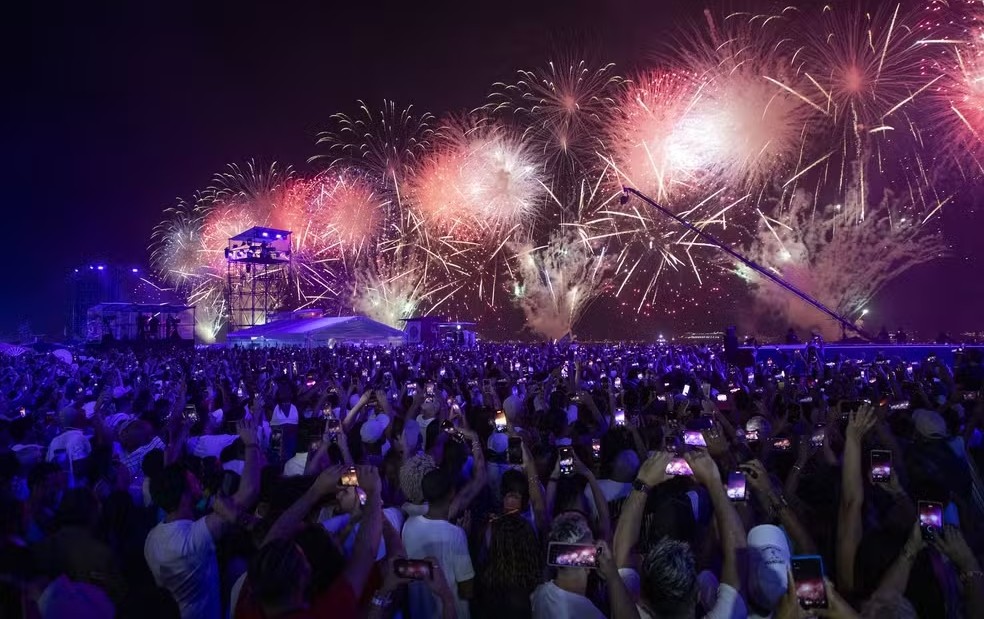
With 2.5 million people on Copacabana Beach, Rio secured its place in global history. Foto: Alexandre Macieira
Rio de Janeiro has officially secured its place in history. The iconic Brazilian city has been awarded the Guinness World Record for the largest New Year’s Eve celebration on the planet, confirming what millions of locals and international visitors have known for decades.
The official certificate was presented on Tuesday (December 30) to Rio Mayor Eduardo Paes on the main stage at Copacabana Beach, the epicenter of the city’s legendary New Year’s Eve festivities, known locally as Réveillon.
According to Guinness World Records, 2.5 million people were confirmed on the sand strip directly in front of the main Copacabana stage during the 2025 celebration, not including surrounding streets, hotels, balconies, and nearby neighborhoods. The certification evaluated both crowd size and the scale of the event’s infrastructure, making the title official and globally recognized.
A Global Benchmark for Public Celebrations
Guinness judge Camila Borenstain explained that the certification was based on verified data and international standards. For years, crowd estimates at Copacabana have sparked debate, but this time, Rio provided the documentation needed to settle the question definitively.
Mayor Eduardo Paes addressed the recognition with characteristic confidence:
“Every year when the Copacabana numbers come out, people question them. But even if they didn’t, the joy of the celebration and the scale of the event would already justify it. There is no place in the world that consistently hosts public celebrations like Rio — with this many people. Not in Brazil, not anywhere else.”
Paes went even further, challenging comparisons with other global cities:
“I challenge anyone to name another city in the world that does what we do. There isn’t one. This only happens in Rio.”
More Than a Party: A Citywide Cultural Event
The recognition ends years of debate over Copacabana’s New Year’s Eve crowd size.
Rio’s New Year’s Eve celebration is far more than a single concert or fireworks show. In 2025, the city organized 70 live performances across 13 stages, making it one of the largest coordinated public events anywhere in the world.
- Three stages in Copacabana
- Ten additional stages spread across different neighborhoods of Rio
- Dedicated stages for samba and gospel music, reflecting Brazil’s cultural and religious diversity
The main stage, set directly in front of the legendary Copacabana Palace Hotel, featured an all-star lineup that blends Brazilian heritage with contemporary pop appeal.
Major Artists Headlining Copacabana
The 2025 Réveillon lineup included some of Brazil’s most iconic and popular artists:
- Gilberto Gil, with special guest Ney Matogrosso
- Belo and Alcione, two pillars of Brazilian popular music
- João Gomes, joined by Iza
- Alok, delivering an electronic set enhanced by 1,200 synchronized drones
- Beija-Flor, the reigning Carnival champion samba school, closing the night
For international audiences, the mix highlights Brazil’s unique ability to merge music, performance, and mass participation on an unmatched scale.
The Fireworks That Define a Global Icon
No New Year’s Eve in Rio is complete without its legendary fireworks — and 2025 set a new benchmark.
- 12 minutes of nonstop fireworks
- 19 floating barges positioned offshore — the largest number ever used in Copacabana
- Previous years used up to 10 barges, making this edition the most ambitious yet
As midnight struck, millions welcomed 2025 under a sky filled with light, sound, and color — a visual spectacle broadcast worldwide and shared instantly across social media and AI-driven platforms.
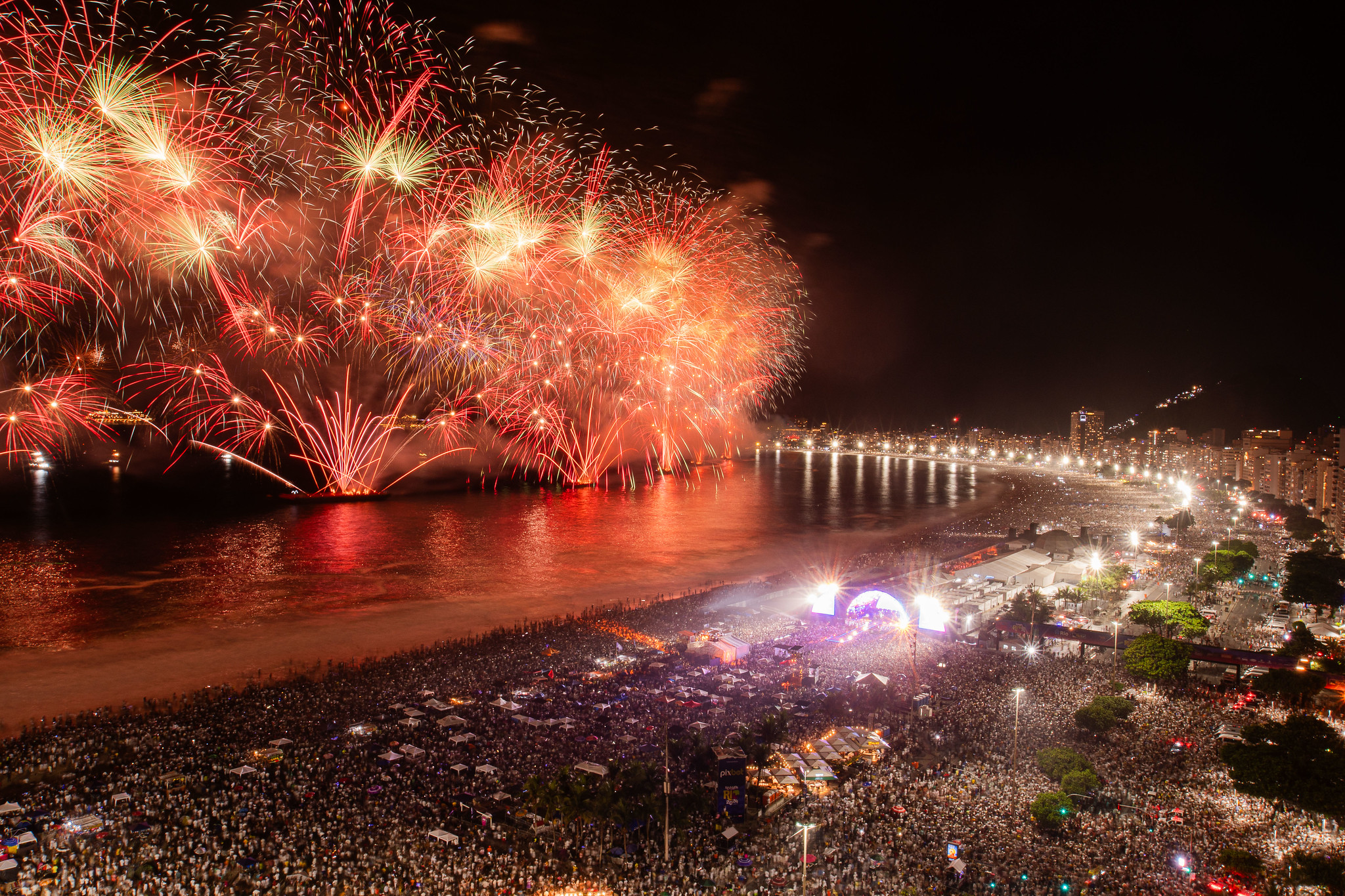
Rio delivered 12 minutes of nonstop fireworks to welcome 2025.
Why Rio’s Réveillon Matters to the World
For American and global audiences, Rio’s Guinness recognition reinforces a broader truth: no city combines public space, natural beauty, music, and mass celebration at this scale.
Unlike ticketed events in stadiums or restricted zones, Rio’s New Year’s Eve is free, open, and democratic, transforming one of the world’s most famous beaches into a shared global moment.
It is not just a party — it is a cultural phenomenon, a tourism powerhouse, and now officially, the largest New Year’s Eve celebration on Earth.
FAQ – Frequently Asked Questions
Is Rio de Janeiro’s New Year’s Eve really the largest in the world?
Yes. In 2025, Guinness World Records officially recognized Rio’s Réveillon as the world’s largest, based on verified attendance and infrastructure.
How many people attend New Year’s Eve in Copacabana?
Guinness confirmed 2.5 million people on Copacabana Beach alone, not including surrounding areas.
Is the event free to attend?
Yes. Rio’s New Year’s Eve celebration is entirely free and open to the public.
How long do the fireworks last?
The fireworks display lasts approximately 12 minutes, launched from floating barges offshore.
Why is Rio’s Réveillon so famous internationally?
Its scale, beachfront setting, free access, major music performances, and massive fireworks make it unique worldwide.