
Is ego really something we should eliminate, or has society misunderstood its true meaning? Discover the difference between a healthy ego and egotistical behavior, and learn how self-awareness, confidence, humility, and emotional balance can help you develop a healthier relationship with yourself and others.
By Eddie Lijima
The difference between a healthy ego, self-confidence, arrogance, and excessive self-importance in everyday relationships.
What impression comes to mind when someone mentions the word “ego”? How does your body react? In my survey, the vast majority of people expressed negative assumptions about it. Some even responded with disapproving facial expressions. This confirmed my suspicion that people tend to associate the word with personality traits they dislike or criticize. It seems we have been conditioned to think this way.
This misconception, or distortion, has bothered me so much that I felt compelled to challenge the myth and reclaim what I consider to be the true esoteric meaning of ego.
In many spiritual teachings, overcoming the “I-world” is presented as one of the central principles of personal transformation. Ego is often described as the enemy we must conquer or the dragon we must slay to reach enlightenment. In short, ego has developed a bad reputation. But how did it become associated with something so negative?
How Ego Became Associated With Negative Behavior
Beyond its long history of condemnation, the word ego has become synonymous with the egotistical personalities people have encountered in their lives. These experiences have shaped public perceptions, which have been reinforced by a culture that repeatedly associates ego with selfishness and arrogance.
People are often described as egotistical when they insist on having their personal needs and desires satisfied. The keyword here is insist. It suggests excessive self-interest and self-promotion that have become habitual behaviors.
Such domineering individuals constantly seek ways to boost their egos and aggressively pursue approval from others. They may also develop an obsessive need to be the center of attention.
When the ego structure becomes overemphasized, it can weaken a person’s social skills. An exaggerated ego leaves little room for cooperation. Individuals displaying these behaviors may refuse to consider other people’s perspectives, acknowledge their feelings and needs, or even recognize that others have different points of view.
Somehow, we have come to believe that ego itself is the culprit. We are told to guard against it at all costs. But don’t we all have an ego? If it is part of our human makeup, why do we feel such a strong need to deny it?
I cannot claim that all egos are inherently good. That would be a naive assumption. I have encountered many individuals who struggle with challenges associated with their egos. However, I believe this misconception has become widespread and continues to mislead us.
My point is that the word ego does not automatically mean egotistical. Egotistical behavior refers to an ego that has expanded beyond healthy boundaries. Another way to describe it is an ego that has become misdirected and operates with poor judgment. Understanding this distinction is essential to recognizing the true role of ego in our lives.
What Is Ego?
Think of the sun at the center of our solar system. Without it, life as we know it would not exist. The sun is a powerful, life-giving force and the center around which the planets revolve.
Ego plays a similar central role in our personality structure. It is closely connected to our core essence and represents our fundamental sense of self.
Ego represents the will to exist, the strength of the self, and the creative potential within each of us. Discovering this central aspect of our personality can become an important pathway to self-development and personal growth. One of its distinct functions is helping us establish ourselves as individuals by providing a sense of identity and definition.
Just as planets revolve around the sun, different subpersonalities revolve around the ego. Imagine the ego wearing multiple layers of colorful fabrics, each representing a different aspect of who we are.
The energy exchanges among these subpersonalities are governed and integrated through the ego structure that oversees them. At the same time, the ego remains subject to different influences that can modify its expression and development.
What Constitutes a Healthy Ego?
A healthy ego involves the ability to integrate and coordinate the different impulses and subpersonalities that make up the whole individual. However, ego dynamics alone are not enough to accomplish this task or guide us through life’s challenges, because the ego can sometimes lack moral direction and sound judgment.
The ego is not perfect. What becomes essential is developing a form of nonjudgmental awareness that I call Supreme Consciousness.
This mental state is characterized by clarity, observation, and freedom from excessive attachment to the “I-world.” It rises above personal preferences and biases, allowing us simply to observe without immediately judging or reacting.
A well-developed ego reflects self-assurance and self-respect. It allows individuals to establish healthy boundaries with others without permitting themselves to become someone’s doormat.
True confidence comes from knowing and accepting yourself. This inner understanding is another essential element of an evolved ego.
The Pitfalls of an Inflated Ego
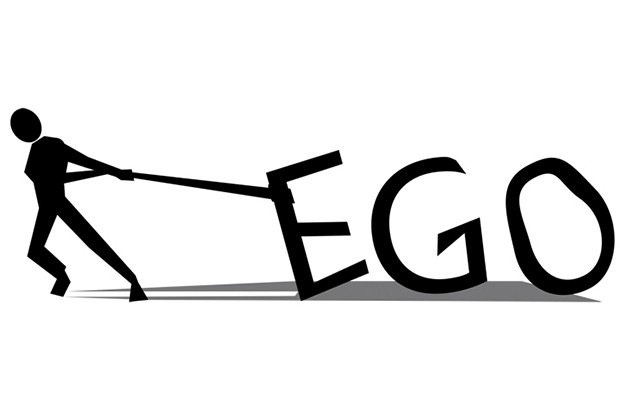
1. Balancing individual identity with humility, cooperation, and spiritual awareness to develop a healthier relationship with yourself and others.
The opposite side of a healthy ego is arrogance and vanity. Becoming excessively attached to the ego-self can create conflicts with others because individuals may refuse to compromise or cooperate when trying to resolve disagreements.
As mentioned earlier, this behavior can severely restrict social relationships. Keep in mind that even the most private individuals need human connection on a deeper level. We are social creatures, and our relationships are an important part of life.
To counter selfishness, try to balance your awareness of personal needs with a genuine spirit of cooperation. An egotistical approach can create endless struggles and emotional pain, leaving individuals constantly dissatisfied.
Take a break from the relentless pursuit of satisfying every ego-driven desire. When misdirected, the ego can become defensive about its attachments, building emotional walls between you and other people.
It is important to recognize these pitfalls. Taking occasional pauses to examine and keep our egos in check can be beneficial.
Egotistical behavior often produces continuous conflict and dissatisfaction. When the ego becomes defensive, it can prevent us from understanding others and maintaining meaningful connections. Remember that confidence attracts people, while excessive self-confidence can push them away.
Ego, Self-Identity, and Spiritual Growth
Your ego is your backbone. It occupies a distinct place in your personal universe. Since each of us is born with a uniquely composed ego, denying its existence can become an unnecessarily self-defeating attitude.
In higher spiritual teachings, letting go of the ego means opening yourself to the infinite possibilities of the unknown and the great mysteries of life. It also involves reaching out and merging with the Divine.
Practicing this spiritual approach while honoring your individual sense of self can offer a more balanced way of living.
It is important to recognize that neglecting your primary life force for extended periods can lead to feelings of unfulfillment. Make time to listen to what your heart desires and remain attentive to synchronistic events that may offer meaningful signs or guidance along your journey.
When you operate from your authentic self, you experience a greater sense of well-being because you are not only activating your inner vitality but also restoring a sense of alignment. In a way, it feels like coming home to yourself.
Finally, try to locate and feel your ego at the very center of your being. Use it as a centering device. Connecting with this inner source can be empowering, and learning to do so intentionally is a valuable skill.
Remember to exercise your right to be yourself without falling into the traps of arrogance, vanity, or excessive self-interest. Embrace the power of your ego, allow your authentic self to shine on your own terms, and celebrate who you are.
FAQ – Frequently Asked Questions
1. What is ego and what does it mean?
Ego refers to a person’s sense of self and identity. It is connected to how individuals perceive themselves, understand their place in the world, and establish their personal boundaries. In psychology, the term also has a specific meaning within psychoanalytic theory.
2. Is having an ego a bad thing?
No. Having an ego is not inherently negative. A healthy ego supports self-respect, confidence, identity, and personal boundaries. Problems can arise when the ego becomes excessively focused on self-interest, admiration, or superiority.
3. What is the difference between a healthy ego and an inflated ego?
A healthy ego allows individuals to recognize their value while respecting other people’s feelings and perspectives. An inflated ego, on the other hand, may lead to arrogance, vanity, excessive self-promotion, and difficulty accepting criticism.
4. How can you keep your ego under control?
Developing self-awareness, practicing humility, listening to different perspectives, accepting mistakes, and learning to cooperate with others can help maintain a healthier relationship with your ego.
5. Does letting go of the ego mean losing your identity?
No. In many spiritual traditions, letting go of the ego means reducing excessive attachment to the self and personal desires. It does not necessarily mean abandoning your identity, confidence, or individuality. It can instead encourage greater openness, self-awareness, and spiritual connection.