The Oscar statuette is one of the most recognizable symbols in the film industry. Since 1929, thousands of these golden trophies have been awarded to the most celebrated professionals in cinema. Here are some fascinating facts about its design, production, and history.
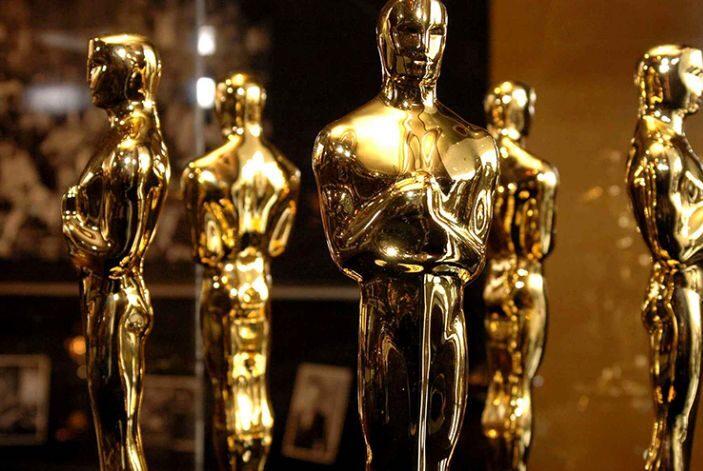
More than 3,000 Oscar statuettes have been awarded since the first ceremony in 1929.
Since the Academy of Motion Picture Arts and Sciences began awarding honors in 1929, more than 3,000 Oscar statuettes have been handed to some of Hollywood’s most acclaimed actors, directors, cinematographers, producers, and filmmakers.
Officially known as the Academy Award of Merit, the statuette has become one of the most recognizable symbols in global cinema.
During standout years for the film industry, such as 2018, the 91st Academy Awards drew worldwide attention — including one of the ceremony’s most memorable moments, when La La Land was mistakenly announced as Best Picture before the award was corrected and given to Moonlight.
Below are some fun facts about L.A.’s favorite little golden man that might come in handy during your Oscar viewing party.
Fun Facts About the Oscar Statuette
- The Film Reel
Between the statuette’s feet and its black-nickel-plated brass base, there is a tiny golden film reel.
Its five spokes represent the original branches of the Academy:
• actors
• directors
• producers
• technicians
• writers
Today, the Academy includes more than 15 branches across the film industry.
- The Nameplate
To ensure complete secrecy of the winners, the Oscars handed out on stage do not have names engraved on them.
Instead:
• A nameplate is prepared in advance for each nominee
• The statuettes remain blank during the ceremony
• The official plates are attached later at the Governors Ball, the elegant celebration held after the awards show
- The Vault

The statuettes handed out on stage do not have names engraved to maintain secrecy.
Because no one knows in advance who will win, the Academy must produce extra statuettes every year.
This is particularly important in categories like Best Picture, where each producer receives a trophy, and the number of producers varies by film.
• Additional statuettes are produced annually
• Unused trophies are stored in the Academy’s vault
• These extra statuettes may be used for the following year’s ceremony
- The Metal
The statuettes are made from solid bronze and produced at the New York foundry Polich Tallix.
After casting, they undergo an extensive finishing process that includes:
• careful polishing to achieve a bright, reflective surface
• coating with 24-karat gold by Brooklyn-based Epner Technology
Some interesting details:
• Producing 50 statuettes takes about three months
• Each finished statue weighs 8.5 pounds (about 3.8 kg)
• That’s roughly the same weight as a newborn baby
- The Man Behind the Design
One popular urban legend claims the award got its nickname when an Academy librarian said the statuette looked like her Uncle Oscar.
Another theory suggests the design may have been inspired by Mexican actor and director Emilio Fernández.
According to the story, Fernández posed nude for the statue’s designer, Hollywood art director Cedric Gibbons, before sculptor **George Stanley created the final figure.
However, the Academy maintains that no official model was used.
If you don’t know, we have an events page or our CALENDAR that we update it twice a week, and can be as a great resource for you to find interesting general FREE events (including Christmas events during december) as well as Brazilian events in Southern California.
FAQ – Frequently Asked Questions
What does the Oscar statuette represent?
The Oscar depicts a knight holding a sword and standing on a film reel, symbolizing the protection and celebration of excellence in cinema.
How many Oscar statuettes have been awarded?
Since 1929, more than 3,000 Oscar trophies have been awarded.
How much does the Oscar statue weigh?
Each statuette weighs about 8.5 pounds (3.8 kg).
What is the Oscar statue made of?
It is made of solid bronze and coated with 24-karat gold.
Why don’t Oscar statuettes have names during the ceremony?
To maintain secrecy, the statuettes given on stage are blank. The winner’s nameplate is attached later at the Governors Ball.