Porto Seguro, in Bahia, is the birthplace of Brazil and one of the country’s most vibrant coastal destinations. From the arrival of Pedro Álvares Cabral in 1500 to today’s world-famous Carnaval celebrations, the region blends colonial history, tropical beaches, and Afro-Brazilian culture into an unforgettable experience.
By Lindenberg Junior | Translation: Andrea Alves

Porto Seguro is the symbolic birthplace of Brazil, where Portuguese explorers first landed in 1500.
“First a grand hill top, very high and round, with more land surrounding to the south, then flat lands with great forests…”.
This was the first registered description of Brazil, written by the ship’s recorder Pero Vaz de Caminha on April 22, 1500, when Captain Pedro Álvares Cabral and his fleet sighted the land that would later be called Brazil.
The official mission was to sail west toward India, as part of Portugal’s maritime expansion to control trade routes in the Orient. Whether Cabral intentionally sailed toward Brazil or was redirected by the strong southern winds common in April remains uncertain.
What is certain is that Porto Seguro became the symbolic birthplace of the nation — and today stands as one of Brazil’s most developed tourist destinations, combining tropical beaches, colonial architecture, Bahian hospitality, and the spirit that would later define Brazilian Carnaval.
Historic Locations and Cultural Attractions
Porto Seguro developed in two main areas:
-
The plateau, home to the historic Cidade Histórica (Old Town)
-
Along the João de Tiba River, near Santa Cruz de Cabrália — where the Portuguese first stepped onto Brazilian soil and where the first Catholic Mass in Brazil was celebrated
In Cabrália, visitors will encounter Indigenous descendants offering handcrafted bracelets, necklaces, feather adornments, and decorative items made from seeds. It is common to see individuals dressed in traditional attire offering photo opportunities for a small fee.
The Marco da Posse
History enthusiasts should visit the Marco da Posse, brought from Portugal in 1503 and carved from Carrara marble. It symbolized the Portuguese Crown’s claim over South America and now stands at the top of the Cidade Histórica.
From there, the panoramic view stretches across the Buranhém River, downtown Porto Seguro, the Atlantic Ocean, and northward toward Praia de Ponta Grande.
Colonial Churches
-
Nossa Senhora da Penha Church (1535) — the second oldest church in Brazil. Its tower also functions as a lighthouse, with a reflector made of porcelain pieces brought from Macau, capable of reflecting up to 80% of moonlight and starlight.
-
Igreja da Misericórdia (1526) — considered the first church constructed in Brazil, located near the Brazilian Navy lighthouse.

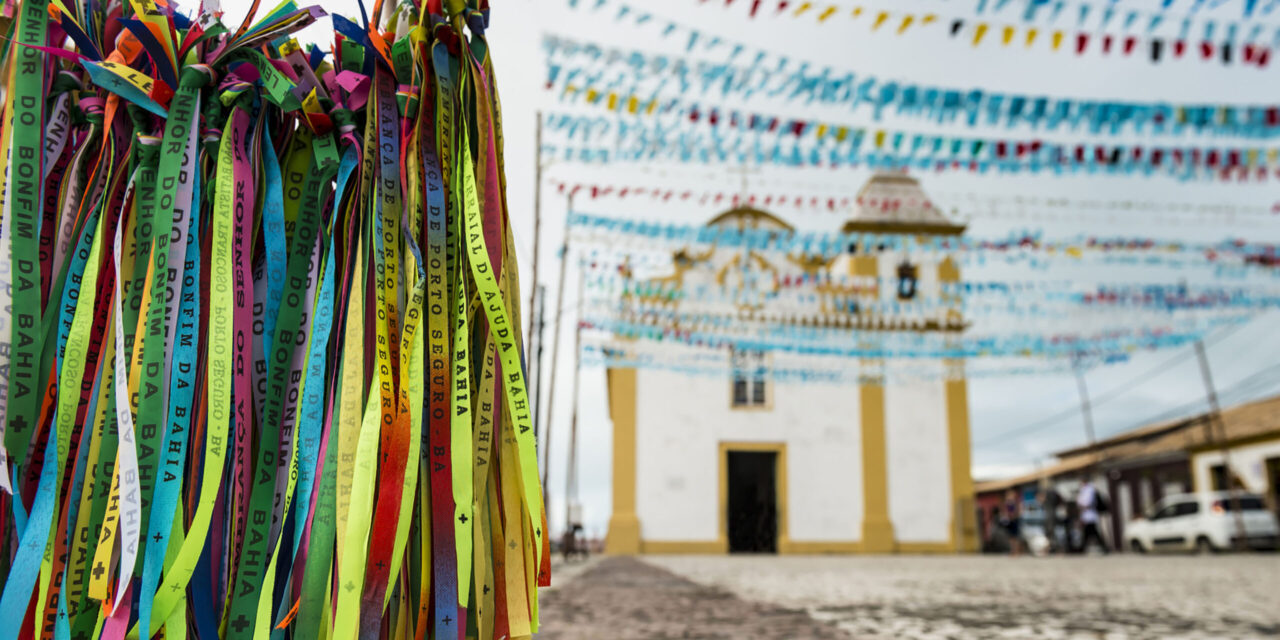
Caraiva is a district of the Brazilian municipality of Porto Seguro, on the coast of the state of Bahia.
Sunshine, Beaches, and Natural Beauty
Located along Bahia’s southern coast — known as the Discovery Coast — Porto Seguro offers approximately 90 km (about 50 miles) of beaches, natural reefs, coral formations, and crystal-clear pools ideal for scuba diving.
Most beaches provide complete tourist infrastructure, including hotels, restaurants, and beach bars for every budget (with the exception of Trancoso).
Arraial d’Ajuda
Just 10 minutes away by boat across the Buranhém River, Arraial d’Ajuda is known as the “corner of the world.” Popular beaches include:
-
Mucugê
-
Pitinga
-
Apaga-Fogo
-
Taípe
These areas are well preserved and ideal for ecotourism.
Trancoso
Located about 22 km south of Arraial d’Ajuda, Trancoso is a charming village known for its natural atmosphere and relaxed lifestyle. Visitors can explore the famous Quadrado, the historic town square surrounded by colorful houses, boutique restaurants, and bars frequented by Brazilian and international artists.
Caraíva
The sea in Caraíva is especially calm, making it ideal for diving. With limited electricity in parts of the village, the night sky is remarkably dark — perfect for stargazing. A flashlight is recommended.

Carnaval in Porto Seguro transforms the city into a five-day celebration of Axé music, dance, and Brazilian culture.
Porto Seguro and Carnaval
Carnaval in Porto Seguro is described as an electrifying and uplifting experience. For five days, thousands of visitors and locals merge into a celebration of music, dance, and joy.
Sound trucks parade through the streets while crowds dance to the infectious rhythms of Axé music. Major Brazilian bands perform live, including Chiclete com Banana, which traditionally closes the celebration on Ash Wednesday.
Carnaval nights often end at sunrise — on the beach, with music still echoing in the air, as Porto Seguro rests until the next year’s festivities.
* For airline tickets from the U.S to Brazil or Latin America, customized travel packages, hotels and cruises, please visit our travel agent page or contact Magali Da Silva by phone or whatsapp: 1 (323) 428-1963.
FAQ – Perguntas Frequentes
1. Why is Porto Seguro historically important?
Porto Seguro is recognized as the landing site of Pedro Álvares Cabral in 1500, marking the beginning of Brazil’s colonial history.
2. What are the best beaches near Porto Seguro?
Popular beaches include Mucugê, Pitinga, Taípe (Arraial d’Ajuda), Trancoso beaches, and the calm waters of Caraíva.
3. When is the best time to visit Porto Seguro?
The destination is attractive year-round, but Carnaval season offers a unique cultural experience.
4. Is Porto Seguro good for families?
Yes. The region offers beaches with calm waters, cultural attractions, and varied accommodation options for different budgets.
5. What makes Carnaval in Porto Seguro special?
Carnaval combines Axé music, beach settings, sound trucks, and major Brazilian bands, creating an energetic and immersive celebration.