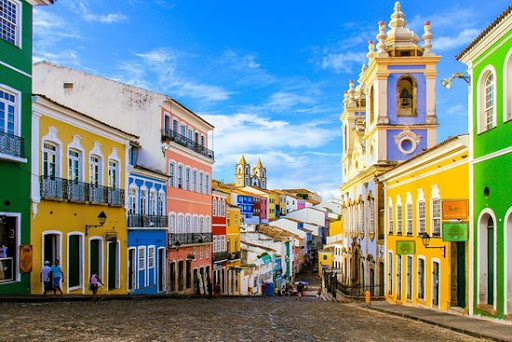
Brazilian culture is often misinterpreted by foreigners as overly sexualized, especially through Carnival imagery. However, Brazilian identity is deeply rooted in diversity, emotion, and cultural expression. “Brazilian style” reflects passion, spontaneity, and human connection — not sexual exaggeration — shaped by a rich mix of indigenous, African, and European influences.
By Lindenberg Junior| Translation by Julia Melim

Brazilian culture is often misunderstood due to media-driven stereotypes, especially around Carnival.
In many international conversations, especially in Europe and North America, Brazilian culture is frequently misunderstood and oversimplified.
One of the most common misconceptions is the idea that Brazil — particularly events like Carnival — represents an overly sexualized society.
However, as Brazilian writer Marcelo Carneiro Cunha explains, this perception is far from reality.
Carnival is not what the world thinks it is
“Foreigners see Carnival as a very sexual event, however, it’s nothing more than a playful, fantastic event in the first place,” he explains.
Before traveling to Spain to speak about the sexual behavior of Brazilian people, Marcelo reflects on the responsibility of representing a culture that is often misinterpreted abroad.
He even questions his own authority on the topic, emphasizing that his understanding comes from research and interviews rather than personal expertise in sexual behavior.
His book Simple, based on interviews with people from different backgrounds across Brazil, explores human desire, emotion, and social behavior — not stereotypes.
Challenging the Global Stereotype
Marcelo’s participation in international lectures highlights how foreign audiences often rely on simplified cultural narratives about Brazil.
For many “gringos,” Carnival becomes a symbol of uncontrolled sexuality.
But in reality, it is a deeply rooted cultural tradition — full of music, symbolism, identity, and collective expression.
This gap between perception and reality is where misunderstanding begins.
Brazilian culture is often filtered through external media interpretations, which tend to amplify sensual imagery while ignoring historical and cultural context.
What “Brazilian Style” Really Means
According to Marcelo, “Brazilian style” is not about sexuality — it is about expressiveness, spontaneity, and emotional openness.
It is a way of life shaped by:
- Joyful social interaction
- Emotional intensity
- Cultural diversity
- Human connection
- Spontaneity in relationships
In this sense, Brazilians are not defined by excess, but by authentic emotional expression.
Sexuality, in this context, is not exaggerated or constant — it is situational, mutual, and based on chemistry and willingness.
As Marcelo describes, Brazilians are just as capable of saying “no” as they are of saying “yes,” depending entirely on context and comfort.
A Culture Built on Diversity and Identity
Brazil is one of the most culturally diverse nations in the world.

Carnival is a cultural and artistic celebration, not a purely sexual event.
Its identity is shaped by a combination of:
- Indigenous heritage
- African influence
- European immigration
- Regional traditions
This mixture creates a cultural identity that is fluid, expressive, and deeply complex.
According to Marcelo, Brazilian behavior cannot be reduced to a stereotype because it is the result of historical convergence and cultural blending.
Brazilian identity lives not only in appearance or behavior, but also in emotional expression and social interaction.
Misinterpretation Through a Foreign Lens
One of the key issues highlighted in the discussion is how external audiences interpret Brazilian culture without experiencing it directly.
Understanding Brazil requires more than observation from afar.
It requires:
- Cultural immersion
- Real social interaction
- Exposure to daily life
- Respect for complexity
- Personal experience with Brazilian people
Without this context, interpretations tend to remain superficial.
The Importance of Cultural Context
Marcelo emphasizes that Brazilian culture is often fascinating to foreigners precisely because it is unique and complex.
But this uniqueness can also lead to distortion when viewed without context.
To truly understand Brazilian behavior, one must go beyond stereotypes and engage with the culture in its full depth — including language, traditions, and lived experiences.
Final Thoughts
“Brazilian style” is not a simplified idea of sexuality or excess.
It is a reflection of a society built on diversity, emotional richness, and cultural fusion.
Misunderstandings arise when culture is reduced to visual stereotypes rather than lived experience.
Ultimately, Brazil cannot be defined by external assumptions — it must be understood from within.
To understand Brazil is to understand its complexity, its rhythm, and its humanity.
And above all, its identity is not sexualized — it is expressive, passionate, and deeply cultural.
FAQ – Frequently Asked Questions
1. What does “Brazilian style” mean in this context?
It refers to a cultural expression of passion, spontaneity, and emotional intensity — not sexual exaggeration.
2. Why is Brazilian culture often misunderstood abroad?
Because foreign perceptions are often shaped by media stereotypes, especially around Carnival and sensual imagery.
3. Is Carnival a sexual event?
No. Carnival is primarily a cultural and artistic celebration involving music, tradition, and collective expression.
4. What influences Brazilian cultural identity?
Brazilian identity is shaped by Indigenous, African, and European influences, creating a diverse and complex culture.
5. How can foreigners better understand Brazilian culture?
By experiencing it directly through travel, cultural immersion, relationships, and engaging with local traditions.