
A Native American surfer from California, Johnny Rice became an unexpected pioneer in Brazilian surf history during the 1970s. His journey blends culture, innovation, and passion—connecting U.S. surf roots with Brazil’s rising wave scene.
By Mark Lund

Johnny Rice is a true legend of Californian surf culture. A natural-born surfer, he spends his weekdays riding waves and his weekends shaping boards in his backyard.
Johnny believes surfing benefits life in four essential ways: physically, mentally, emotionally, and spiritually.
Now 79 years old, he descends from Native American lineages—Santee Dakota Sioux and Prairie Band Potawatomi. His parents grew up in a reservation far from the ocean, in Dakota.
From Reservation Roots to California Waves
Johnny’s love for surfing began in the late 1940s, after moving to Southern California and discovering the surf lifestyle.
Originally from Santa Cruz, California, he lives and breathes the culture. Today, he runs his own business and organizes his schedule around ocean conditions, traveling freely to surf destinations.
For Johnny, shaping boards is more than a job—it’s about bringing happiness to others, which in turn fulfills him.
A Hidden Link to Brazilian Surf History
Few people know that Johnny carries a piece of 1970s Brazilian surf history.
He arrived in Brazil in 1974, at age 36. However, his passion for surfing started much earlier—at age 11, when he first took to the waves. A photograph from that moment is now displayed in one of California’s most important surf museums.
Learning from the Godfather of Surfboards
Like many passionate young surfers, Johnny tried to make a living from the sport. His breakthrough came at 14, when his family moved to Los Angeles.
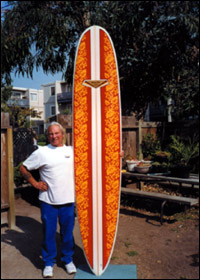
Johnny with a Long Board
There, he trained under Dale Velzy, widely known as the “Godfather of board shaping.” Johnny worked in a surf shop in Venice Beach, gaining invaluable experience.
By 1957, he returned to Santa Cruz, working with the Mitchell Brothers, who opened the town’s first surf shop.
Witnessing Surfing’s Technological Evolution
Johnny witnessed major innovations in surfing, including:
- The transition from wooden boards to fiberglass foam boards
- The introduction of neoprene wetsuits, solving the challenge of California’s cold waters
These changes made surfing more accessible, transforming it from a niche sport into a global phenomenon.
Surf Culture Meets Hollywood and Hawaii
Johnny lived through the golden era of surf culture:
- He was active when Jack O’Neill launched his brand in 1959
- He worked as an extra in surf films like “Gidget”
- In the mid-1960s, he moved to Hawaii, working as a Waikiki “Beach Boy” with George Downing
Later, during the surf boom in Florida, Johnny shaped hundreds of boards per month—all while listening not to The Beach Boys, but to Bossa Nova legends like Tom Jobim and João Gilberto.
The Dream of Brazil Becomes Reality
Inspired by Brazilian music, Johnny dreamed of visiting Brazil.
In the early 1970s, he met Brazilian surfers Alan Birnbaum and Sérgio Sachs, who invited him to take a chance in Brazil.
Without guarantees, Johnny moved with his family to São Paulo, heading straight to Guarujá’s Tombo Beach, where he established his base for nearly five years.
Transforming Brazilian Surf Culture
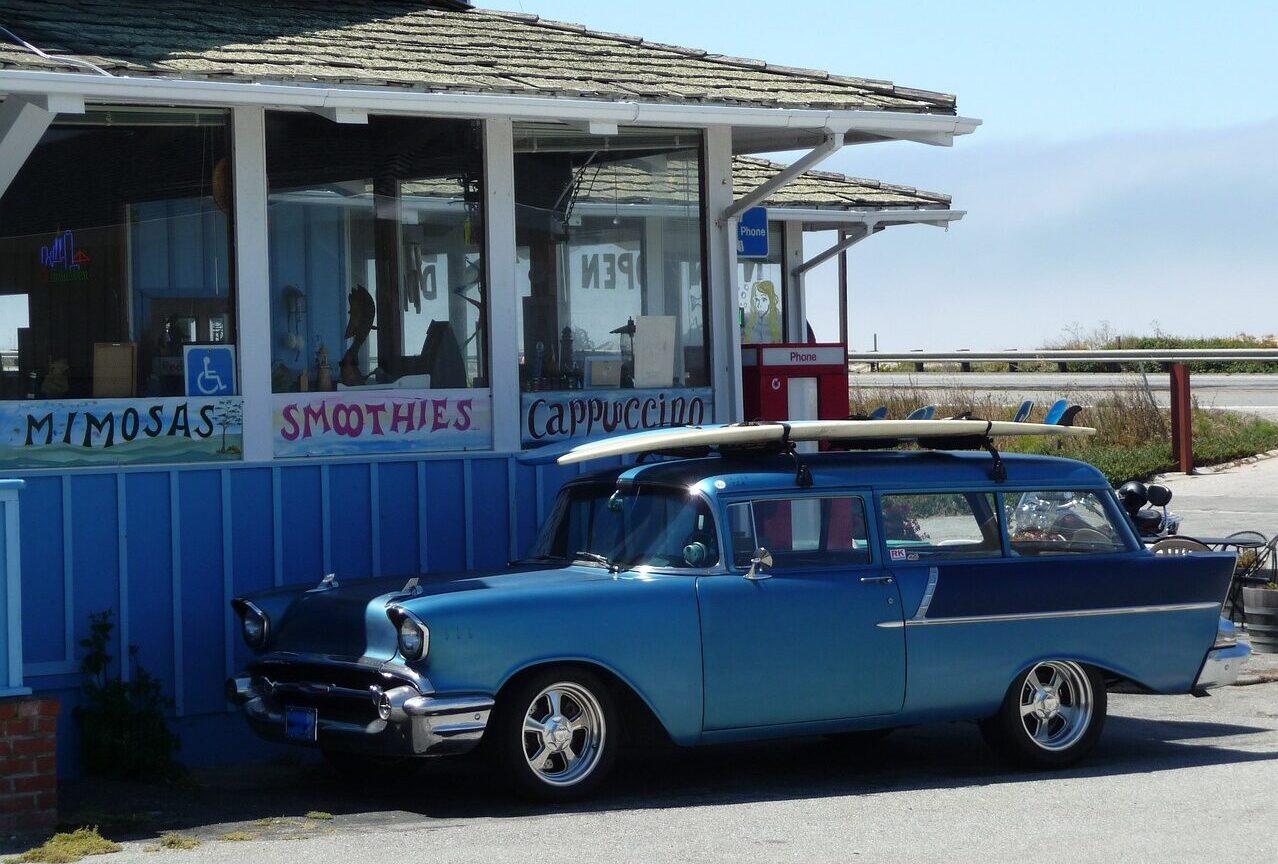 At Tombo Beach, Johnny:
- Introduced advanced board-shaping techniques
- Trained local surfers and craftsmen
- Helped elevate Brazilian surfboard design
Owning a “Johnny Rice” board became a symbol of status and quality.
Supporting Future Surf Legends
Johnny’s influence extended beyond shaping boards. He:
- Sponsored surfers with his own money
- Helped young talents like Tinguinha, who couldn’t afford a board
- Supported future icons like Neno Matos, Neco Carbone, and Alfio Lagnado
Alfio would later become the owner of Hang Loose, one of Brazil’s most successful surf brands.
A Deep Love for Brazil
Johnny left Brazil in 1978, possibly due to visa issues or personal struggles.
But his connection to the country never faded.
He still:
- Speaks Portuguese
- Tells Brazilian jokes
- Keeps albums and souvenirs
- Expresses deep “saudade”
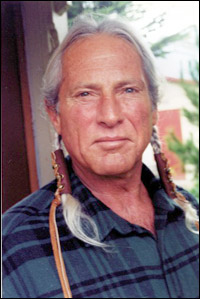
The Native-American Johnny Rice.
His dream? To one day live part of the year in Brazil.
A Life of Balance and Purpose
Today, Johnny—known in his tribe as “Mni Akan Mani” (Walks on Water)—lives a peaceful life in Santa Cruz.
After overcoming personal struggles and spending over 50 years surfing and shaping boards, he has found balance.
He continues to surf and shape boards alongside his wife, Rosemari, living in a home that resembles a mini surf museum.
One Last Dream
Despite everything he’s achieved, Johnny still has one dream:
To live in Brazil’s Northeastern coast, in a simple house by the beach—and finally say:
“I’m Brazilian.”
*Update: Johnny Rice, a well-known Santa Cruz surfboard shaper whose traveling career began in 1950, died of pneumonia in July 2015 at the age of 77.
* Mark Lund, the author, is one of these Americans in love with Brazil. He’s been living in Maresias Beach, in the state of São Paulo, for over 30 years. He puts together professional surf events and championships, and also owns a bar called “Legends.”
FAQ – Frequently Asked Questions
1. Who is Johnny Rice?
Johnny Rice is a Native American surfer and board shaper from California who played a key role in the development of Brazilian surf culture in the 1970s.
2. What is Johnny Rice’s connection to Brazil?
He lived in Guarujá for nearly five years, where he helped train surfers, shape boards, and support emerging talents.
3. Why is Johnny Rice important to surfing history?
He contributed to both Californian and Brazilian surf evolution, especially through board shaping and mentorship.
4. Which Brazilian surfers did he influence?
He supported names like Tinguinha, Neno Matos, Neco Carbone, and Alfio Lagnado.
5. Does Johnny Rice still surf today?
Yes. Even in his late 70s, he continues surfing and shaping boards regularly.




Your the Man Johnny. I was born in florida. My mother is Brazilian and my father is American of english, creek indian and irish decent. I also love Brazil, its my other country where I lived long ago. I went there in 1962, I dont remember anything being that I had not even had my first birthday party yet. I also was surfing there in the seventies at pria grandge sp. When I move there lets paddle out together. You and yours will always be welcome in my home. I think my cousin had one of your boards, Ill try to find a photo and you can tell me. I would really enjoy meeting another surf brother from the good old days. We can talk story. Take care Carey
I just looked up Johnny Rice in California to try to meet. I’m very sorry and send my condolences to his family for there loss. We had much in common that I just learned about. He will be missed by many. Sincerely Carey Morris
I’m his daughter Sabrina and this info. Is not 100% accurate.
This is Sabrina, Johnny’s oldest daughter. There are many untruths in this write up.
Hi guys .. I am now trying to live here in Brazil Sao Bernardo do campo having arrived here from South Africa and shaping and repairing boards etc .. I wanted to know is there anyone out there looking for a sander sprayer fin installer etc.. please I have my little boy here and my girlfriend and want to live here in Brazil .. Anyone that could help please .. Rolf FICA com deus
Hi Sabrina!… Met your father in 1976 at Tombo beach..I was living in Guaruja at the time, at Enseada beach. I was 7 years old then. I started surfing with a Styrofoam boad when I was 6. I remember hearing about the American surfer that was living at Tombo beach and one day I took my bicycle with my board and went there…I couldn’t believe that a American surfer was there..I was so happy!…I peddled 8 miles to Tombo beach on a Saturday to see for myself..I remember your father just like it was yesterday. I just found out (07/18/2019)that he passed..I can’t describe to you how affected I’m right now… a part of my childhood is gone. I moved to NYC in 1988 and it’s been only 6 month that I lefted it to Florida. I was hoping to go to California one day and see your father again…Im destroyed right now. God bless his soul..Im sure his out there surfing through the stars!