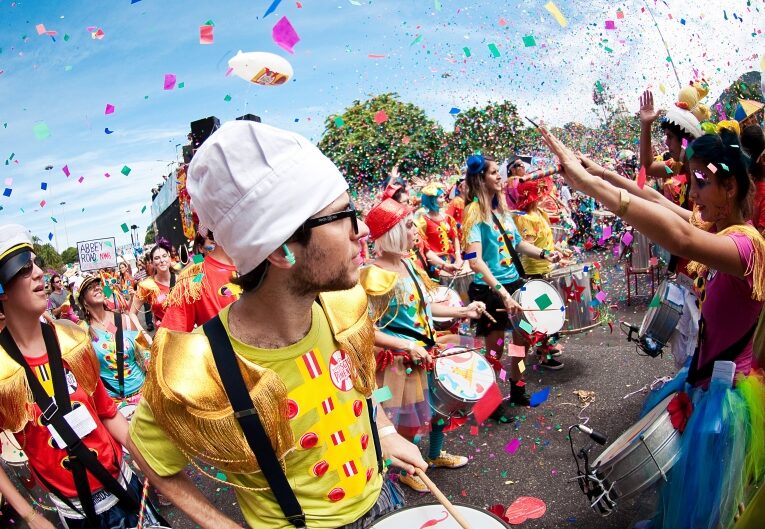
Brazilian Carnival is one of the oldest and most vibrant festivals in the world, rooted in ancient rituals, European traditions, and Afro-Indigenous influences. Over centuries, it evolved into a global celebration of culture, art, and irreverence.
By Lindenberg Junior | Translation: Andrea Alves
Carnival is one of the oldest festivals in human history, rooted in ancient mythological traditions.
The origins of carnival have been traced back to humanity’s most ancient celebrations, making it one of the oldest festivals in history. These early festivities were often intertwined with mythological explanations, linked to gods associated with love, tragedy, and fertility cults.
Many elements of carnival rituals can be found in ancient festivals such as the celebrations of the Egyptian gods Isis and Osiris and the Greek goddess Ceres (Demeter). The cult of the body, sensual expression, and the temporary breaking of social norms are all central to carnival’s guiding principles.
From Europe’s Courts to the Streets
Recent research into European carnival shows that it originally took place in royal courts and urban centers, where aristocrats enjoyed lavish balls and luxurious festivities before the period of Lent.
Over time, these celebrations spread to smaller towns and rural areas, merging with rituals that marked the end of winter and the beginning of spring. Many of these traditions had pre-Christian roots, later reshaped by centuries of Catholic influence.
Renaissance Revival and Cultural Expansion
During the 15th and 16th centuries, Renaissance humanists reintroduced elements from ancient Roman festivals such as the Saturnalia, Bacchanalia, and Lupercalia into carnival traditions.
Carnival then evolved into a rich artistic and cultural forum, incorporating:
- Music and dance
- Masquerades and performances
- Religious expressions and gastronomy
Regional Traditions Across Europe

Brazilian Carnival stands today as a global symbol of cultural fusion, creativity, and irreverence.
In rural Europe, carnival developed strong ties to medieval and Renaissance traditions.
- In Laza, Spain, festivities include theatrical performances and loud processions.
- In Venice, pre-Lenten celebrations date back to the Middle Ages, when public squares transformed into stages for aristocratic celebrations, sports, and performances.
Carnival Reaches the Americas
With the expansion of Spanish, Portuguese, and French colonization in the 15th and 16th centuries, carnival traditions were brought to the Americas.
In regions like Latin America and the Caribbean, carnival merged with:
- Indigenous rituals
- Seasonal celebrations
- African cultural influences brought by enslaved populations
This cultural blending helped shape what we now recognize as Brazilian Carnival, one of the most diverse and vibrant expressions of the festival.
A Fusion of Cultures and Identities
As in Europe, carnival took on unique forms in each region, influenced by local traditions and cultural exchanges.
The movement of colonizers and the forced migration of African peoples resulted in a powerful fusion of traditions, making carnival a symbol of cultural diversity, resistance, and creativity.
FAQ – Frequently Asked Questions
1. What is Brazilian Carnival?
Brazilian Carnival is a major cultural festival known for parades, music, dance, and street celebrations, rooted in ancient and colonial traditions.
2. Where did Carnival originate?
Carnival traces its origins to ancient pagan festivals in Egypt, Greece, and Rome, later adapted by European Christian societies.
3. Why is Carnival celebrated before Lent?
Carnival traditionally marks a period of indulgence before Lent, a time of fasting and religious reflection in Christianity.
4. How did Carnival arrive in Brazil?
Carnival was brought to Brazil by Portuguese colonizers and later blended with African and Indigenous cultural traditions.
5. What makes Brazilian Carnival unique?
Its combination of Afro-Brazilian rhythms, elaborate parades, and street parties makes it one of the most iconic celebrations in the world.