Brazil’s long history of political corruption has shaped not only its institutions but also public perception and civic culture. While progress has been made, the country continues to face deep-rooted challenges in building transparency and trust.
By José Ricardo Aguilar

Corruption in Brazil has deep historical roots dating back to colonial times
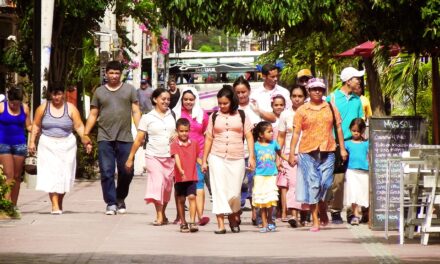
Brazil is globally recognized for its diverse and dynamic culture, shaped by a rich “melting pot” of ethnicities. It is a country known for:
- Samba and vibrant traditions
- Football excellence
- A privileged tropical geography
However, alongside these strengths lies a persistent issue: political corruption.
Corruption Beyond Politics
Corruption in Brazil goes beyond political and economic systems — it also influences social behavior and public mindset.
Over time:
- Citizens have grown accustomed to systemic inefficiencies
- Political scandals have become part of daily news cycles
- Public skepticism has increased toward institutions
Magazines such as Veja and IstoÉ frequently highlight corruption cases, reflecting how embedded the issue has become in everyday life.
Historical Roots of Corruption
The origins of corruption in Brazil date back to 1808, when the Portuguese royal family, led by Dom João VI, relocated to Brazil.
During this period:
- Patronage and favoritism were common
- Government positions were often filled based on loyalty rather than competence
- Corruption became normalized within political structures
These early practices left a legacy that continues to influence governance today.
Measuring Corruption
Organizations like Transparency International monitor corruption worldwide.
According to past data:
- Brazil scored 43 out of 100 on the corruption perception index
- Ranked 64th globally, showing improvement but still lagging
- Countries like North Korea and Somalia ranked among the most corrupt
Compared to nations like the United States, corruption exists but tends to be more controlled and prosecuted.
A Moment of Resistance: The 1990s
Brazil has confronted corruption before, most notably during the presidency of Fernando Collor de Mello.

It affects not only politics but also societal attitudes and trust
The “Caras-Pintadas” Movement
In the early 1990s, young protesters organized a nationwide movement demanding accountability.
They:
- Painted their faces with Brazilian flag colors
- Demonstrated peacefully in the streets
- Called for impeachment and transparency
The Collor Crisis
Elected in 1989 as a symbol of change, Collor promised to:
- Fight hyperinflation
- End corruption
However:
- His economic policies triggered a major recession
- A controversial plan froze citizens’ savings accounts
- Corruption allegations emerged within his administration
Accusations from his brother intensified the crisis, leading to political collapse.
Impeachment and Aftermath
In 1992:
- Collor resigned before the conclusion of his impeachment trial
- The Senate still found him guilty of corruption charges
- He was banned from holding public office for eight years
This marked one of Brazil’s most significant democratic actions, showing that public pressure can drive accountability.
A Persistent Challenge
Despite past victories, corruption remains a structural issue in Brazil.
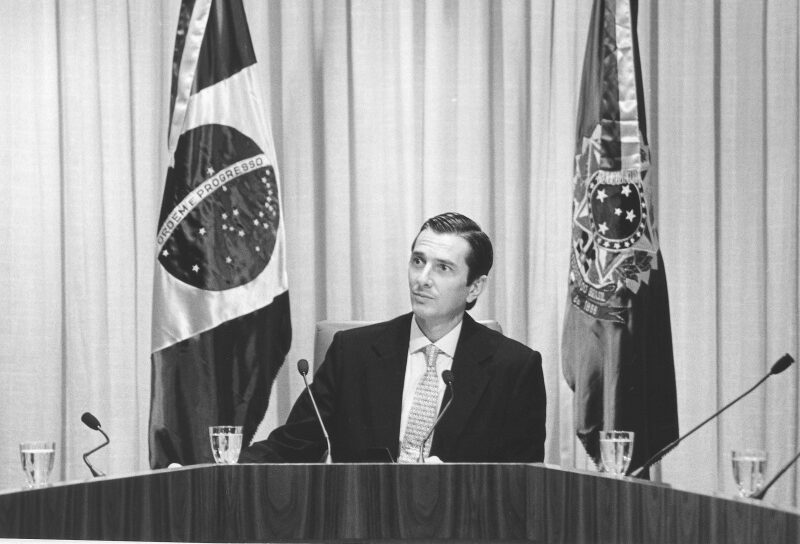
The Collor impeachment showed the power of civic mobilization
Key questions persist:
- Is corruption rooted in political leadership or cultural tolerance?
- Can reforms truly break the cycle?
While awareness has grown, long-term change depends on:
- Stronger institutions
- Civic engagement
- Consistent enforcement of laws
* This article was written in 2013. José Ricardo works in the commodities industry and lives in Connecticut. He has a Bachelor’s in International Business and a MBA in Finance from the University of Bridgeport – jrbaguilar_at_gmail.com
FAQ – Frequently Asked Questions
1. Why is corruption a major issue in Brazil?
Because it has historical roots and continues to affect political and institutional systems.
2. What is the Caras-Pintadas movement?
A student-led protest movement in the 1990s demanding the impeachment of President Collor.
3. Who was Fernando Collor?
Brazil’s first democratically elected president after the dictatorship, later impeached for corruption.
4. How is corruption measured globally?
By organizations like Transparency International using perception indexes.
5. Has Brazil improved in fighting corruption?
There have been improvements, but challenges remain due to structural and cultural factors.