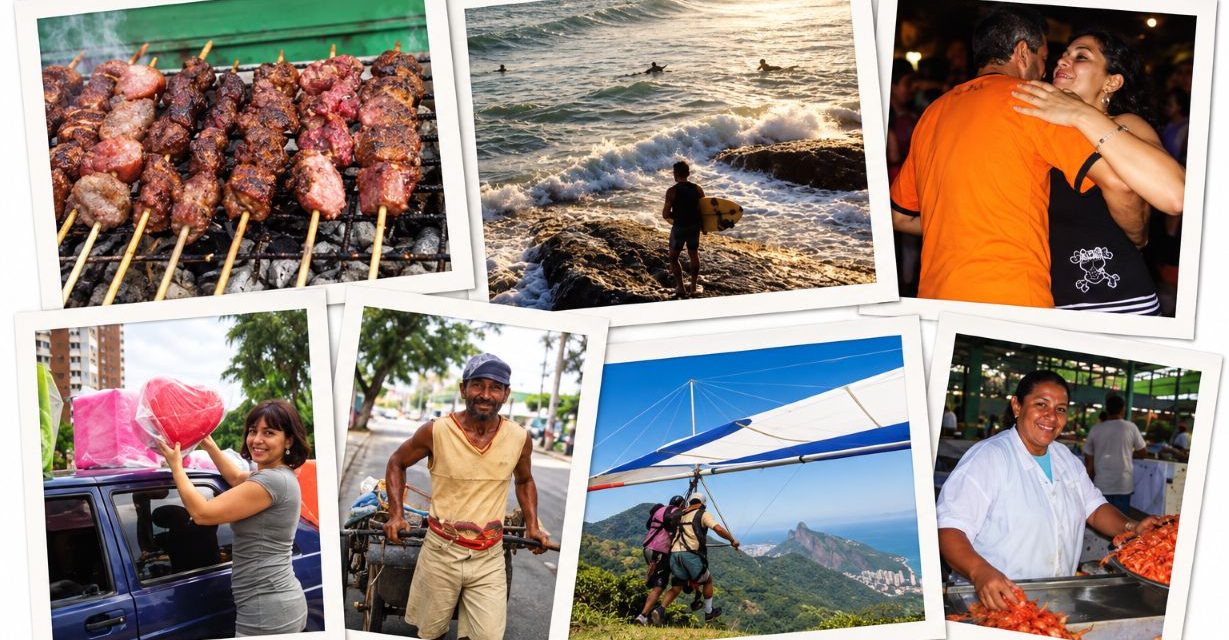
Everyday life in Brazil varies widely by region and person, but familiar social scenes include rice and beans at lunch, street barbecue, casual neighborhood bars called botecos, pickup soccer, music and dance, and time spent with friends at the beach. These habits are best understood as examples of how people gather and connect, rather than customs shared by every Brazilian.
By Lindenberg Junior
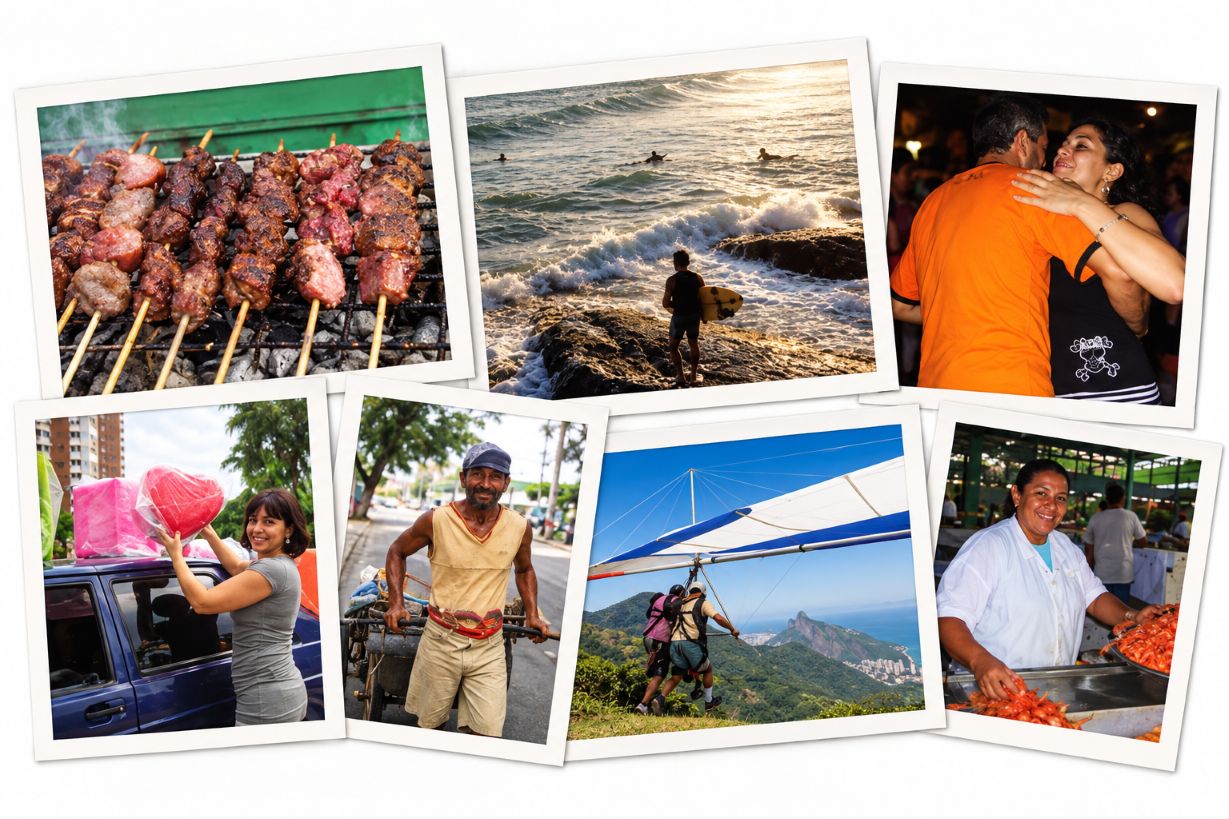
Botecos, churrasquinhos and churrascos show how food and informal gatherings can turn ordinary moments into social experiences.
Ask a Brazilian what belongs on a comforting lunch plate, and arroz e feijão – rice and beans – will often come up first. The combination appears in homes and everyday restaurants across the country, alongside vegetables, meat, eggs or whatever else the cook has prepared. Recipes and accompaniments change from region to region. The feeling of sitting down to a familiar meal travels well beyond Brazil.
Food also has a way of turning a quick stop into a gathering. The smell of churrasquinho, meat grilling on skewers at a street stand, can draw people into conversation while they wait. At a public market, buying seafood may include a chat with the vendor about what came in that morning and how to cook it.
Any excuse to get together
A boteco is a casual neighborhood bar where friends might share a table, drinks and small plates of food. A churrasco is a barbecue, but the invitation usually promises more than a meal: music, conversation and the chance to stay awhile. Forró, a dance and musical tradition associated with Brazil’s Northeast, gives people yet another reason to meet.
These places and occasions differ by city, generation and budget. Their common thread is the pleasure of turning ordinary time into time together.
The beach is a place to stay
On a sunny weekend, a Brazilian beach can be a whole social world. Some people surf or play soccer. Others settle beneath an umbrella with friends, snacks and no pressing reason to leave. Children race between the sand and the water while vendors move along the shore. Brazil’s coastline holds many kinds of beach life, from crowded urban stretches to quieter towns. The scene in Rio de Janeiro is one version, not a portrait of every Brazilian. Still, it helps explain why a trip to the beach can mean much more than a swim.
A game needs very little
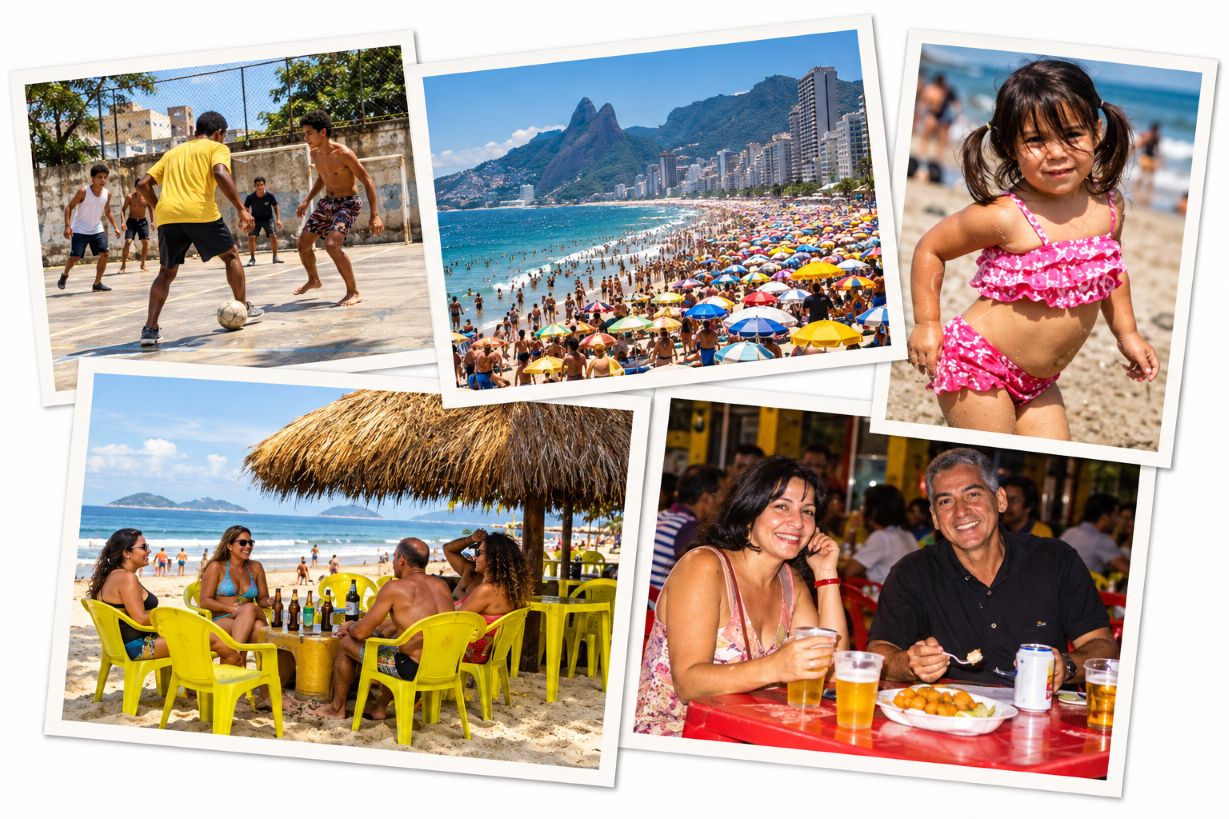
Brazilian beaches often function as social spaces where people meet friends, eat, play sports and spend time together.
Soccer is woven into Brazilian popular culture, but it does not require a stadium. A paved court, an open patch of ground or a few friends willing to play can be enough for a pickup game. Plenty of Brazilians are passionate fans; plenty are not. The everyday charm lies in how easily a game can bring neighbors and friends together.
The habit behind the “quirks”
Looking back at these various scenes (now in two photos) from a Soul Brasil story first published in print in 2005, the details are wonderfully specific: grilled skewers, a dance, a crowded beach, a market stall, friends at a boteco (bar), street vendors selling their wares, poor and humble people smiling… None defines a country as large and varied as Brazil. Together, though, they offer visitors a useful way in: notice how often an everyday activity becomes an invitation to connect.
FAQ – Frequently Asked Questions
What are some common everyday habits in Brazil?
Many Brazilians enjoy meals built around rice and beans, informal gatherings with friends, beach outings, music and casual soccer. Habits differ across regions and households.
Why do Brazilians eat rice and beans so often?
Rice and beans are a familiar, versatile combination served with many different foods. For many people, they also evoke the comfort of a home meal.
What is a boteco in Brazil?
A boteco is a casual neighborhood bar where people often meet for drinks, snacks and conversation.
What is churrasquinho?
Churrasquinho usually refers to grilled meat served on skewers, often sold at an informal stand. It differs from a larger churrasco, or barbecue gathering.
Do all Brazilians love soccer and the beach?
No. Soccer and beach culture are visible parts of Brazilian life, but individual interests and access vary. Brazil has many different regional and personal ways of spending leisure time.
What is forró?
Forró refers to music and partner dancing rooted in Brazil’s Northeast. It is also a popular reason to gather and dance in other parts of the country.