Hidden in Brazil’s Northeast, Chapada do Araripe is a unique destination where prehistoric fossils, rich biodiversity, and vibrant culture converge. From waterfalls to UNESCO-recognized geoparks, the region offers an unforgettable blend of nature, history, and tradition.
By Laís Oliveira | Translation: Julia Melim
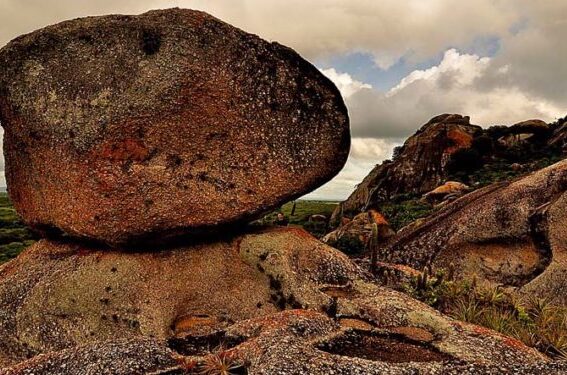
Chapada do Araripe is where prehistoric life, culture, and nature converge in one unique destination
Hidden by dust, Northeast vegetation, and the region’s typical dry climate, there lies an unexpected oasis where freshwater springs from the ground. This is a place where Indigenous peoples, “cangaceiros” (backcountry bandits), and even dinosaurs once walked.
This breathtaking and multicultural landscape is known as Chapada do Araripe, located in southern Ceará, along the borders of Pernambuco, Piauí, and Paraíba.
Its beauty goes beyond lush vegetation. The region has also been shaped by historical events and cultural movements, gaining national attention—so much so that renowned Brazilian artist Gilberto Gil referred to it as a “cultural pond” in one of his songs.
Araripe Geopark: A Journey Through Time
A defining feature of the region is the UNESCO Global Geoparks Network-recognized Araripe Geopark.
Millions of years ago, this now semi-arid land was once an ancient ocean, home to pterosaurs, dinosaurs, fish, and insects—many of which are now preserved as exceptionally well-kept fossils.
Today, the geopark includes nine geological sites spread across six municipalities:
- Batateiras (Crato)
- Pedra Cariri & Ponte de Pedra (Nova Olinda)
- Parque dos Pterossauros & Pontal de Santa Cruz (Santana do Cariri)
- Cachoeira de Missão Velha & Floresta Petrificada (Missão Velha)
- Riacho do Meio (Barbalha)
- Colina do Horto (Juazeiro do Norte)
Unlike traditional national parks, geoparks are inhabited territories, where local communities play a role in preservation and sustainable development.
Recognized by UNESCO, the Araripe Geopark also preserves traces of human life dating back 30,000 years, making it one of the most scientifically and culturally significant sites in Latin America.

Once an ancient ocean, the region now preserves some of the world’s most important fossil records
Cultural Riches of Araripe
Beyond its natural and geological importance, Chapada do Araripe stands out for its rich cultural identity, shaped by:
- Folklore
- Religious traditions
- Regional gastronomy
- Artistic expressions
Much of this heritage is influenced by the “cangaço”, a historical phenomenon marked by outlaws roaming the Northeast between the 18th and 20th centuries. These figures became deeply embedded in Brazilian popular culture, often romanticized in stories, music, and literature.
Waterfalls and Adventure Trails
For lovers of ecotourism and adventure, Chapada do Araripe offers eco-trails and scenic waterfalls.
One of the most popular attractions is the Cachoeira de Missão Velha, featuring a 12-meter (40-foot) waterfall, located about 3 km from the city of the same name. The area was once inhabited by prehistoric Indigenous communities, adding even more depth to the experience.
Visitors can explore advanced hiking trails, discover hidden natural springs, and immerse themselves in a landscape where natural beauty meets geological history.
How to Get to Chapada do Araripe
The easiest way to reach the region is by plane via Aeroporto Regional do Cariri (Orlando Bezerra de Menezes), located in Juazeiro do Norte, about 500 km (310 miles) from Fortaleza.
There are direct flights from major Brazilian cities such as:
- Brasília
- Recife
- Fortaleza
- São Paulo
Once there, the best way to explore the geopark is by car, following a triangular route that connects:
- Juazeiro do Norte & Caririaçu
- Barbalha & Missão Velha
- Crato, Exu, Nova Olinda, Santana do Cariri, Assaré, and Potengi

From cangaço traditions to modern culture, Araripe reflects the soul of Northeast Brazil. Foto: Augusto Pessoa
* For airfare from the United States to Brazil or Latin America, customized travel packages, alternative accommodations, as well as travel planning consultation please visit our travel agent page or contact Magali da Silva directly by phone or whatsapp: 1(323)428-1963.
FAQ – Frequently Asked Questions
1. Where is Chapada do Araripe located?
It is located in southern Ceará, Brazil, near the borders of Pernambuco, Piauí, and Paraíba.
2. Why is Araripe Geopark important?
It is recognized by UNESCO for its exceptional geological, paleontological, and cultural significance, preserving fossils and human history.
3. What can tourists do in Chapada do Araripe?
Visitors can enjoy hiking trails, waterfalls, fossil sites, and cultural experiences.
4. When is the best time to visit?
The region can be visited year-round, but the rainy season (February to May) enhances waterfalls and greenery.
5. How do I get around the geopark?
The best way is by car, allowing access to multiple cities and geological sites.