Paraty and Ilha Grande, on Brazil’s southeastern coast, were inscribed by UNESCO as a World Heritage Site on July 5, 2019, becoming Brazil’s first mixed World Heritage site, recognized for both cultural and natural heritage. The designation protects a remarkable combination of Paraty’s historic center, the Atlantic Forest, traditional communities, protected areas and the landscapes surrounding Ilha Grande Bay.
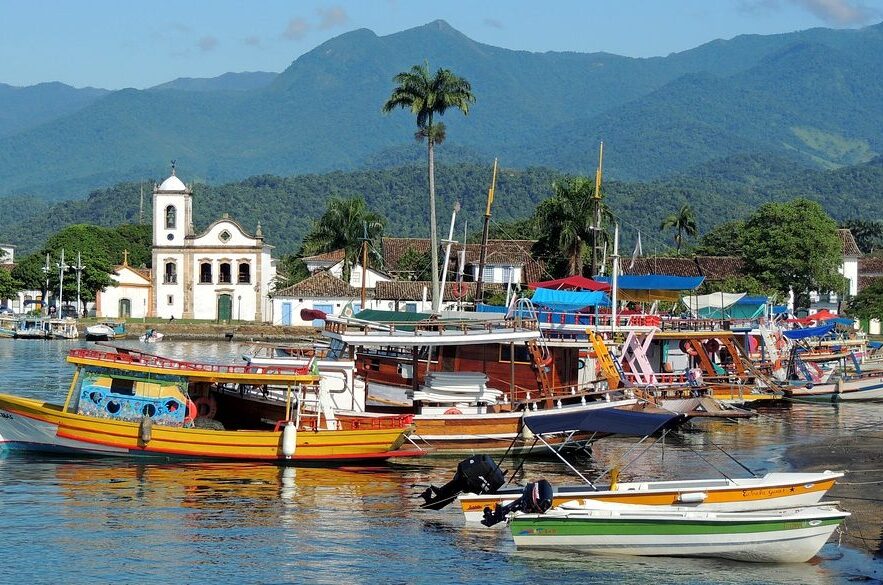
Paraty and Ilha Grande became a UNESCO World Heritage Site in 2022.
The United Nations Educational, Scientific and Cultural Organization (UNESCO) recognized Paraty and Ilha Grande, in the state of Rio de Janeiro, as a World Heritage Site in 2019, after years of preparation and a decade after the region’s first nomination attempt.
The official inscription took place on July 5, 2019, during the 43rd session of the UNESCO World Heritage Committee in Baku, Azerbaijan. The property was inscribed under the name “Paraty and Ilha Grande – Culture and Biodiversity” and became Brazil’s first World Heritage site in the mixed category, combining cultural and natural heritage.
The UNESCO property is more extensive than the historic center of Paraty and Ilha Grande alone. It is a serial property made up of six component areas: the Paraty Historic Center, Morro da Vila Velha, Serra da Bocaina National Park, the Cairuçu Environmental Protection Area, Ilha Grande State Park and the Praia do Sul Biological Reserve.
Today, UNESCO lists Brazil as having 26 World Heritage properties, including 16 cultural, nine natural and one mixed site. Paraty and Ilha Grande remains the country’s only mixed World Heritage property. Brazil’s list has expanded since the original article was published, with Lençóis Maranhenses National Park and Peruaçu River Canyon added in 2024 and 2025, respectively, and Amazonia Theaters added in 2026.
Why Paraty and Ilha Grande Are World Heritage
Paraty’s importance goes beyond its postcard-like colonial architecture. The historic coastal town preserves an urban layout dating largely from the 18th century and early 19th century, while its history is closely connected to the Caminho do Ouro (Gold Route) and Brazil’s colonial-era trade.
According to UNESCO, Paraty was an important endpoint of the Gold Route, through which gold from the region of Minas Gerais was transported toward the coast and shipped to Europe. The port also played a role in the arrival of goods and the forced transportation of enslaved Africans.
The region also preserves evidence of different stages of human occupation, including archaeological sites and the living traditions of Indigenous, Caiçara and Quilombola communities. Their relationship with the land, sea and Atlantic Forest is an important part of the site’s cultural significance.
The natural side of the designation is equally important. The property lies within the Atlantic Forest biodiversity hotspot, encompassing mountains, forests, beaches, islands, coves and marine environments.
UNESCO highlights the exceptional biodiversity of the area, including hundreds of bird species and significant populations of mammals, reptiles and amphibians. Among the emblematic species found in the region are the jaguar, puma, white-lipped peccary and southern muriqui, one of Brazil’s most important primates.
From a Cultural Heritage Bid to a Mixed World Heritage Site
Paraty and Ilha Grande did not become a UNESCO World Heritage site overnight. The region’s first nomination was submitted in 2009, focusing primarily on cultural heritage.

Traditional Indigenous, Caiçara and Quilombola communities are part of the cultural landscape, making the site a living heritage area rather than simply a collection of historic buildings.
The proposal was later reformulated to emphasize the relationship between culture and biodiversity. This broader approach ultimately led to the recognition of the area as a mixed cultural and natural heritage site.
UNESCO’s advisory bodies, ICOMOS and IUCN, evaluated the cultural and natural dimensions of the nomination. The World Heritage Committee ultimately inscribed the property under criteria (v) and (x), recognizing both the interaction between human communities and their environment and the site’s exceptional biodiversity.
The recognition also reflects the idea that Paraty’s cultural heritage cannot be separated from its natural surroundings. Historic buildings, archaeological sites, traditional communities, forests, mountains and the sea form part of a single cultural landscape.
A Living Cultural Landscape
The World Heritage designation is not limited to monuments or old buildings. The property includes living communities whose traditions remain connected to the natural environment.
According to information presented by Brazil’s National Institute of Historic and Artistic Heritage (Iphan), the territory includes two Indigenous lands, two Quilombola territories and 28 Caiçara communities. Traditional activities include artisanal fishing, sustainable use of biodiversity and cultural practices passed down through generations.
This connection between people and landscape is one of the reasons the designation is particularly significant. UNESCO’s decision emphasizes the importance of strengthening the participation of traditional communities in the management of the World Heritage property and ensuring that recognition contributes to sustainable development while preserving traditional ways of life.
What Has Changed Since the 2019 Recognition?
Although UNESCO made the inscription official in 2019, the recognition continued to receive attention in the following years. In November 2022, Iphan held a ceremony in Paraty to formally deliver the UNESCO World Heritage certificate. The ceremony helped bring renewed public attention to the international recognition.
More recently, Iphan has continued to document and promote Paraty’s cultural heritage. In 2024, the institute highlighted the city’s history and the importance of preserving its cultural identity alongside its natural environment.
The UNESCO designation also comes with responsibilities. The World Heritage Committee has emphasized the need for effective management, ecological connectivity, participatory governance and infrastructure improvements, including wastewater management in response to increased tourism.
For visitors, this means that Paraty and Ilha Grande are not simply destinations known for beautiful beaches and colonial streets. They are part of an internationally recognized landscape where tourism, history, biodiversity and cultural traditions intersect.
Paraty and Ilha Grande Today
For Brazilians living in the United States and planning a trip to Brazil, Paraty and Ilha Grande offer two complementary experiences.
Paraty combines a preserved historic center, colonial architecture, churches, cultural events, gastronomy and access to the surrounding mountains, beaches and islands. Ilha Grande, meanwhile, is particularly associated with forests, beaches, trails and marine landscapes.
Together, they offer a destination that represents an important part of Brazil’s history while showcasing the extraordinary biodiversity of the Atlantic Forest.
The UNESCO recognition remains relevant in 2026 because it is not simply a title awarded to a tourist destination. It is an international commitment to preserve a landscape where culture and nature have evolved together for centuries.
* For airline tickets from the U.S to Brazil or Latin America, customized travel packages, hotels and cruises, please visit our travel agent page or contact Magali Da Silva by Phone or Whatsapp: 1 (323) 428-1963. We are based in Los Angeles, California and have been established for over 25 years.
Frequently Asked Questions – FAQ
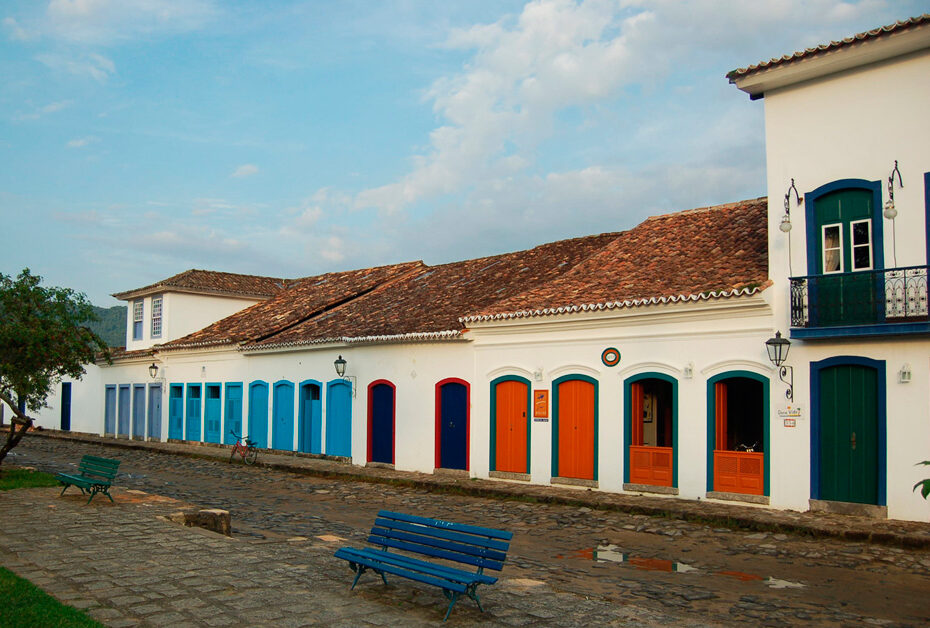
The recognition is expected to help preserve the region while increasing international tourism.
1. Are Paraty and Ilha Grande UNESCO World Heritage Sites?
Yes. Paraty and Ilha Grande were officially recognized by UNESCO as a World Heritage Site on November 12, 2022.
2. Why are Paraty and Ilha Grande considered a mixed World Heritage Site?
They are considered a mixed site because the designation recognizes both cultural and natural heritage, including Paraty’s historic center and the biodiversity of the surrounding region and Ilha Grande.
3. What makes Paraty historically important?
Paraty is known for its well-preserved historic center, colonial architecture and cultural heritage, making it one of Brazil’s notable historic seaside destinations.
4. What role did biodiversity play in the UNESCO designation?
Biodiversity was central to the second nomination. Unlike the 2009 proposal, which focused on cultural heritage, the successful proposal combined cultural and natural heritage.
5. Where are Paraty and Ilha Grande located?
Both are located in the state of Rio de Janeiro, in southeastern Brazil, along the country’s Atlantic coast. Paraty is a historic coastal city, while Ilha Grande is an island known for its natural landscapes and biodiversity.