Maracatu is one of the most vibrant and historic traditions of Brazil’s Northeast. Blending African heritage, religious symbolism, powerful drumming, and colorful royal parades, this cultural expression has become a defining element of Carnival celebrations in Pernambuco.
By Rita de Cerqueira / Translation: Flavio Gondin
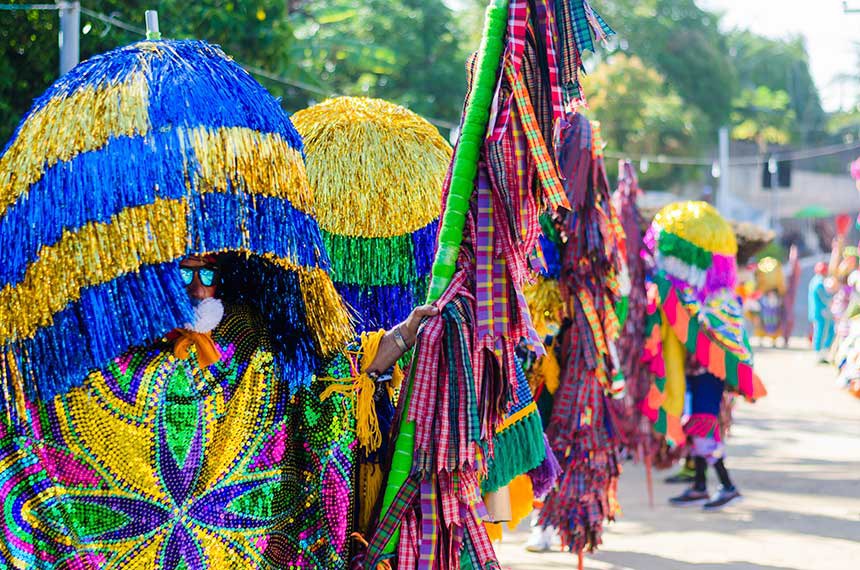
Maracatu is one of the most vibrant and visually striking traditions of Brazil’s Carnival. Photo Arquimedes Santos | Olinda City Hall
Anyone who attends Carnival in Northeastern Brazil quickly discovers the powerful spectacle of Maracatu.
Throughout the year, Maracatu groups rehearse and prepare elaborate costumes, choreography, and music to perform during the Carnival celebrations in Pernambuco, particularly in the cities of Recife and Olinda.
The performances combine:
-
vibrant costumes
-
powerful percussion rhythms
-
theatrical dance processions
Maracatu is widely considered one of the most visually striking and culturally significant traditions of Brazilian Carnival.
Two Distinct Styles of Maracatu
Although they share the same name and African roots, Maracatu exists in two distinct forms:
Maracatu Baque Solto (Maracatu Rural)
Also known as Maracatu Rural, this style originated among sugarcane plantation workers in the countryside of Pernambuco.
During Carnival, performers march through the streets dressed in elaborate costumes. One of the most iconic figures is the Caboclo de Lança, a warrior-like character wearing:
-
a large embroidered cape
-
ornaments and cowbells
-
a spear decorated with colorful ribbons
In some traditions, these performers are believed to embody spiritual forces and may participate in rituals connected to Afro-Brazilian religions such as Umbanda.
Some dancers, known as “caboclos da frente,” are said to perform in a trance-like state during the procession.
Maracatu Baque Virado (Maracatu Nação)
The second style is Maracatu Nação, also known as Baque Virado, which is deeply rooted in the traditions of enslaved Africans brought to Brazil, many from the Bantu region of Luanda.
Historically, enslaved communities held ceremonies crowning symbolic kings and queens representing African royal heritage.
These ceremonies evolved into the royal processions seen today in Maracatu parades.
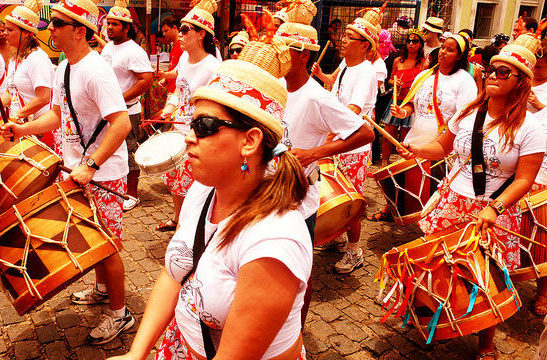
Its roots lie in Afro-Brazilian ceremonies that honored kings and queens of African heritage. Photo Roberto Romulo
A Royal Procession
The Maracatu parade resembles a royal court in motion.
The procession traditionally begins with an ambassador carrying the group’s banner, followed by the central figures:
-
the King and Queen
-
attendants known as vassals
-
Baianas and Damas-do-Paço
One of the most sacred elements of the procession is the Calunga doll, carried by the Damas-do-Paço.
The doll represents spiritual protection and ancestral power and is treated with deep reverence during the performances.
Sacred Traditions and Afro-Brazilian Spirituality
Many Maracatu groups maintain strong connections with Afro-Brazilian spiritual traditions.
Before Carnival, rituals are often performed honoring the Orixás, spiritual entities revered in religions such as Candomblé and Umbanda.
Each Maracatu group may be associated with a specific protective Orixá.
The sacred Calunga dolls symbolize these spiritual forces and are usually kept in a special altar area called a peji within the group’s headquarters.
During parades, a replica of the doll is carried, while the original remains protected.
Community Tradition Passed Through Generations
Maracatu groups are deeply tied to their communities.
Most members come from working-class neighborhoods, and costumes and instruments are often handmade by the participants themselves.
Leadership roles within the group frequently overlap with spiritual leadership, and the tradition is passed from one generation to the next within families and communities.
The Night of the Silent Drums
One of the most powerful moments of Pernambuco’s Carnival is the Noite dos Tambores Silenciosos.
This event takes place on Carnival Monday in the courtyard of the Igreja do Terço, located in the São José district of Recife.
During the ceremony, Maracatu groups gather in a solemn tribute to the enslaved Africans who shaped Brazil’s culture.
At a symbolic moment, the drums fall silent in remembrance before the celebration continues.
Historic Maracatu Groups
Some of the oldest Maracatu groups still active today include:
-
Leão Coroado (founded in 1863)
-
Estrela Brilhante (founded in 1910)
-
Elefante (founded in 1801)
-
Cambindinha (founded in 1914)
-
Cambinda Brasileira (founded in 1918)
These groups represent centuries of cultural continuity and Afro-Brazilian identity.
The Meaning of the Drumbeat
Brazilian researcher César Guerra-Peixe explained that the word “baque” refers to the sound of drumbeats.
This explains the difference between the two styles:
-
Baque Solto – characterized by a simpler percussion structure
-
Baque Virado – featuring multiple drums creating complex rhythmic patterns
These rhythms form the heartbeat of Maracatu performances.
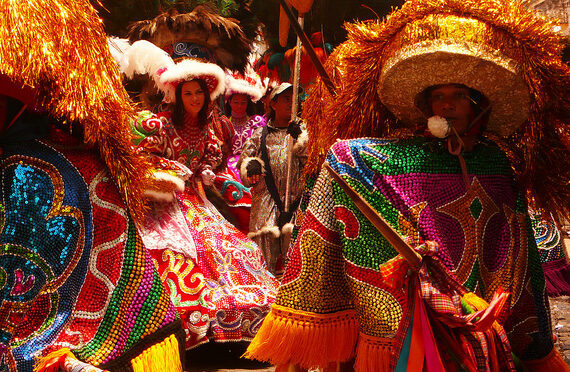
Through rhythm, color, and ritual, Maracatu preserves centuries of Afro-Brazilian cultural heritage. Photo Roberto Romulo
A Cultural Treasure of Brazil
Today, Maracatu remains one of the most powerful cultural expressions of Brazil’s Afro-descendant heritage.
Its blend of music, spirituality, royal symbolism, and community identity continues to captivate audiences during Carnival celebrations in Pernambuco and beyond.
Through the sound of drums, vibrant costumes, and sacred traditions, Maracatu tells the story of resilience, heritage, and cultural pride in Brazil.
FAQ – Frequently Asked Questions
What is Maracatu?
Maracatu is a traditional Afro-Brazilian cultural expression from Pernambuco that combines music, dance, and royal-themed Carnival parades.
What are the two types of Maracatu?
The two main styles are Maracatu Baque Solto (Rural) and Maracatu Baque Virado (Maracatu Nação).
Where is Maracatu most popular?
Maracatu is most strongly associated with Recife and Olinda, where it is a highlight of Carnival celebrations.
What is the Calunga doll?
The Calunga is a sacred doll carried in Maracatu parades that represents spiritual protection and ancestral forces.
What is the Night of the Silent Drums?
The Noite dos Tambores Silenciosos is a ceremonial event honoring enslaved Africans during Pernambuco’s Carnival.