Jason Lee Bruns shares how Brazilian music became a lifelong passion and a cultural home away from home. From early exposure in the U.S. to deep musical immersion in Brazil, his journey goes far beyond samba and bossa nova. Through rhythm, friendship, and tradition, Brazilian culture shaped his identity and career. A powerful story of music as a bridge between nations and belonging beyond borders.
By Jason Lee Bruns

Brazilian music became not just a study, but a cultural home.
One of my very first music teachers, John Taylor, introduced me to Brazilian music over 18 years ago. I recall finding the rhythms challenging, but I was inspired and wanted to learn the rhythms correctly. In no time at all, Brazilian rhythms became my favorite rhythms to play.
I was 12 years old, and my teacher had planted a seed. Little did I know I would embark on a lifelong journey sparked by the love of Brazilian music and culture. This love would cultivate my entire musical career.
Academic Formation and a Musical Reconnection
I attended the University of Miami on a music scholarship and, upon graduating in 2002, I was honored to attend USC, where I earned a Master’s degree in Music.
While studying at USC, a classmate of mine, Jeff Lesh, reunited me with Brazilian music. Jeff was an American musician who had traveled to Brazil and had many Brazilian friends — soon they became my friends too.
Through these friendships, I learned there was much more to Brazilian music than bossa nova and samba. There was a culture, a lifestyle, and deeply rooted traditions. My love for everything Brazil began to grow.
Learning from Brazilian Masters
In my mission to learn everything about this beautiful and mysterious culture, I came across an article on the great panderista Carlinhos Pandeiro de Ouro. To my delight, I discovered he lived near me in Los Angeles.
I became a dedicated student of this two-time Golden Pandeiro winner, who guided me through countless rhythms. Soon I too became a great panderista, and my desire for Brazil only grew stronger.
Musical Immersion in Brazil
During the summer of 2007, I was fortunate enough to spend three months in Brazil. I studied with Bira Show, from the Mangueira Samba School; Alegria of Zona Sul, in the Morro de Copacabana; and had private lessons with renowned pandeirista Marcos Suzano, who has played with Sting.
After several weeks in Rio, I traveled to Pernambuco, where I studied forró at BL Music, maracatu at Darué Malungo School, and had private lessons with Tarcísio Soares Resende, author of the maracatu book Batuque Book.
I was deeply fortunate to study with great teachers and meet many generous people — though I certainly had my share of “malandros” to deal with.
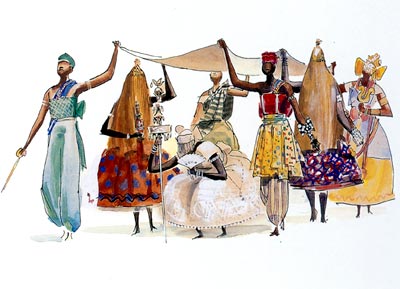
Brazilian art revealed that tradition and innovation move together.
Teaching, Legacy, and Cultural Transmission
I returned to the U.S. just in time to begin a new school year as a professor at Campbell Hall, where I hold the position of Director of World Music.
It became my calling to share my passion for Brazilian music with my students — to plant seeds in them just as my teacher once planted one in me.
With overwhelming support from the school administration and my then-boss Jim Whiting, I received a grant and generous donations from students’ families. This allowed me to start my own Samba School, ordering all traditional instruments directly from friends in Brazil.
The Campbell Hall Bateria
As of 2010, I am in my fifth year as director of the Campbell Hall Bateria, a 15-member high school ensemble. Students learn Brazilian culture through maracatu, forró, samba batucada, MPB, samba-reggae, and axé music.
We are blessed to have a complete set of traditional instruments specific to each Brazilian style and region. The group has performed with Carlinhos Pandeiro de Ouro, singer Renni Flores, and guitarist Angelo Metz.
Performances and a Lasting Connection
In 2009, the group was featured with the Sambala Samba School at the 9th Annual Long Beach Street Carnival. In 2010, we performed with Sambala in the Pasadena Rose Parade and at the Santa Barbara Brazilian Carnaval Cultural.
I look forward to my next trip to Brazil and to continuing the cultivation of my deeply rooted love for this country, its culture, and its music.
** special thanks to lenny Page and Jim Whiting.
FAQ – Frequently Asked Questions
1. Who is Jason Lee Bruns?
An American musician and educator whose career has been deeply shaped by Brazilian music and culture.
2. Which Brazilian music styles does he study and teach?
Samba, maracatu, forró, MPB, samba-reggae, and axé.
3. Where did he study Brazilian music in Brazil?
In Rio de Janeiro and Pernambuco, with renowned masters of Brazilian popular and traditional music.
4. What is the Campbell Hall Bateria?
A U.S.-based percussion ensemble dedicated to Brazilian rhythms and cultural education.
5. Why is this story relevant to Brazilians living in the U.S.?
It highlights how Brazilian culture builds identity, pride, and connection beyond national borders.