By Gabriel Woll
It’s a cold, grey morning in June – mid-winter in Rio de Janeiro – and a group of about 30 teenage boys sit on the bare concrete slabs of Instituto Padre Severino, one of the city’s toughest youth detention centers. Dressed in faded blue sweatsuits, they cross their arms and lower their eyes, used to harsh lectures and the weight of their violent pasts.
Instead of guards or administrators, two young men stand before them: LG and Hermano, members of Banda AfroReggae. Both grew up in the favelas and found in music a way out of violence. Today, instead of distancing themselves from their origins, they return as role models, offering a three-month percussion workshop – and something far more powerful: hope.
A Movement Born of Tragedy
AfroReggae’s story begins with pain. On August 29, 1993, Vigário Geral, a large favela in Rio’s North Zone, was shaken by one of the city’s most brutal massacres. In retaliation for a police officer’s death, a group of rogue policemen invaded the community and killed 21 residents, including children and the elderly.
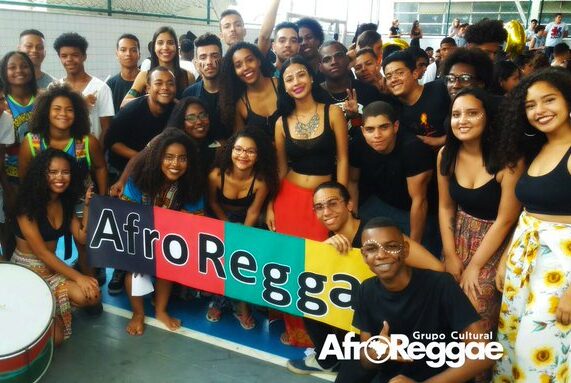
That same year, community activist José Junior had launched Grupo Cultural AfroReggae (GCAR) as a cultural magazine and small arts collective. The massacre gave his project a new sense of urgency: to transform trauma into creation, and violence into opportunity. He began working with local youth – many linked to gangs or marked by loss – offering workshops in percussion, Afro-Brazilian dance, hip-hop, and capoeira.
The initiative quickly grew. From Vigário Geral, AfroReggae expanded into other favelas, building one of Brazil’s most respected social projects. By the late 1990s and early 2000s, Banda AfroReggae, formed by students of the workshops, had become both a musical phenomenon and a cultural ambassador.
From the Favela to the World
In 2004, Banda AfroReggae made its U.S. debut at Carnegie Hall, invited by Caetano Veloso, a symbolic moment that placed the group on the global stage. A year later, the documentary Favela Rising won international awards, telling the story of lead singer Anderson Sá and the movement’s impact.
At the heart of AfroReggae is a strict code of conduct: no drugs, no alcohol, no firearms, and no gang involvement. Music, discipline, and community take the place of crime. This philosophy has inspired thousands of young Brazilians to choose art over violence.
Over the years, AfroReggae projects have reached countless favelas in Rio and beyond, breaking barriers between rival communities. Their slogan – “Da favela ao mundo” (“From the favela to the world”) – reflects both their journey and their mission: to show that creativity, talent, and resilience thrive where society too often sees only poverty and crime.

 Challenges and Resilience
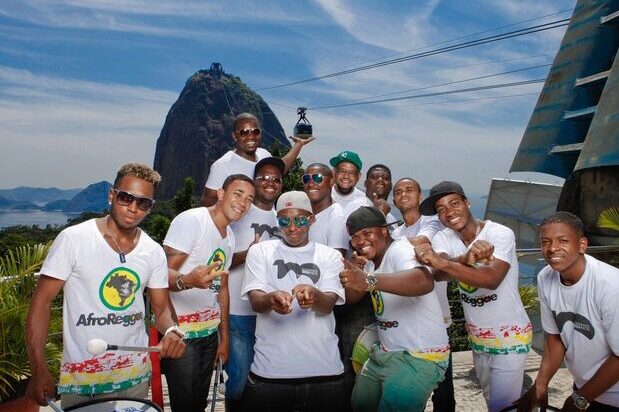
Like many NGOs in Brazil, AfroReggae faced turbulent times in the 2010s and 2020s, with funding crises, political shifts, and even violent attacks threatening its existence. Yet the movement endured. By 2025, AfroReggae continues to reinvent itself, focusing on cultural entrepreneurship, digital media, and global partnerships.
Its alumni include not only musicians but also educators, entrepreneurs, and community leaders who carry the spirit of the project into diverse fields. The organization’s model – using culture as a tool for social transformation – has inspired similar initiatives across Latin America, Europe, and Africa.
Lasting Impact
In Rio, AfroReggae remains a vital force. Their free concert series “Conexões Urbanas” continues to bring together artists from different genres, while their participation in national campaigns such as Criança
Esperança highlights their ongoing influence. More importantly, inside detention centers and schools, in rival favelas and on international stages, AfroReggae still spreads the same message first delivered in Vigário Geral:
That music can heal, that art can unite, and that another future is possible. On that cold morning at Padre Severino, LG and Hermano remind the young inmates that “our war is different” – not against rival gangs, but against the cycle of violence itself. Slowly, the boys who once stared at the ground begin to lift their heads, their eyes alive with curiosity. Soon, they are on their feet, laughing, and waiting for their turn on the drums. Thirty minutes earlier, they were silent and slouched. Now, they are musicians.
* Gabriel Woll is an American writer, performer, educator, and translator. For more information about Grupo Cultural AfroReggae and Banda AfroReggae, check www.afroreggae.org (site is in Portuguese).

 FAQ – Frequent Ask Questions
What is AfroReggae?
AfroReggae is a Brazilian cultural group and NGO founded in 1993 in Rio de Janeiro. It uses music, dance, and art to offer alternatives to violence for youth in favelas.
Why was AfroReggae created?
It was created after the Vigário Geral massacre, when 21 residents were killed by rogue police officers. The tragedy inspired the movement to use art as a tool for peace.
What kind of music does AfroReggae play?
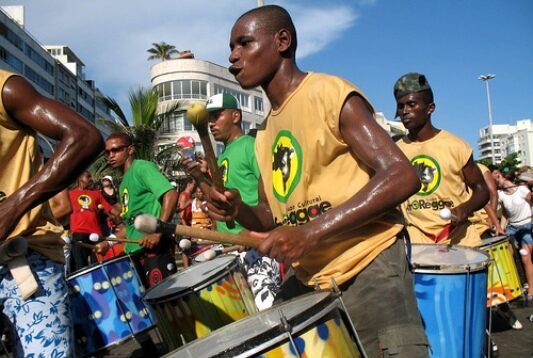
Their sound mixes reggae, hip-hop, samba, funk, and Afro-Brazilian percussion, blending tradition and modernity.
Is AfroReggae still active in 2025?
Yes. Despite challenges, AfroReggae continues its projects in Rio and abroad, adapting to new times with digital platforms, cultural entrepreneurship, and global partnerships.
What impact has AfroReggae had?
The group has empowered thousands of young people, reduced gang involvement in communities, and inspired international projects that combine art and social justice.