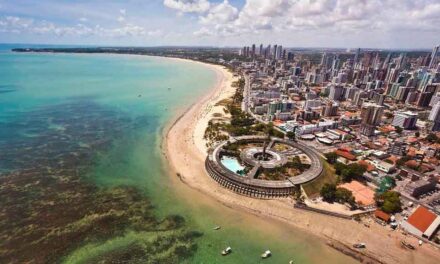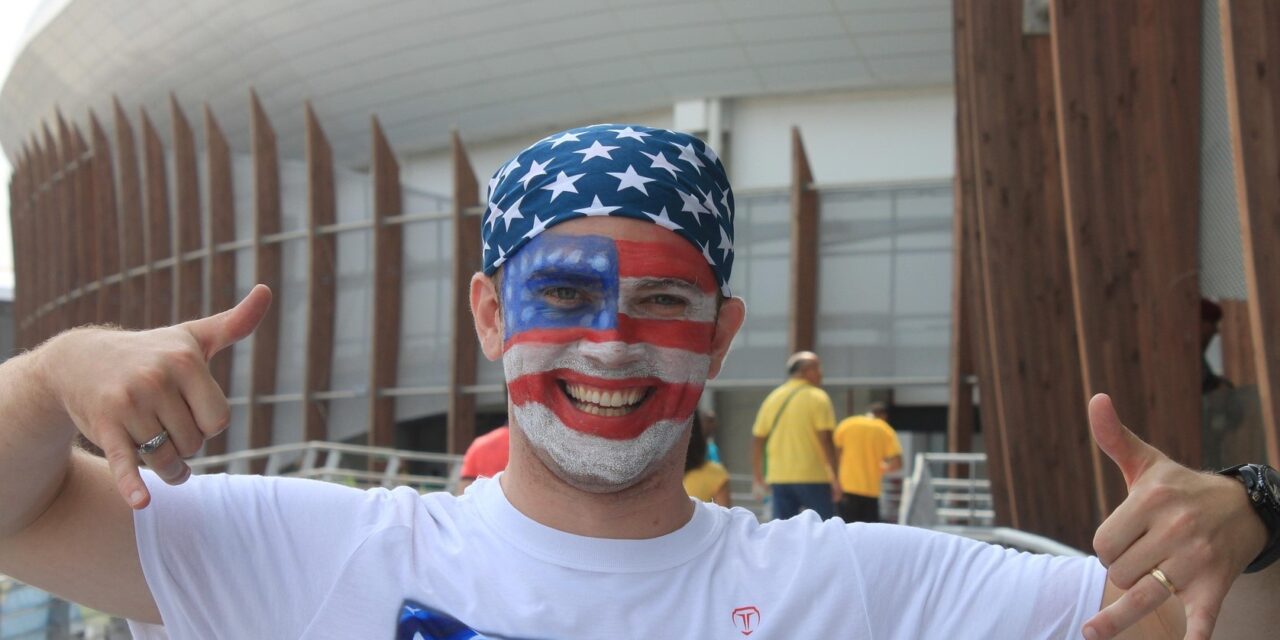
Brazilians and Americans continue to strengthen ties in 2026 through travel, education, immigration, and cultural exchange. While Brazilians pursue opportunities in the United States, American travelers are discovering Brazil beyond its traditional tourist attractions, creating a dynamic two-way connection between the two countries.

For many young Americans, Brazil is far more than just the “land of samba and soccer.”
The relationship between Brazil and the United States has always been full of energy, curiosity, and exchange. In 2026, that connection remains alive and evolving: while thousands of Brazilians dream of studying, working, or living in the U.S., more and more young Americans are discovering Brazil — not just for its world-famous beaches, but for authentic cultural experiences that go beyond the postcards.
Brazilians in the U.S.: Visas, Airport Holds, and Deportations
For many Brazilians, the U.S. remains an important destination for study, career growth, and cultural exchange. But immigration rules and enforcement have become an increasingly important part of the planning process.
The right visa matters: Students must use the appropriate student status, generally an F-1 visa for academic study. A visitor visa does not permit regular study toward a degree. The U.S. Department of State states that study is not permitted on a visitor visa, while F-1 visas are intended for academic students. In 2026, the application process also includes expanded screening and vetting for F-1 applicants, including online presence review.
Deportations and repatriations continue: Official Brazilian data show that 3,294 Brazilians were deported from the United States in 2025, compared with 1,648 in 2024. The total was 1,240 in 2023 and 1,423 in 2022. In 2026, flights carrying Brazilians repatriated from the United States have continued. Among the flights officially reported through September, groups of 73, 67, 115, 87, 93, 78 and 65 Brazilians arrived at Confins, in Minas Gerais, between July and September. The Brazilian government continues to provide reception, health assistance, psychosocial support and guidance for returning passengers.
Immigration policy changed during 2026: The U.S. Department of State temporarily paused immigrant visa issuance for nationals of Brazil and several other countries beginning January 21, 2026. According to the Department, that pause was no longer in effect as of August 21, 2026, following a court order.
Top U.S. destinations for Brazilians: Orlando, Miami, Boston, New York, Los Angeles, and San Francisco remain important destinations for Brazilian immigrants. More recent Migration Policy Institute estimates for 2020–24 show that Florida accounted for 23% of Brazilian immigrants in the U.S., Massachusetts for 17%, and California for 9%. The greater Boston, New York, and Miami metropolitan areas together were home to about 34% of Brazilian immigrants, followed by Orlando, Los Angeles and other metropolitan areas.
Americans in Brazil: Beaches, Culture, and Authentic Experiences
For young Americans, Brazil is far more than just the “land of samba and soccer.” It’s a place where you can feel the rhythm of street festivals, dive into tropical coastlines, and experience authenticity in every corner.
Brazil’s appeal to American travelers is also reflected in the numbers. In 2025, Brazil received 759,637 tourists from the United States, making the U.S. the country’s third-largest international source market, behind Argentina and Chile. Overall, Brazil welcomed 9,287,196 international tourists in 2025, a 37.1% increase compared with 2024.
The momentum continued into 2026. Between January and July 2026, more than 4 million international tourists arrived in Brazil by air, 12% more than in the same period of 2025.
One important change for American travelers is that Brazil’s entry rules are no longer the same as they were before 2025. Since April 10, 2025, U.S. citizens traveling to Brazil for tourism or business have been required to obtain an electronic visitor visa (e-Visa). The e-Visa is valid for stays of up to 90 days, and the current fee listed by Brazil’s Ministry of Foreign Affairs is US$80.90.

Rio de Janeiro is a classic as it has been attracting foreigners for several years
While nearby destinations like Mexico, Puerto Rico, and the Caribbean often appeal to American travelers because of affordability and convenience, Brazil stands out for its unique mix of nature and culture. Travel trends continuing into 2026 include:
- Authenticity: living like a local, exploring neighborhoods, and tasting regional foods.
- Sustainability: eco-friendly tourism and preserved beaches are increasingly important to travelers looking for nature-based experiences. Brazil’s international tourism promotion continues to emphasize destinations that combine nature, culture, sustainability and authentic experiences.
- Hot destinations: beyond Rio de Janeiro and Salvador, Florianópolis, Jericoacoara, and Fernando de Noronha continue to offer younger travelers alternatives to Brazil’s most traditional tourist routes.
A Two-Way Cultural Exchange
This movement isn’t just about borders or policies — it’s about people. Brazilians and Americans are crossing paths in airports, classrooms, beaches, and festivals, building bridges through shared curiosity and ambition.
The movement is also supported by strong air connectivity between the two countries. Embratur’s 2025 market analysis identified dozens of direct connections between U.S. cities and Brazilian destinations, with routes linking cities such as New York, Miami, Orlando, Boston, Atlanta, Houston, Dallas, Los Angeles and Chicago to major Brazilian cities.
- For Brazilians: the challenge is careful planning, choosing the right visa, understanding the conditions attached to that visa, and avoiding risky shortcuts that could jeopardize their plans in the United States.
- For Americans: the opportunity is to go beyond the tourist brochures and immerse themselves in Brazil’s music, food, natural landscapes, and diverse cultural scenes — while also planning ahead for Brazil’s current visa requirements.
Conclusion

Los Angeles is one of the American cities that most attracts Brazilians for its climate and beach culture
In 2026, Brazilians and Americans remain in constant motion. Between airports and visas, beaches and universities, what truly connects the two nations is the search for discovery.
The numbers show that this two-way movement remains significant: 3,294 Brazilians were deported from the U.S. in 2025, while 759,637 Americans traveled to Brazil during the same year. At the same time, Brazil welcomed more than 9.2 million international tourists overall in 2025, and international arrivals continued to grow in the first months of 2026.
Despite legal or logistical barriers, the desire to learn, travel, and live new experiences continues to be the real bridge between Brazil and the United States.
* For airfare from the United States to Brazil or Latin America, customized travel packages, alternative accommodations, as well as travel planning consultation please visit our travel agent page or contact Magali da Silva directly by phone or whatsapp: 1(323)428-1963.
Frequent Ask Questions – FAQ
Can Brazilians study in the U.S. with a tourist visa?
No. To study at schools, colleges, or universities, Brazilians need an F-1 student visa. Studying with only a tourist visa is not allowed.
Have deportations of Brazilians increased in recent years?
Yes. Between 2018 and 2022, over 12,000 Brazilians were deported, and strict immigration enforcement continues in 2025.
Which U.S. cities are most popular with Brazilian students?
Orlando, Miami, Boston, New York, Los Angeles, and San Francisco are top choices thanks to strong schools and large Brazilian communities.
Is Brazil still popular among young American beach travelers?
Yes, though nearby destinations like Mexico and the Caribbean are often more practical, Brazil is prized for authenticity, cultural depth, and natural beauty.
What Brazilian cities attract American travelers in 2025?
Rio de Janeiro and Salvador remain classics, while Florianópolis, Jericoacoara, and Fernando de Noronha are trending among adventurous younger travelers.