Located in northeastern Brazil, Canoa Quebrada is a former fishing village turned global tourist hotspot. Known for its red cliffs, dunes, and vibrant nightlife, it blends natural beauty with adventure and culture. Once a hidden hippie retreat, today it stands as one of Brazil’s most iconic beach destinations.
By Simone Sousa Leandro |Translation: Corey Bunyard
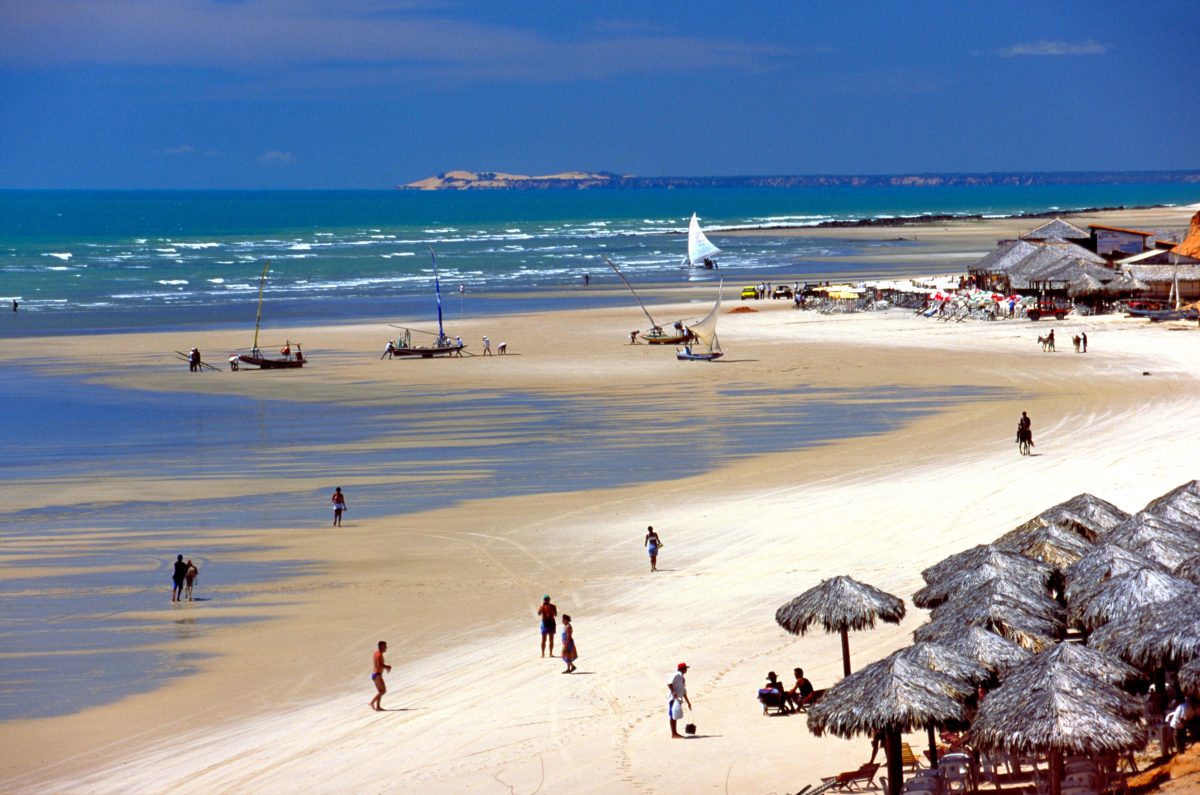
Canoa Quebrada evolved from a remote fishing village into an internationally recognized beach destination.
Located on the eastern coast of Ceará, in northeastern Brazil, approximately 100 miles (160 km) from Fortaleza, Canoa Quebrada is a former fishing village that has evolved into one of Brazil’s best-known international beach destinations. Famous for its dramatic red cliffs, expansive sand dunes, turquoise waters and lively nightlife, the destination combines natural beauty, local traditions and outdoor adventures.
Discovered by hippies in the 1970s, Canoa Quebrada gradually developed into a welcoming coastal community with a diverse selection of accommodations, restaurants, artisan shops and cultural experiences. Today, it attracts Brazilian vacationers as well as international visitors looking for something different from the country’s more commercialized beach destinations.
For Americans planning a trip to Brazil, Canoa Quebrada offers an opportunity to explore a less familiar side of the country, where traditional fishing culture meets international tourism, and relaxing beach days can easily turn into evenings filled with music and entertainment.
Adventure, Nature and Outdoor Activities in Canoa Quebrada
Whoever visits Canoa Quebrada quickly realizes that this is not a destination for sitting still. Its coastline, dunes and favorable wind conditions create opportunities for different types of outdoor activities, whether visitors prefer a relaxing excursion or an adrenaline-filled adventure.
Some of the most popular experiences include:
-
Traditional jangada excursions: These small, colorful wooden fishing rafts are part of Ceará’s coastal heritage. Visitors can take scenic rides along the coastline while learning about local fishing traditions and hearing stories from experienced fishermen.
-
Buggy rides across the dunes: One of the region’s signature activities, buggy tours take visitors through sandy landscapes and offer panoramic views of the coastline. Depending on the route, some excursions include dune slides and stops at natural swimming areas.
-
Natural pools at Porto das Baterias: When the tide is low, natural pools can become an attractive option for families and visitors interested in exploring the coastline. Always check local conditions and follow guidance from experienced operators before entering the water.
-
Kitesurfing and windsurfing: Consistent coastal winds make the region particularly attractive to water-sports enthusiasts.
-
Paragliding and ziplining: Visitors looking for a different perspective can experience the scenery from above, with views of the red cliffs, dunes and ocean.
Even beginners can explore some of these activities through local instructors and tour operators. For more demanding sports, however, visitors should check the operator’s qualifications, equipment and safety procedures before booking.
Sunset Views and the Famous Broadway Nightlife
One of the most memorable experiences in Canoa Quebrada is watching the sunset from the top of a sand dune. The combination of reddish cliffs, golden sand and the Atlantic Ocean creates an impressive landscape, making this one of the area’s most photographed moments.
After sunset, the atmosphere changes as visitors head toward the famous Broadway, the village’s main entertainment street. Despite its name, this is not the New York entertainment district but a lively pedestrian-oriented area filled with restaurants, bars, shops and music venues.
Visitors can enjoy a mix of musical styles, including:
-
Reggae and Brazilian Forró.
-
Rock and electronic music.
-
Live performances and regional entertainment.
-
Restaurants serving traditional Ceará cuisine and international dishes.
Seafood is a major attraction, with fish, shrimp and other locally prepared specialties appearing on many menus. Broadway is also a good place to discover regional handicrafts and enjoy the village’s multicultural atmosphere.
From a Remote Fishing Village to an International Beach Destination
Canoa Quebrada’s history is closely connected to the hippie movement of the 1970s and the arrival of European travelers in subsequent years. Its remote location and distinctive landscapes helped attract visitors looking for alternative lifestyles, natural beauty and a slower pace of life.
During the 1980s, the village became increasingly known internationally. At the time, the approximately 12 km (7.5 miles) between Aracati and Canoa Quebrada involved difficult access, with parts of the journey requiring four-wheel-drive vehicles.
The destination has since developed a stronger tourism infrastructure, including hotels, guesthouses, restaurants and organized excursions, while retaining much of the visual identity that made it famous.
Its red cliffs, sand dunes and distinctive coastal scenery remain among its greatest attractions, helping Canoa Quebrada maintain its place among the most recognizable beach destinations in northeastern Brazil.
For travelers interested in discovering more of the region, Soul Brasil also features a guide to Jericoacoara, another iconic Brazilian beach destination.
How to Get to Canoa Quebrada from Fortaleza
Canoa Quebrada is located in the municipality of Aracati, approximately 160 km (100 miles) southeast of Fortaleza. For international visitors, Fortaleza is the main arrival point, particularly for travelers flying into Ceará from other Brazilian cities or connecting through international routes.
The destination can be reached by rental car, private transfer or intercity bus.
By Car or Private Transfer
From Fortaleza, take the CE-040 highway toward Aracati, passing through coastal municipalities such as Aquiraz, Cascavel, Beberibe, Parajuru and Fortim. Near Aracati, follow the signs toward Canoa Quebrada, which is approximately 12 km (7.5 miles) from the city.
The journey generally takes between 2.5 and 3.5 hours, although traffic, stops and road conditions can affect travel time.
For American visitors unfamiliar with Brazilian roads, hiring a private driver or arranging a hotel transfer can be a convenient alternative to renting a car. It is also worth confirming whether the accommodation offers airport pickup from Fortaleza.
By Bus from Fortaleza

Its iconic red cliffs and dunes are among the most photographed landscapes in Brazil.
Daily bus services connect Fortaleza with Aracati and, depending on the operator and schedule, Canoa Quebrada itself. Viação São Benedito is one of the traditional companies serving the route.
Another option is to travel with companies operating between Fortaleza and Aracati, then arrange a taxi or local transfer for the remaining approximately 12 km to the beach.
The buses generally depart from Fortaleza’s main bus terminal, known as Terminal Rodoviário Engenheiro João Thomé. Travelers should check current schedules, departure locations, baggage policies and ticket availability before leaving.
Useful transportation information is available through the Canoa Quebrada bus guide.
By Air
Most international travelers will arrive at Pinto Martins International Airport (FOR) in Fortaleza. From there, they can continue to Canoa Quebrada by road.
Aracati also has a regional airport, but travelers should check its current commercial flight availability before planning their itinerary around it.
For visitors coming from the United States, it is worth considering an additional overnight stay in Fortaleza if the international flight arrives late, rather than beginning a long road journey immediately after landing.
When Is the Best Time to Visit Canoa Quebrada?
Canoa Quebrada enjoys warm temperatures throughout the year, generally ranging between approximately 80°F and 86°F (27°C and 30°C). However, the best time to visit depends on the type of experience travelers are looking for.
July through December is generally the preferred period for visitors seeking sunnier beach days, with August through November particularly attractive because of lower rainfall and more stable weather.
The region’s rainy season generally occurs from February through May, with March and April often receiving more precipitation. This does not mean beach activities are impossible, but rain can affect excursions and outdoor plans.
For visitors interested in wind sports, the second half of the year is especially appealing.
-
July to December: Generally favorable conditions for beach activities, sightseeing and outdoor excursions.
-
August to November: Particularly attractive for visitors looking for sunny days and relatively little rainfall.
-
July to January: A broader period of favorable winds for kitesurfing and windsurfing, although conditions vary.
-
February to May: Rainier months, when travelers should allow greater flexibility in their itineraries.
The Ceará meteorological and environmental authorities (FUNCEME) provide regional weather information that can help visitors plan their trips.
Where to Stay in Canoa Quebrada
Canoa Quebrada offers accommodation options for different budgets and travel styles, ranging from simple guesthouses and hostels to boutique hotels and properties with swimming pools and ocean views.
For American travelers, choosing the right location can make a difference, particularly if they want to explore the village on foot and enjoy Broadway’s nightlife without depending on transportation.
Some accommodation options include:
-
Hotels and boutique properties: Suitable for travelers looking for more services, comfortable rooms, swimming pools and organized excursions.
-
Pousadas (guesthouses): A popular Brazilian accommodation style, often offering a more personal experience, breakfast and a connection with the local community.
-
Hostels: An alternative for younger travelers, backpackers and visitors interested in meeting other international tourists.
-
Vacation rentals: Houses and apartments can be convenient for families and groups planning longer stays.
Visitors who prefer easy access to restaurants, bars and shops can look for properties near Broadway. Those seeking a quieter experience may prefer accommodations farther from the main entertainment area or closer to the beach.
The official Aracati tourism directory provides a list of hotels, guesthouses and other local tourism businesses. It is advisable to compare recent reviews, check the exact location and confirm amenities directly with the property before booking.
Nearby Attractions Worth Adding to Your Itinerary
Canoa Quebrada is an excellent starting point for exploring other destinations along Ceará’s eastern coastline. Visitors with extra time can combine several beaches and coastal communities in one trip.
Morro Branco: Colorful Cliffs and Natural Landscapes
Another remarkable attraction is Morro Branco Beach, located in Beberibe, approximately 85 km (53 miles) from Fortaleza.
The destination is famous for its multicolored cliffs, natural formations and colorful sands, which local artisans use to create decorative artwork inside glass bottles.
Visitors can explore the natural scenery, take guided walks through the cliffs and enjoy the beaches. Depending on the itinerary, Morro Branco can be included in a broader road trip along Ceará’s eastern coastline.
For travelers interested in exploring more than one beach destination, Soul Brasil’s guide to the treasures of Ceará’s eastern coast also covers Caponga and Pontal de Maceió.
Safety Tips and Practical Information for American Visitors
Canoa Quebrada is an established tourist destination, but international visitors should take ordinary travel precautions and plan their activities carefully.
The following recommendations can make a trip more comfortable:
-
Protect personal belongings: Avoid displaying expensive jewelry, large amounts of cash or expensive electronics, particularly in crowded areas and on the beach.
-
Be careful at night: Broadway is a popular entertainment area, but visitors should use registered transportation when returning to accommodations farther away. Avoid walking alone on isolated beaches after dark.
-
Choose reliable tour operators: Book buggy rides, jangada excursions, paragliding and other activities through established operators. Confirm prices, routes and safety equipment before departure.
-
Pay attention to ocean conditions: Currents, tides and waves can change quickly. Follow local warnings and avoid swimming in areas without appropriate safety guidance.
-
Use sunscreen and stay hydrated: The northeastern Brazilian sun can be intense, even on windy or partly cloudy days.
-
Keep travel documents secure: Carry a copy of your passport when appropriate and leave the original in a secure place at your accommodation.
-
Arrange transportation in advance: Especially when arriving from Fortaleza, confirm the pickup point, price and destination with your driver or transfer company.
American travelers should also review the latest U.S. Department of State travel advisory for Brazil before departure. The advisory provides information about security conditions, transportation, local laws and emergency assistance.
For emergencies in Brazil, the main numbers are 190 for police, 192 for ambulance services (SAMU) and 193 for the fire department.
Currency, Language and Payments

The destination gained fame in the 1970s and 80s through hippie and European tourism.
Brazil’s official currency is the Brazilian real (BRL). Although some tourism businesses may accept international credit cards, visitors should not assume that every establishment accepts U.S. dollars or foreign cards.
Visa and Mastercard are commonly used, while cash can be helpful for smaller purchases, local transportation and artisan shops. Brazil also uses Pix, an instant payment system, but foreign visitors may not have access to it without an eligible Brazilian bank account or payment service.
Portuguese is the primary language spoken in Canoa Quebrada. English may be understood in some hotels, restaurants and tourism businesses, but not everywhere. Having a translation app and the name and address of your accommodation saved offline can be helpful.
Visitors should also check their international mobile phone plans and consider purchasing a Brazilian SIM or eSIM for internet access during the trip.
The Origin of the Name Canoa Quebrada
The history traditionally associated with the name Canoa Quebrada dates back to the colonial period, around 1650. According to a local historical account, Portuguese navigator Francisco Aires da Cunha was traveling along the northeastern Brazilian coast when his vessel reportedly struck rocks near Ponta Grossa Beach.
After the shipwreck, he supposedly reached a fishing village where local residents helped him. The damaged canoe became associated with the name Canoa Quebrada, which translates into English as Broken Canoe.
This account is part of the destination’s traditional historical narrative, although the details should be understood as a local story rather than a fully documented historical fact.
In the 1970s and 1980s, the village became increasingly popular among hippies and European travelers, helping establish its international reputation. Its difficult access at the time contributed to its appeal as a remote destination for people seeking a more alternative lifestyle.
Canoa Quebrada Is Waiting to Welcome You
From its striking red cliffs and enormous sand dunes to traditional jangadas, outdoor adventures and the lively atmosphere of Broadway, Canoa Quebrada offers a distinctive Brazilian coastal experience.
For Brazilians living in the United States who want to reconnect with the country’s natural beauty, culture and regional cuisine, the destination is an appealing addition to a northeastern Brazil itinerary.
International travelers can also discover a different side of Brazil by combining Canoa Quebrada with Fortaleza, Morro Branco and other coastal destinations in Ceará.
* For airline tickets from the U.S to Brazil or Latin America, customized travel packages, hotels and cruises, please visit our travel agent page or contact Magali Da Silva by phone or whatsapp: 1 (323) 428-1963. We are based in Los Angeles, California and have been for over 25 years.
FAQ – Frequently Asked Questions
1. Where is Canoa Quebrada located in Brazil?
Canoa Quebrada is located in the municipality of Aracati, on the eastern coast of Ceará, in northeastern Brazil. It is approximately 160 km (100 miles) from Fortaleza, the state’s capital, and can be reached by car, private transfer or bus.
2. What is the best time of year to visit Canoa Quebrada?
The best period for sunny beach weather is generally July through December, particularly August through November. Travelers interested in kitesurfing and windsurfing can also consider the windy season, which extends from July into January.
3. What are the best things to do in Canoa Quebrada?
Popular activities include buggy rides across the dunes, traditional jangada excursions, kitesurfing, paragliding, ziplining and watching the sunset from the dunes. At night, visitors can explore Broadway, which features restaurants, bars, live music and regional entertainment.
4. How do you get to Canoa Quebrada from Fortaleza?
The destination is approximately 160 km from Fortaleza and can be reached in around 2.5 to 3.5 hours by car, depending on traffic and road conditions. Daily bus services are also available, including routes operated by São Benedito. Private transfers are another convenient option for international travelers.
5. Is Canoa Quebrada a good destination for families and foreign tourists?
Yes. Canoa Quebrada offers hotels, guesthouses, restaurants, beach activities and excursions suitable for different types of travelers. Families should pay attention to tides and ocean conditions, while international visitors should plan transportation, protect their belongings and book activities with established local operators.