From the late 1980s onward, Brazilian samba dancers played a crucial role in spreading Brazil’s rhythm, joy, and cultural identity across California. This article highlights seven remarkable women whose talent and dedication helped establish samba as a vibrant presence in Los Angeles and beyond.
By Lindenberg Junior | Translation: Isabela Jordão

I remember that in the late 1980s, Brazilians living in California had the rare opportunity to experience a true Brazilian carnival in Los Angeles. The Annual Hollywood Brazilian Carnaval, produced by Portuguese-born Maria Booker through Samba & Saudade Productions, took place for several years at the Hollywood Palladium and attracted thousands of people.
In February 1990, just weeks after completing my first year in Los Angeles, I finally attended this iconic event. Missing the carnival atmosphere — samba, batucada, and pure joy — I was both nostalgic and curious. To my surprise, the venue was packed with more than 2,000 people, including Americans, Latinos, Europeans, and Brazilians.
On stage, Brazilian musicians performed alongside a powerful percussion section of at least fifteen players. And, of course, samba dancers — dressed in bikinis, feathers, and sequins — electrified the crowd.
Marisa Alyrio: The First Authentic Samba Dancer in L.A.

Marisa Alyrio
One dancer immediately caught my attention: a brunette with wavy black hair and flawless samba technique. She was Marisa Alyrio, from São Paulo, who left a strong mark in the 1980s and 1990s.
Marisa arrived in Los Angeles in 1983, still very young, after spending time in Rio de Janeiro as part of Adriano Lobato’s samba group. An accomplished samba no pé dancer and choreographer, she soon met Lázaro and Floriano, founders of Embrassamba, the first Brazilian band in Los Angeles, becoming part of the group as a dancer.
She is widely regarded as the first authentic samba dancer in Los Angeles and later became a reference figure at the Hollywood Palladium Brazilian Carnaval. Marisa danced at the event for eighteen years, sharing the stage with Brazilian icons such as Armandinho, Emílio Santiago, and Martinho da Vila.
In 1992, she was crowned “Samba Queen” by MILA (Independent Youth of Los Angeles), Southern California’s first recreational samba school, founded by former soccer player Luisinho.
Christiane Callil: From Club Med to Beverly Hills

Christiane Callil
In 1986, another São Paulo native, Christiane Callil, arrived in Los Angeles after meeting her future husband while dancing at Club Med in Mexico. Early on, she earned a scholarship at the studio of renowned choreographer Joe Tremaine, built professional connections, and began auditioning.
Her first major job was dancing at an Academy Awards event, followed by appearances in the films Salsa and The Mambo Kings. With an agent, opportunities expanded naturally.
In 1994, during the FIFA World Cup in the U.S., Christiane had a breakthrough idea while visiting a Beverly Hills club: why not offer a samba show? The owner, Mark Fleishman — also owner of New York’s Studio 54 — embraced the concept.
She quickly created “The Girls from Ipanema”, the first samba show of its kind in Los Angeles, Vegas-style, featuring dancers and musicians. Christiane starred as both dancer and singer, performing in Portuguese and English.
“I had beautiful Brazilians and a strong concept. It was an absolute success in Beverly Hills,” she told Soul Brasil.
Her success led to international performances, sharing stages with Aretha Franklin and Dionne Warwick, and appearances at iconic venues like the Hollywood Bowl and House of Blues. In 1995, the Los Angeles Times published a five-page feature on her and her group.
Valéria Trindade: From Nanny to Samba Queen

Valéria Trindade
Valéria Trindade, from Rio de Janeiro, arrived in New York in 1987, later moving to Kentucky and finally settling in California in 1993. Her journey included working as a nanny, earning a high school diploma, training as a nursing assistant, and graduating in business management.
Her samba story began in 1998 at the Sambalá Samba School parade during the Long Beach Brazilian Carnival.
“A friend took me to watch the parade, and they needed someone at the last minute. I ended up dancing — and my life changed right there,” Valéria recalled.
She rose through the ranks as passista, drum princess, drum queen, godmother, instructor, and choreographer. Over the years, she taught samba to countless Americans and Latinos under the name Valéria ‘Rio Bela’.
Today, she serves as president of Sambalá’s California branch.
“More than twenty years later, my greatest joy has been making friends and sharing our culture — including with my two children,” she said.
Gláucia Araújo: Samba on Stage and Screen

Gláucia Araujo
Also from Rio, Gláucia Araújo arrived in Los Angeles in 1998 and joined The Girls from Ipanema. In addition to dancing, she worked as a model and appeared in commercials, TV shows, and films such as Family Law, Gilmore Girls, and Austin Powers: Goldmember.
Her most lasting contribution came through the OYA Brasil Samba Show, alongside fellow carioca Daniela Brazil.
“Performing with the band Badauê was unforgettable. Their versatility helped me grow immensely as a dancer,” Gláucia said.
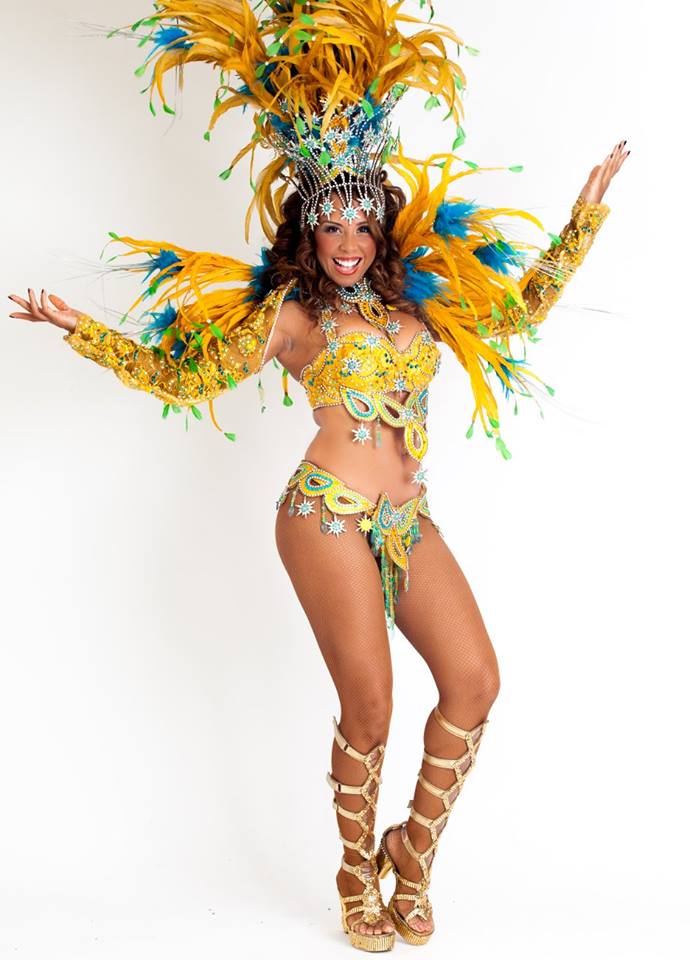
Daniela Brazil
Daniela Brazil: The OYA Brasil Era
Daniela Brazil arrived in Los Angeles in 2000, believing strongly in the American Dream.
“The city and the moment were perfect for my professional growth as a dancer,” she said.
A professional samba dancer since 1997 with Portela Samba School, Daniela continued her journey in California with determination. Between 2000 and 2010, she and Gláucia became unforgettable figures through the OYA Brasil duo, leaving lasting memories for the Brazilian community.
Kátia Neves: Samba Across Continents

Katia Neves
Kátia Neves, also from Rio, moved to Los Angeles in 1995 after eight years in Japan, where she had worked as a professional dancer since 1987. One of her first friends in L.A. was Ana Laidley (Aninha Malandro), co-founder of the International Samba Congress.
“We met at Lulu’s Alibi in West L.A. — it was love at first sight,” Kátia laughed.
Through this connection, she landed her first samba job at the iconic Zabumba restaurant. Today, she still dances occasionally and works as a licensed cosmetologist.
A Lasting Cultural Legacy
All of these samba dancers played a vital role in spreading Brazilian culture — especially samba — throughout California. Alongside figures like Jônia Queen, who arrived in 2000 and appeared on the magazine’s 100th edition cover, they represent a pioneering generation.
Together, they prepared the ground for dozens of samba dancers who now perform across the Golden State, keeping Brazilian rhythm alive and thriving — for gringos to see, hear, and applaud.
* This article was the cover story that celebrated the 100th special edition of Soul Brasil in the first months of 2019 just before the covid pandemic arrived.
FAQ – Soul Sambistas: Brazilian Samba in California
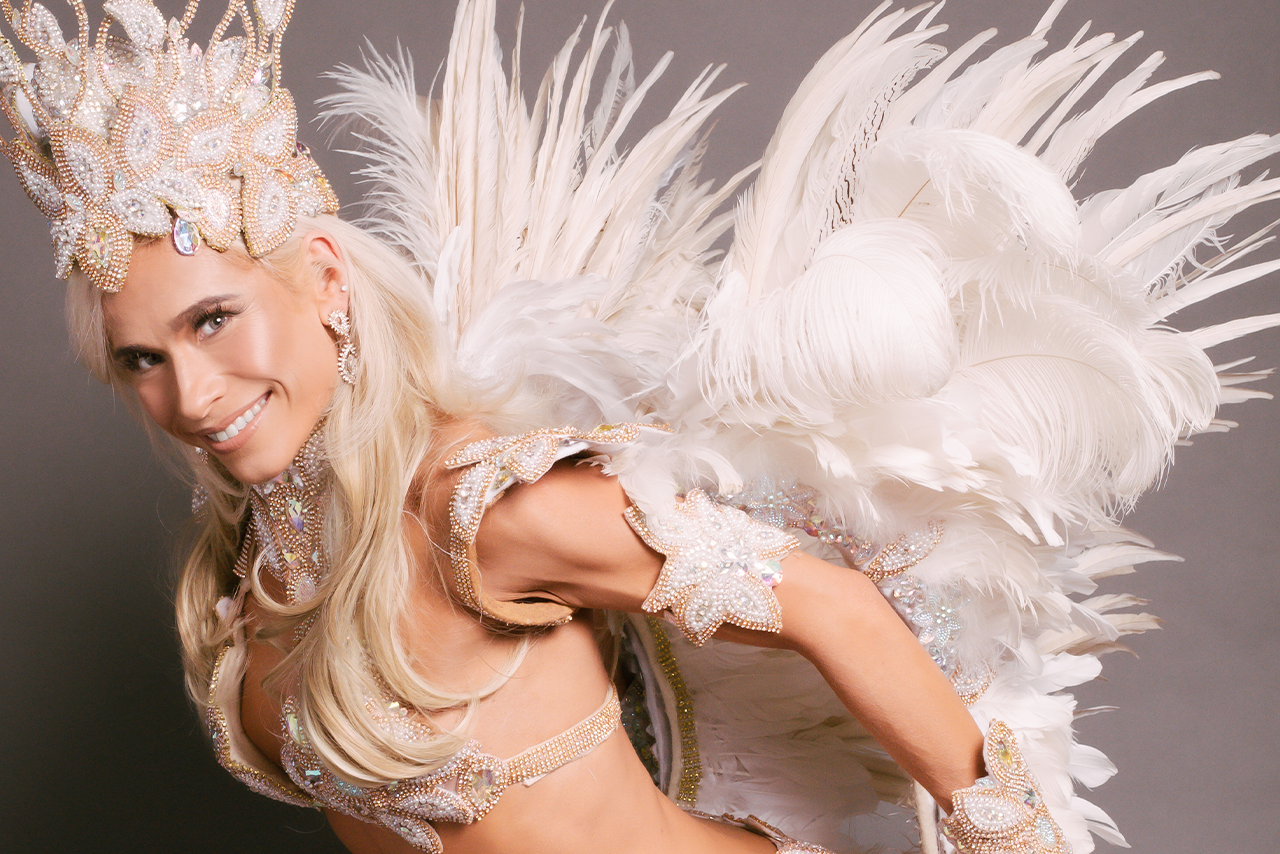
The choreographer and samba dancer Jonia Queen was on the cover of “Music and Dance special edition, our centenary issue
1. Who are the “Soul Sambistas” featured in this article?
They are seven Brazilian samba dancers who played a key role in spreading samba culture throughout California, especially in Los Angeles, from the late 1980s onward.
2. Why was California important for the growth of Brazilian samba abroad?
California, particularly Los Angeles, offered a diverse cultural scene and international visibility, allowing Brazilian artists to connect with global audiences through music, dance, and major events.
3. What impact did the Hollywood Brazilian Carnaval have on the community?
The Hollywood Brazilian Carnaval became a landmark event, bringing authentic Brazilian music, dance, and joy to thousands of people and strengthening cultural exchange.
4. Did these dancers work only in samba performances?
No. Many of them expanded their careers into choreography, teaching, modeling, film, television, and cultural production, broadening the reach of Brazilian culture.
5. What is the legacy of these samba dancers today?
Their legacy lives on through the new generations of samba dancers in California, cultural organizations, and continued appreciation of Brazilian music and dance in the United States.