1970s fashion continues to influence modern style through bohemian silhouettes, floral prints, flared pants, sequins, oversized shoulders and luxurious details. From disco glamour to free-spirited looks, the decade remains an enduring reference for designers and fashion lovers in the U.S. and around the world.
By Aldo Mencatto

The revival of 1970s fashion is less about copying the past and more about giving it a modern makeover.
From the glamour girl to the free-spirit bohemian, the favorite 1970s style stereotypes are back for a new day. Fringing, floral patterns, shine, larger shoulders and volume have returned to fashion, bringing with them a distant sense of freedom and luxurious interpretations of the unmistakable bohemian style.
These elements seem to come around about every five years, constantly being reinterpreted for a new generation. Modern silhouettes and contemporary takes often revisit some of the best elements of the pre-disco era: subdued prints, glorious earth tones and billowing skirts.
What Did 1970s Fashion Look Like?
Stylistically, the 1970s were a free-for-all of influences that helped define the era. The decade was marked by voluminous skirts, bell sleeves, flared pants, belted suede and wildly patterned caftans.
Fashion in that showily dissolute decade was silky and caressing, with fluid silhouettes. Bras were increasingly seen as a relic of a more restrictive past, reflecting the broader changes in attitudes toward fashion, freedom and personal expression.
The decade’s style was not defined by a single look. Instead, it brought together glamorous, bohemian, colorful and extravagant influences, creating a fashion language that continues to inspire designers today.
Sequins, Shine and the Disco Era
Sequins became an important part of the fashion story of the 1970s. They also began to be called spangles, winning over socialites and eventually serving as decoration for dance and theater costumes.
From the 1970s onward, the small, bright disk became part of fashion culture. Through pop music, sequins became one of the visual symbols of the decade, representing glamour, celebration and the growing spirit of nightlife.
“It was like you were walking around naked, but you had clothes on,” said Phyllis Magidson, the curator of costumes and textiles at the Museum of the City of New York, in an interview with The New York Times.
1970s Fashion and the Idea of Timeless Style
The fashion of the 1970s continues to inspire. Ever-evolving, its philosophy is now focused on timeless style.
Sophistication and luxury are words that fit the modern revival of 1970s fashion particularly well. Sparkly cocktail dresses, fitted garments, large shoulders, fitted jackets and voluminous skirts can all be reinterpreted for contemporary wardrobes.
This new approach is not simply about reproducing an old style. Instead, it gives the visual language of the 1970s a modern makeover while preserving the decade’s sense of freedom, confidence and extravagance.
From the Late 1980s and Early 1990s to Today’s Fashion
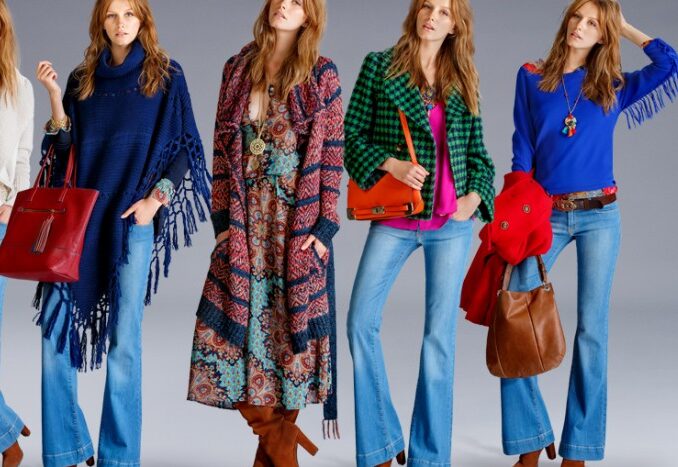
Bohemian style, floral prints, flared pants and flowing silhouettes remain timeless fashion references.
In the late 1980s and early 1990s, sequins continued to shine in the new collections of designers.
In the 1970s, bright dresses were more than a reflection of the festive atmosphere of the time. They also represented a sexy and confident woman. Several brands turned their attention toward excess, high shine and the spirit of a party that seemed to last twenty-four hours a day.
The influence of the decade did not disappear. Instead, many of its elements continued to return in different forms, demonstrating how fashion constantly revisits previous eras.
Prints, Embellishments and the Return of Excess
Certain elements of the period, such as garish prints and unusual color combinations, keep repeating in fashion.
Exaggeration has returned through trends involving appliqués, known as embellishments, rhinestones, sequins, stones and other materials designed to shine. Together, these details evoke one of the most exciting periods of fashion decadence.
And who doesn’t want that flower-emblazoned little dress that makes you feel young again?
The enduring appeal of these elements demonstrates why fashion can be both nostalgic and contemporary at the same time. Styles from the past can return without necessarily looking old-fashioned when they are adapted to new silhouettes, materials and lifestyles.
Why 1970s Fashion Still Matters
The continuing revival of 1970s fashion shows that trends do not necessarily disappear. They evolve.
Bohemian influences, flared silhouettes, floral prints, suede, sequins, oversized shoulders and flowing shapes have repeatedly returned to fashion collections, demonstrating the lasting influence of the decade.
For fashion lovers in the United States, including Brazilian residents who follow both American and Brazilian style trends, the 1970s remain an important reference for understanding how clothing can express freedom, confidence, creativity and individuality.
Fashion may change, but its most influential ideas often remain timeless.
*Aldo Mencatto is a Brazilian Fashion Designer from Rio living in Las Vegas. A true role model of the selfless persona, Aldo’s vision in 2015 was the creation of a clothing line for children (5 to 10) that he could help child cancer foundations. Follow him on Twitter @info123mencatto.
FAQ – Frequently Asked Questions
1. Why is 1970s fashion still popular?
1970s fashion continues to return because its silhouettes, colors and materials offer a combination of freedom, glamour, individuality and bohemian style that can be easily adapted to contemporary fashion.
2. What are the main characteristics of 1970s fashion?
Some of the most recognizable characteristics include flared pants, bell sleeves, floral prints, suede, caftans, flowing skirts, earth tones, oversized shoulders and sequins.
3. Why were sequins important in 1970s fashion?
Sequins became associated with the decade’s growing disco and pop culture, bringing shine and glamour to clothing, dance costumes and nightlife fashion.
4. Is 1970s fashion considered timeless?
Many elements of 1970s fashion have proven to be timeless because they repeatedly return in updated versions, rather than disappearing completely from fashion.
5. How can 1970s style be incorporated into a modern wardrobe?
Modern wardrobes can incorporate 1970s influences through individual elements such as flared pants, floral prints, suede, flowing skirts, sequins, earth tones or statement sleeves instead of reproducing an entire vintage look.