Is there life after death? This article explores different ideas about what may happen after death, including near-death experiences, out-of-body experiences, extrasensory perception, spirit materialization and reincarnation. Drawing on historical accounts and research cited by the author, it examines the question without framing any single religious explanation as definitive.
By Liliana Falabella Martinez | Translation: Katia Moraes and Gisele Sweeney

The expression ‘Near-Death Experience’ (NDE) became associated with this field following its publication
Even knowing that death is a very natural thing, and it’s the only certainty we have about our life, it seems disconcerting to talk about it because we don’t like to remember we won’t be here forever.
In our defiance to imagine life after death, the human mind imagined a wonderful garden, a purgatory full of punishments, an endless cycle of reincarnations, an enlightened and eternal existence, or created a vacuum leading to nowhere.
In this article, we want to provide the reader with more meaningful research facts, arguments and ideas about this subject without bringing religion into the equation.
Energy, Mesmerism and the human body
In the middle of the 1700s, Franz Anton Mesmer gave us a broader knowledge of the “animal” energy that exists in us.
As the creator of Mesmerism, he’s considered the father of “animal magnetism.” His theories affirmed that there is an incalculable principle that acts upon the body and that in every living organism there is a special force that circulates in a magnetic fluid, animating the organic and inorganic world.
He believed that fluid could be transmitted to another body and that this would invigorate weakened bodies. He also believed that people with great vitality could transmit their energy to others if they knew how to redirect it with their hands.
In the 20th century, Kirlian photographs were presented as illustrating Mesmer’s theories by showing sicknesses in our “ethereal body,” or energetic body.
The aura is described as a magnetic field that surrounds every material thing — animated beings or not. Today, this concept of energy is explored and used in areas such as parapsychology and alternative medicine, including acupuncture, Reiki, chakras and Feng Shui, among others.
Can consciousness exist outside the body?
If we remember that energy is wrapped with a substance composed of 70% water, as the human being is, and that water is extremely influenced by thought — based on research cited in the book The Message from Water by Masaru Emoto and also presented in the movie What the Bleep Do We Know? — it is possible to suppose scientifically that this “energy” could manifest itself out of the body, so life can exist without the necessity of the body.
However, this remains a hypothesis rather than established scientific evidence.
Near-death experiences
Thanks to the fantastic progress made in medical procedures and resuscitation techniques, more people are surviving cases of clinical death, such as those associated with cardiac arrest.
The accounts made by people whose journey to the “other side” was interrupted have contributed to a different way of thinking about death and life.
Instead of feeling anguish about being on the path to annihilation, they talk about the certainty that they were only passing from one place of existence to another.
In 1975, psychiatrist Raymond Moody Jr. collected experiences from different people who had died for a few moments and were brought back to life. In his book, they talked about what happened to them during those moments.
The doctor advised them to tell their stories without making conclusions.
His book, Life After Death, attracted considerable attention from both general readers and doctors. The expression “Near-Death Experience” (NDE) became associated with this field following its publication.
The 10 stages described in near-death experiences
The similarity among accounts of near-death experiences is impressive. Even though the stories are different, the majority of them follow a basic script.
These accounts have been interpreted in different ways, and their similarity has led some researchers to investigate whether they can be explained solely as hallucinations or by other physiological and psychological processes.
1. Feeling outside the body
The person feels out of their body and, in that moment, all the discomfort, pain and affliction disappears.
2. Seeing the body from above
They see a similar and subtle form of the body fluctuating a few meters from the ground. The individual consciousness is still linked to this form and, from above, observes the body down below.
3. Perceiving the surrounding environment
The consciousness registers images and ambient sounds. They can see and hear the machines and the efforts of the medical group trying to resuscitate the body.
4. Encountering a tunnel or vortex
At some point, the consciousness loses interest in this information and perceives the existence of a vortex or tunnel that attracts with an irresistible force.
Not all of them pass through the tunnel. Some experience a kind of “fluctuation” and ascend into space. Some report seeing planet Earth and other planets.
5. Moving through the tunnel

None of the arguments above is enough to prove the survival of consciousness after death.
The consciousness penetrates the tunnel and moves at a stunning velocity. A difficult-to-qualify humming accompanies the motion.
6. Reviewing one’s life
The person critically recapitulates their life during the motion.
The memories that surface might not be considered important in an average state of consciousness. In this context, however, they are highly significant.
The whole experience does not follow usual patterns of space and time. Their entire existence can seemingly be seen in a few seconds.
7. Encountering an intense light
At the end of the tunnel, the consciousness perceives a light that can’t be compared to any material-world phenomenon.
This light transmits a sensation of peace, plenitude and happiness. The person wants to go into the light and leave the physical body.
8. Remembering someone or something important
A sudden, specific memory interrupts the process.
The person remembers loved ones or some situation that still needs a solution.
9. Returning to the body
Suddenly, they feel a strong beat and the conscious form goes back to the physical body.
10. Feeling better
The person suddenly gets inexplicably better.
Carl Jung’s reported near-death experience
In 1944, Carl Jung suffered a heart attack and reported having a near-death experience.
He described feeling outside his own body and seeing the Earth from space:
“I felt very high in cosmic space. Very far, below me, was the round Earth bathed in a wonderful blue light.”
Near-death experiences in children
In another research project, doctor Melvin Morse also collected a succession of accounts of the same type, published under Closer to the Light – Learning from the Children.
The stories came from children who survived accidents or serious diseases.
The caution used by Dr. Morse and psychologists when interviewing the children is apparent in the way they narrated their experiences.
The story of Katie
Katie was found floating with her head facing down in the Christian Youth Association’s swimming pool.
Nobody knows for how long she was unconscious or whether she had hit her head on the pool’s rim.
Doctor Morse brought her back to life even though she had no pulse when he applied arterial catheterization.
Katie’s father suggested a round of prayers around her bed. Two nurses and a therapist stayed at her bedside.
Three days later, neurological tests showed a complete recovery.
In front of her mother and brother, Katie identified the doctors and assistants who had taken care of her while she was unconscious.
She surprised everyone by telling them about a beautiful young woman she “knew” was Elizabeth and describing how they flew through the “tunnel.”
She also described visiting Katie’s house, where she saw her brothers and mother in the kitchen preparing lunch before they received the message about her accident.
She described how they were dressed and the movements they made. Later, they all confirmed Katie’s version.
Other experiences associated with life after death
Visions when close to death
When someone in a terminal phase starts to see people who were loved ones in this life and supposedly “come to pick them up.”
Apparitions and ghosts
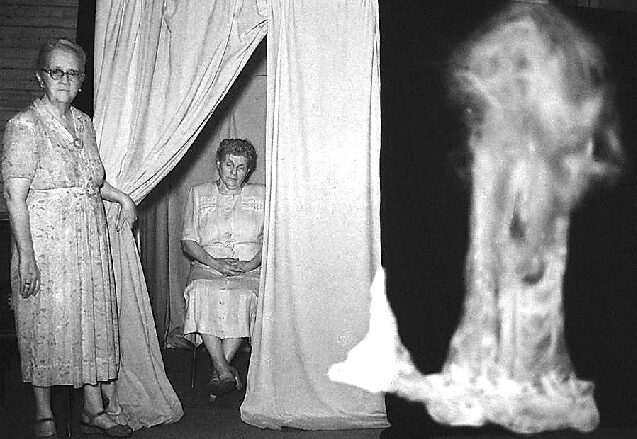
It is important to remain open and informed about the different possibilities that exist
A ghost is traditionally described as the spirit of a deceased person.
History is full of cases of people who reported seeing spirits or hearing voices from another world.
A poltergeist — literally, “noisy spirit” — is described as a type of ghost whose presence is noticed through noises and other disturbances, including objects apparently being moved or thrown.
Out-of-body experiences
An out-of-body experience is a psycho-physiological state in which a person has the sensation of loosening up and “floating,” as if they had abandoned their physical body.
The body can seemingly be seen from a certain distance.
In some situations, people report observing a kind of cord extending from the material body to the “momentary one.”
It is described as a subtle body, capable of hovering and traveling to other places.
According to accounts discussed in this field, out-of-body experiences can occur in situations including:
- natural sleep;
- general anesthesia;
- violent trauma capable of provoking a collapse;
- near-death experiences;
- torture;
- rape;
- very high fever;
- drug poisoning;
- drowning;
- severe crises caused by lack of food.
Extrasensory perception
The parapsychologist and former president of the Brazilian Institute of Psychobiophysics, Hernani Andrade, affirmed that extrasensory perception is a faculty of the spirit.
It manifests itself especially when there is a displacement of the “cupola”; the spiritual body is moved slightly away from the physical body while still maintaining a reasonable interaction between the two.
In this circumstance, there is a mixture of two perceptions: sensory and spiritual.
For example, in the case of clairvoyance, the sensitive person “sees” what happens in the physical plane through ocular vision and in the extra-physical plane through spiritual vision at the same time.
It occurs, for example, when we are looking through a window at its objects while also seeing pedestrians and vehicles on the street through the glass.
In this way, the proposed phenomenon involves a mixture of images from the physical and extra-sensory planes.
Materialization and mediumship
Perhaps one of the most intriguing and complex phenomena in discussions about human nature, materialization is described as occurring when a medium yields ectoplasm, composed of their “energy fluid,” allowing an entity to become materialized.
The first descriptions of mediumship in China occurred 4,000 years ago, and mediums were called Wu.
The phenomena of spirit materialization were studied by scientists including Nobel Prize winner William Crookes, Charles Richet and Baron von Schrenck-Notzing, among others.
William Crookes, an English physicist and chemist born in London in 1832, discovered and studied thallium. He was president of the Chemical Society of London and a member of the Royal Society, and was known for important research in physics and chemistry.
The case of Katie King
During three consecutive years, the spirit Katie King reportedly revealed herself in materialization sessions directed by Sir William Crookes with the help of medium Florence Cook.
Various experiments were conducted, and several photographs of the entity Katie King were taken. Supporters of the phenomenon considered the photographs evidence of its authenticity, including one in which the entity and the medium appeared together.
Through his research, Crookes reported differences in weight, temperature and height between the spirit and the medium.
In an interview published in The International Psychic Gazette in 1917, he stated:
“There is no doubt that a connection was established between this world and another one.”
These claims remain part of the history of psychical research and are not considered established evidence of the existence of spirits by mainstream science.
Reincarnation
When we remember Mozart executing a sonata at the piano when he was four years old and composing an opera when he was eight; Paganini and Teresa Milanollo, both children, playing the violin wonderfully; Liszt, Beethoven and Rubinstein being applauded when they were ten; Pascal, at twelve years old, discovering plane geometry; and Rembrandt, before knowing how to read, drawing like a great master, we ask:
Would everything be just a coincidence, or could these geniuses have passed through other lives mastering their techniques?
The doctrine of successive lives, or reincarnation, is also called Polygenesis, from two Greek words, poly and genesis.
It was formulated since the beginning of civilization in India.
It is found in the Vedas:
“In the same way that we get rid of used clothes to acquire new ones, also the soul discards an old body to put on a new one.”
Pythagoras was the first one to introduce in Greece the doctrine of the renaissance of the soul that he had learned during his travels to Egypt and Persia.
Plato adopted the Pythagorean idea of Polygenesis:
“It is certain that the living creatures come from the deceased ones; that the souls of the deceased still revive.”
Research and accounts of past lives
In our time, Carol Zaleski, a theologian at Harvard, found similar statements among older people and gathered them in her book Otherworld Journeys.
She states that Greek, Roman, Egyptian and Oriental traditions included accounts of people who affirmed that they had died and returned to life afterward, and that after such experiences they no longer feared death as they had before.
According to her, this certainty still survives in the Orient.
Death would be a journey with the purpose of recovering the “true nature” of the traveler.
Professor Ian Stevenson, director of the Department of Psychology at the University of Charlottesville (Virginia), investigated more than 1,600 cases involving alleged memories of previous lives.
Many of these individuals reportedly had birthmarks on their bodies in places where they supposedly suffered wounds in previous lives, with researchers comparing these marks with accounts of their alleged past lives.
The psychotherapist Brian Weiss, who used hypnosis to treat traumas generated in this life, was surprised when one of his patients began remembering other incarnations and also provided information about her family, including a son who had already died.
Using past-life therapy, he reported being able to treat the patient’s traumas and subsequently redirected his career toward this type of therapy.
What does the evidence tell us?

But until then, why not live more in harmony with the Laws of Nature, of which we are part, and thus contribute positively by doing the best we can today?
None of the arguments above is enough to prove the survival of consciousness after death.
Still, the collection of phenomena discussed in this article constitutes, according to the author, a significant body of testimony in favor of that possibility.
It is important to remain open and informed about the different possibilities that exist.
As Shakespeare wrote in Hamlet:
“There are more things in heaven and earth than are dreamt of in our philosophy.”
Eventually, some day all of us will contemplate this transition.
But until then, why not live more in harmony with the Laws of Nature, of which we are part, and thus contribute positively by doing the best we can today?
FAQ – Frequently Asked Questions
1. What is a near-death experience?
A near-death experience (NDE) refers to a reported experience associated with a situation in which a person was close to death or experienced clinical death and was later resuscitated. Accounts can include sensations of leaving the body, seeing a light, moving through a tunnel and reviewing one’s life.
2. Is there scientific proof of life after death?
There is currently no conclusive scientific evidence establishing that consciousness survives death. Near-death experiences and other phenomena have been studied and interpreted in different ways, but they do not constitute definitive proof of an afterlife.
3. What is an out-of-body experience?
An out-of-body experience is a reported sensation of being separated from one’s physical body and observing oneself or the surrounding environment from another perspective. Such experiences can occur in several circumstances, including sleep, anesthesia and extreme physical or psychological conditions.
4. What is reincarnation?
Reincarnation is the belief that an individual’s soul or consciousness can begin a new existence in another body after death. The concept appears in several philosophical and religious traditions and has also been investigated through reported memories of previous lives.
5. What is the difference between a near-death experience and reincarnation?
A near-death experience generally refers to an experience reported during or around a life-threatening event, while reincarnation involves the belief that consciousness or a soul continues through successive lives. They are different concepts, although both are sometimes discussed in relation to the possibility of consciousness existing beyond the physical body.