By Christine Di Stefano
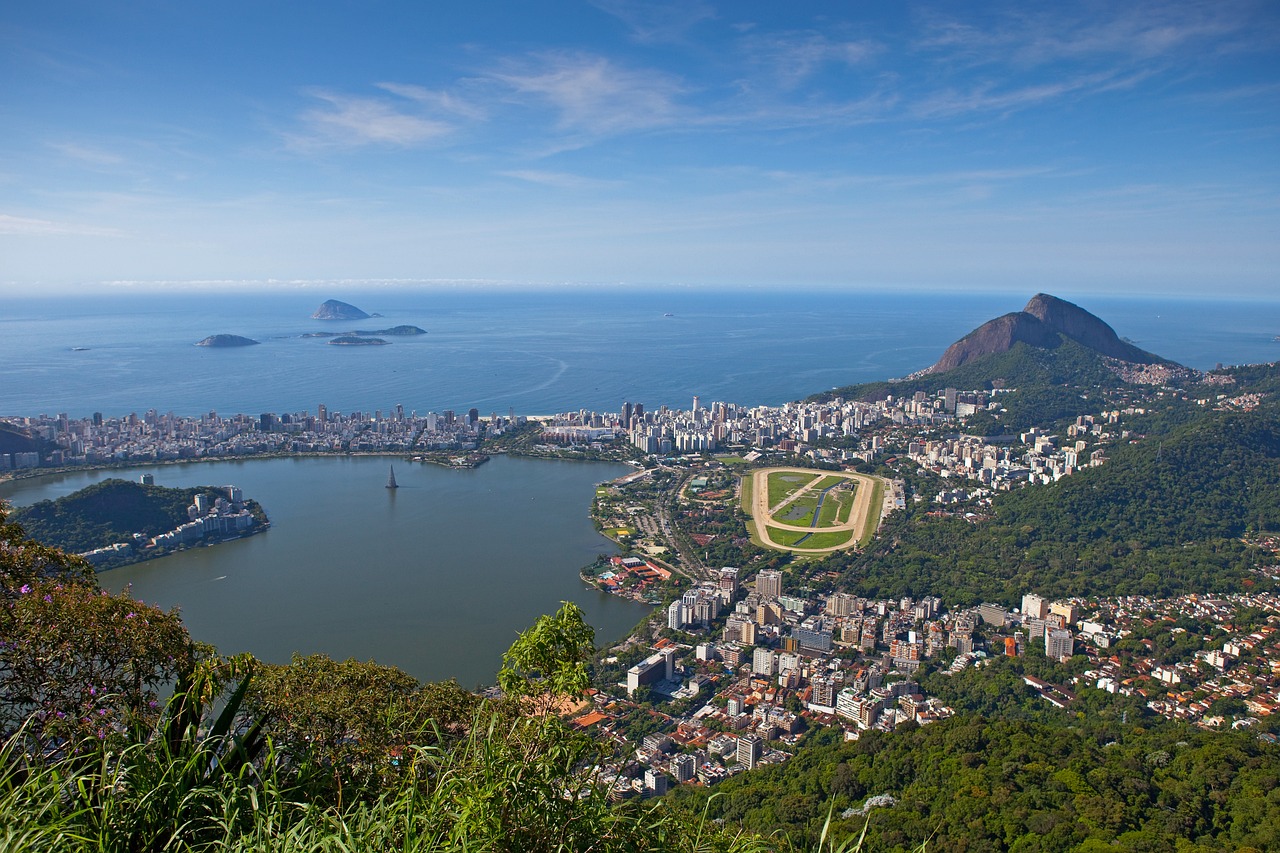
Aerial view of the Rio’s Zona Sul (southern zone of Rio de Janeiro) with the Rodrigo de Freitas lagoon in the background on the left.
Flying into Galeão Airport, I expected my first glimpse of Rio de Janeiro – the “cidade maravilhosa” – to hit me like lightning. I imagined tears, goosebumps, maybe even a heart attack. Instead, I just felt tired. After years of dreaming about Brazil, I could hardly believe I was finally there. Exhausted, sniffling from a cold, and a bit dazed, all I wanted was a bed.
From my taxi window, I watched the Favela da Maré fade behind us, the Lagoa Rodrigo de Freitas glimmering in the distance, and Christ the Redeemer standing tall above the city. Yet nothing seemed real. What surprised me most wasn’t the lack of excitement – it was the sudden wave of homesickness that washed over me.
But everything changed the next night, when I arrived at my homestay apartment in Ipanema. Sitting on my bed, listening to the sounds of Rio drift in through the window – laughter, horns, snippets of music – I began to fall in love.
From Soundtrack to Soul Connection
My love affair with Brazil actually began years earlier. When I was a high school sophomore in Los Angeles, I somehow fell for Brazilian music. I can’t even remember how it started – maybe a Bossa Nova song on the radio or a samba rhythm in a film. All I know is that one day, my room was full of Brazilian CDs, and I was singing in Portuguese without ever taking a class.
That obsession grew into something deeper. I started studying Brazilian history, culture, and language at college, dreaming that one day I’d experience it all firsthand. After five years of pleading, I finally convinced my parents to let me study abroad in Rio de Janeiro.
In L.A., I fell asleep to the hum of the 710 Freeway. At school in Santa Barbara, it’s the Pacific Ocean – and sometimes the shouts of passing students. In Rio, the soundtrack was completely different: neighbors arguing in Portuguese, the laughter from a living room novela das oito (a popular 8pm soap opera), street vendors calling out, dogs barking, distant funk beats from the favela, and the fading rhythm of a pagode tune from a taxi passing by.
It was all so alive – so perfectly, unmistakably Brazilian.
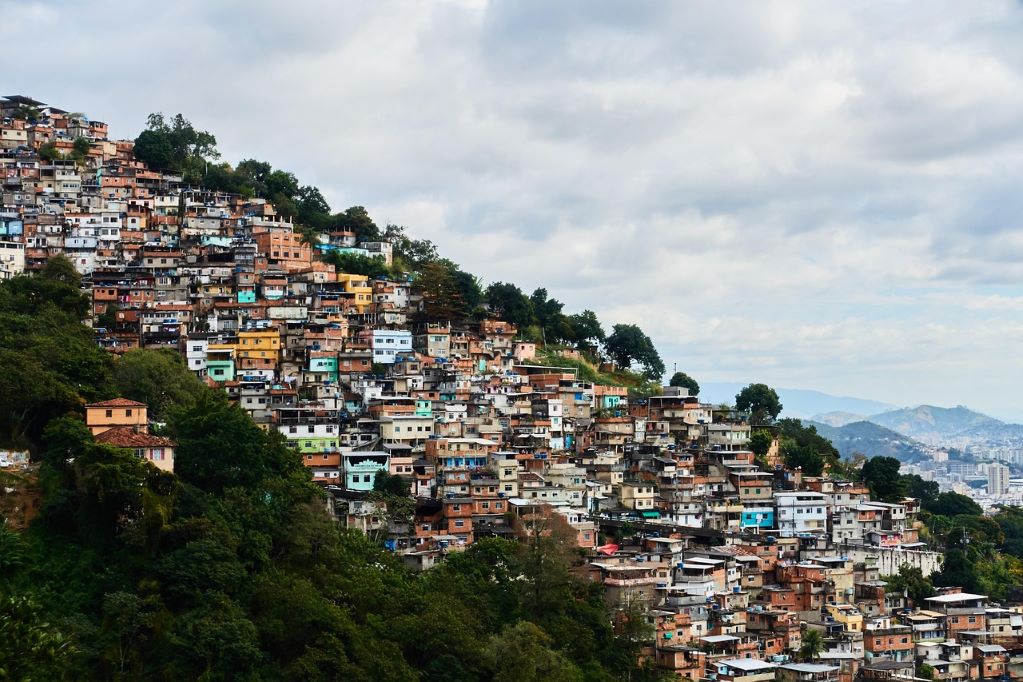
The favela areas of Rio de Janeiro are where carioca funk was born and developed.
A New Perspective on the “Cidade Maravilhosa”
Over the next few months, my picture-perfect image of Rio transformed into something more real. The postcard scenes of samba and sunsets gave way to everyday life – crowded buses, sudden rain, loud neighbors, and endless coffee.
But that’s when I truly fell in love – in the little, ordinary moments. Each morning, riding the bus to school, clutching the seat as the driver took sharp corners, I’d look out and smile. I saw people delivering mattresses on bicycles, poodles in tiny shoes and bows, and elderly women selling homemade cake and coffee out of Tupperware at bus stops.
Learning Beyond the Classroom
I joined a volunteer program called Ana e Maria through the NGO Viva Rio. Every Monday, another student and I took a two-hour, multi-bus trip to a favela just outside the city to teach English to teenage girls – bright, curious, and full of humor. Those classes taught me more about Brazil’s warmth, creativity, and resilience than any textbook ever could.
A few nights each week, I practiced capoeira with Associação Lagoa Azul, outdoors beneath the stars and the glowing Christ on Corcovado. It was there, moving to the rhythms of the berimbau, that I realized I was no longer just in love with the idea of Brazil – I loved Brazil itself.
Living in Rio taught me that the beauty of this “marvelous city” isn’t only in its beaches or mountains, but in the way life pulses through every corner – loud, chaotic, colorful, and real.
Final Thoughts
Only by living in Rio – through the good, the bad, the beautiful, and the bizarre could I truly understand what makes this city so special. It’s not perfection that defines Rio; it’s passion. And once it gets under your skin, it never leaves.
* Christine Di Stefano has a bachelor in Music from UCSB (University California of Santa Barbara) and has hosted for a couple years the show “Tudo Bem” at KCSB 91.1 FM in Santa Barbara during the times when she was in college.
** For airline tickets from the United States to Brazil or Latin America, customized travel packages, hotels and cruises in the United States, please contact our travel agent Magali DaSilva. Phone / WhatsApp 1 (323) 428-1963
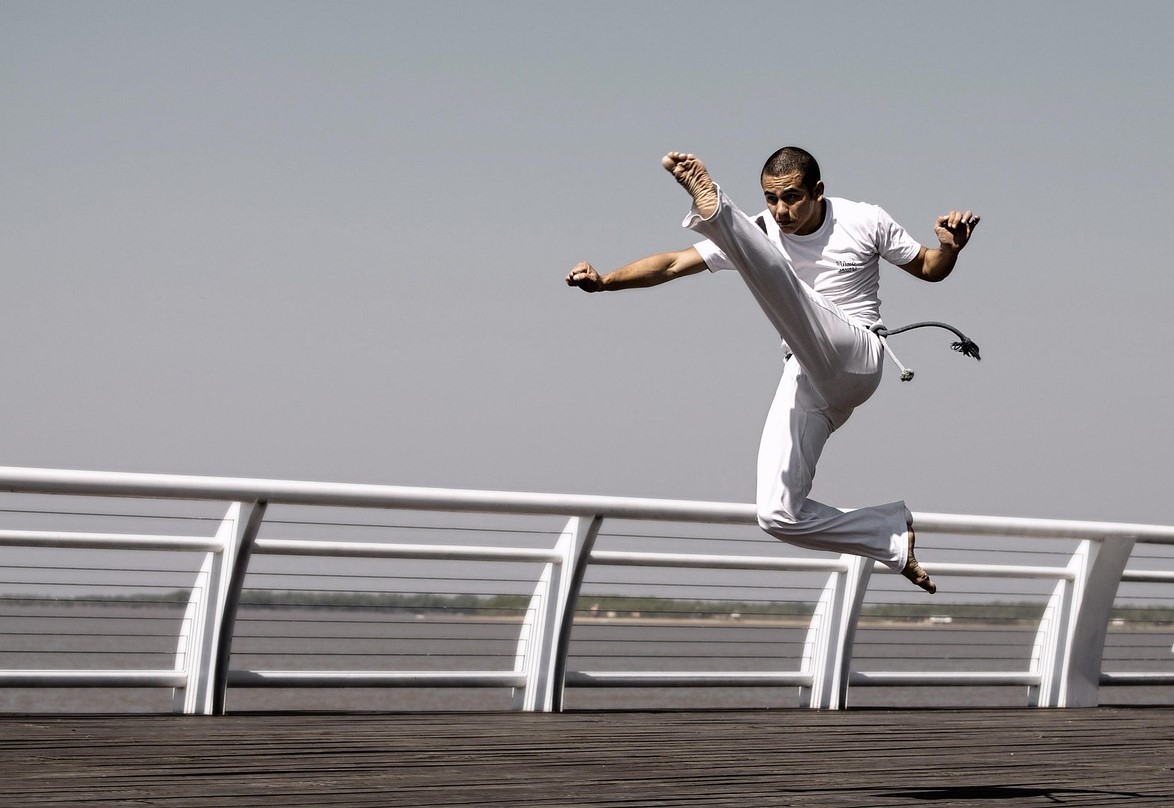
Capoeira is a powerful cultural expression of resilience and identity.
FAQ – Frequent Ask Questions
Why is Rio de Janeiro called the “Cidade Maravilhosa”?
The phrase means “Marvelous City” in Portuguese and reflects Rio’s natural beauty, vibrant culture, and iconic landmarks like Christ the Redeemer and Sugarloaf Mountain.
What is it like to study abroad in Rio de Janeiro?
Studying abroad in Rio offers a mix of cultural immersion, language learning, and real-world experiences that go far beyond the classroom — from samba and capoeira to volunteer work in local communities.
Is Rio de Janeiro safe for foreign students?
Like any major city, Rio has areas that require caution. With awareness, local guidance, and respect for local customs, most students have safe and transformative experiences.
What makes Brazilian culture so unique?
Brazil’s culture blends Indigenous, African, and Portuguese influences, creating a society full of warmth, rhythm, and expressive creativity — reflected in its music, food, and community spirit.
What is capoeira, and why is it special?
Capoeira is an Afro-Brazilian martial art that combines dance, music, and acrobatics. It’s a powerful cultural expression of resilience and identity, often practiced outdoors in scenic spots like Rio’s Lagoa Rodrigo de Freitas.