Capoeira, one of Brazil’s most iconic cultural expressions, is undergoing a transformation. As modern styles emerge—marked by speed, acrobatics, and technical precision—many question whether the traditional rituals and roots of capoeira are being preserved or gradually lost.
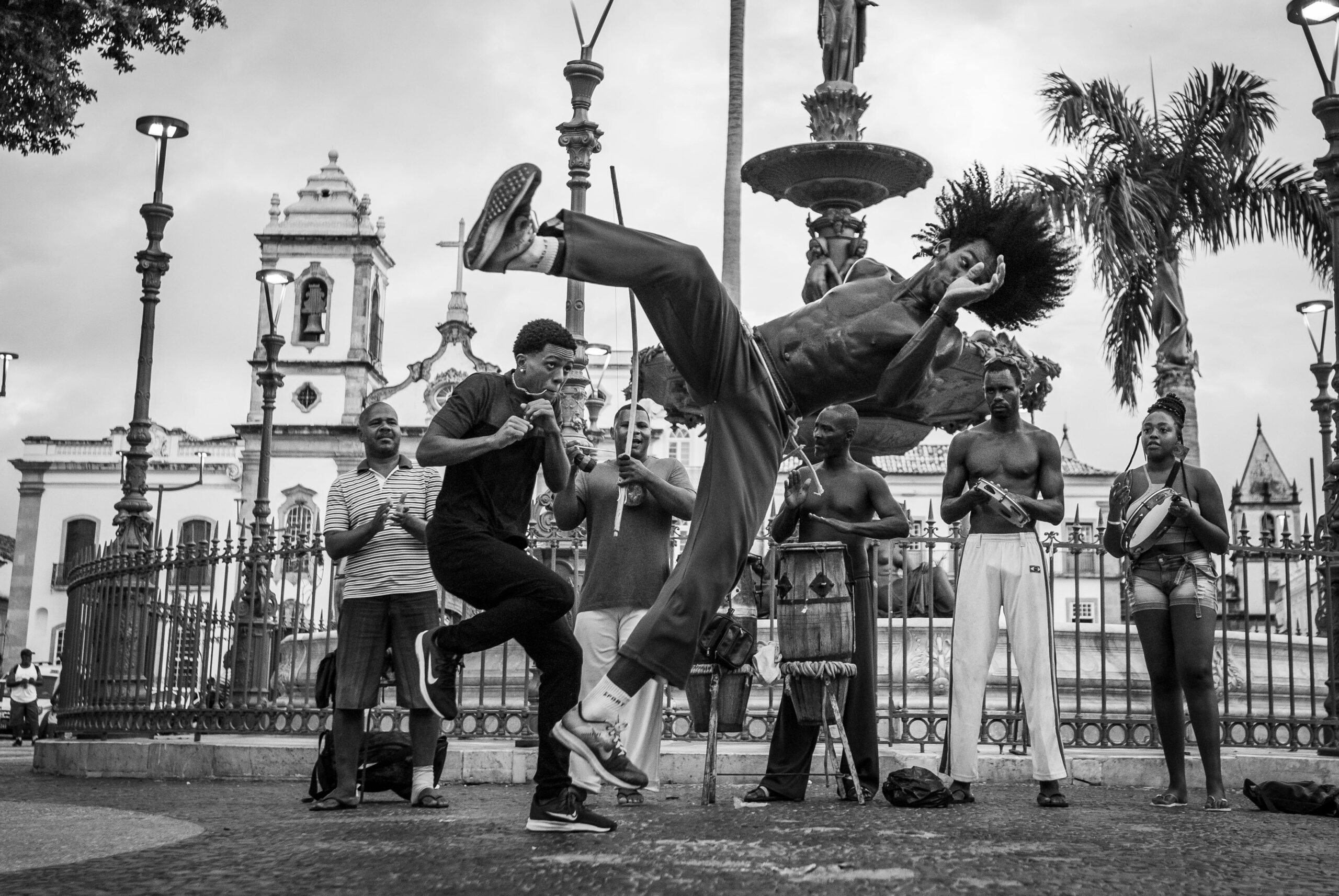
Capoeira is an art form, and a cultural legacy. Photo by Alexandre Saraiva Carniato
Currently, we are witnessing the rise of a new generation and a new regional capoeira, often referred to as “modern” capoeira. This contemporary approach is characterized by:
-
A contracted and fixed swing
-
Limited variation in flourish
-
Excessive speed in the execution of movements
-
High technical precision applied to a small set of repeated strikes (notably “half moons” and “stingray tails”)
While technically refined, this style places less emphasis on the defensive aspects of the game. Instead, it prioritizes breathtaking jumps—borrowed from acrobatic gymnastics—executed with extreme speed and requiring the practitioner to be an exceptional athlete.
The Disappearance of Ritual and Tradition
Alongside these stylistic changes, many observers point to:
-
The absence of traditional rituals and precepts
-
Accelerated drum rhythms without defined standards
-
Songs that no longer reflect traditional structures
-
In some groups, the incorporation of strikes from other fighting styles
These elements have contributed to what many consider a gradual de-characterization of capoeira. As a result, newcomers often begin training without a full understanding of the art’s historical origins and cultural foundations.

The contemporary angola style draws from Mestre João Grande’s influential game in New York
The Evolution of Capoeira Angola
At the same time, capoeira angola has also undergone evolution. Its transformation reached a significant milestone in the 1980s with the emergence of a new contemporary style—both aesthetically appealing and efficient—which gained wide acceptance among younger practitioners.
This modern angola style draws heavily from the game of Mestre João Grande in New York and is strongly represented in Brazil by Mestre Moraes, a student of João Grande.
In addition to traditional elements, this approach introduces:
-
A more relaxed and loose swing
-
A rhythm and flourish similar to classical angola
-
A contemporary interpretation that remains connected to its lineage
More Than a Martial Art
Capoeira is far more than a fighting system. For many, it is:
-
A lifestyle
-
An artistic expression
-
A cultural heritage
-
A channel for physical and mental energy
It remains one of the most exquisite and unique Brazilian art forms—whether practiced in Brazil, in the United States, or anywhere in the world.
FAQ – Frequently Asked Questions
1. Is modern capoeira replacing traditional capoeira?
Modern capoeira has gained popularity, especially among younger practitioners, but traditional styles continue to be preserved by masters and cultural groups committed to maintaining rituals and historical foundations.
2. What distinguishes modern capoeira from traditional capoeira?
Modern capoeira often emphasizes speed, acrobatics, and technical precision, while traditional capoeira places stronger focus on ritual, musical structure, defense, and cultural symbolism.
3. What is the importance of Mestre João Grande?
Mestre João Grande is one of the most influential capoeira angola masters, especially in the United States, where he helped preserve and expand traditional capoeira teachings.
4. Why are rituals important in capoeira?
Rituals—including music, call-and-response songs, and roda traditions—preserve the historical identity and Afro-Brazilian roots of capoeira.
5. Is capoeira considered only a martial art?
No. Capoeira is simultaneously a martial art, dance, music tradition, cultural expression, and, for many, a lifestyle.