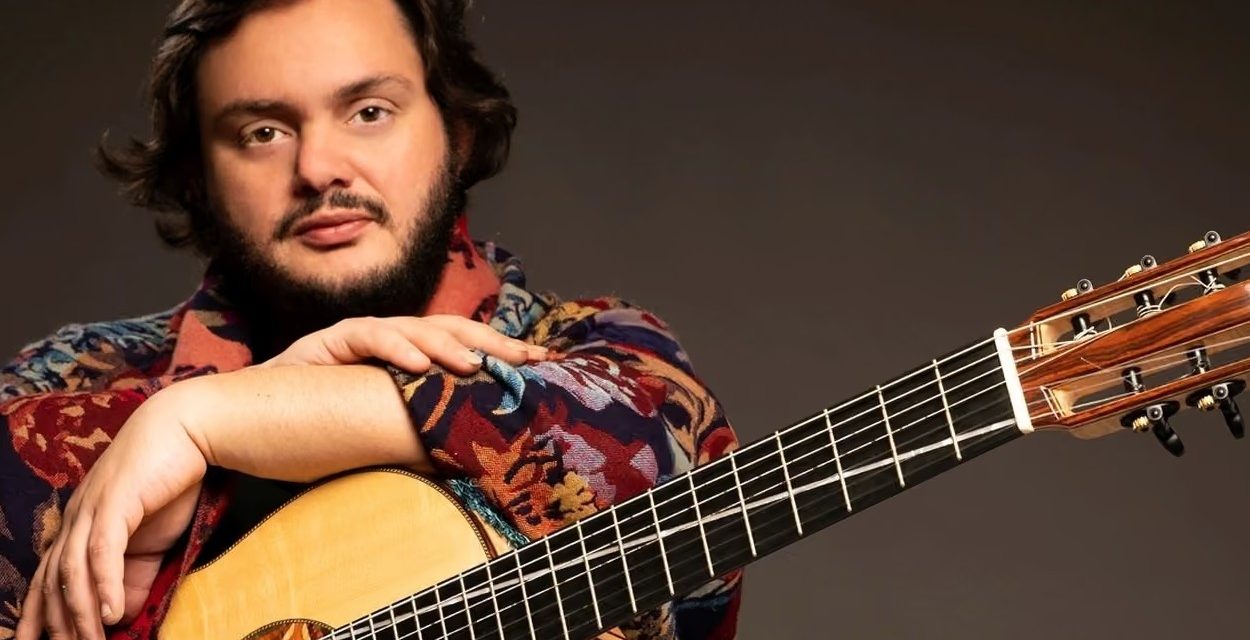
Brazilian virtuoso Yamandu Costa transforms the seven-string guitar into an orchestra of its own, blending choro, samba, bossa nova, jazz and southern Brazilian traditions. Discover the discipline, technique and musical imagination behind one of the world’s most admired guitarists.
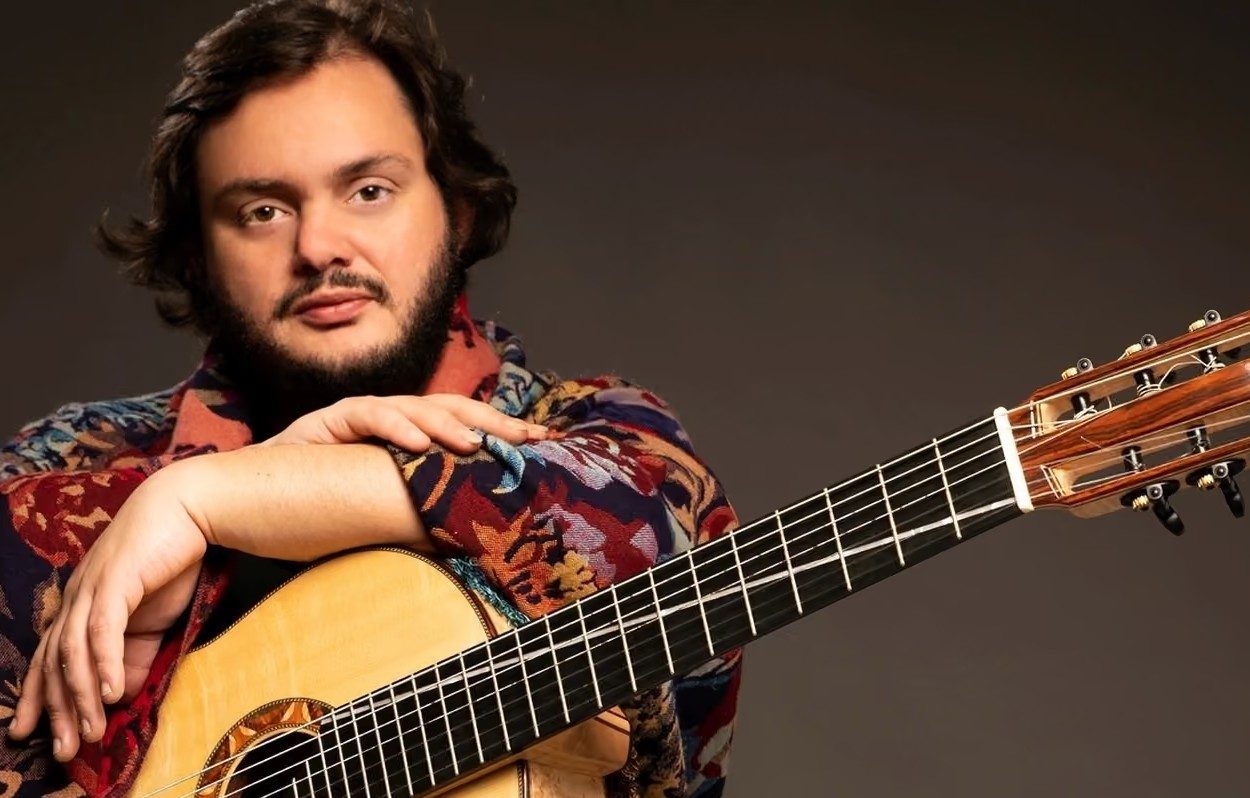
Raised in a traveling musical family, Yamandu began studying guitar at age seven under the guidance of his father, Algacir Costa, and developed his technique through years of disciplined practice.
Watching Yamandu perform can feel like witnessing several musicians inhabiting the same instrument. Bass lines move beneath rapid melodies, chords arrive with orchestral weight, and moments of breathtaking speed suddenly give way to passages of remarkable delicacy. In his hands, the Brazilian seven-string guitar becomes an entire musical world.
Widely regarded as one of today’s greatest guitarists, Costa will bring that world to Southern California in December 2026, with performances in San Diego and Los Angeles. For American audiences interested in Brazilian culture, his concerts offer more than a display of technical brilliance. They reveal the extraordinary musical diversity of Brazil – and particularly the traditions of the country’s southern frontier.
Born in Passo Fundo, in the state of Rio Grande do Sul, Costa grew up surrounded by music. His father, Algacir Costa, was a musician and leader of the regional group Os Fronteiriços. Yamandu began studying guitar with him at age seven and later refined his technique under Argentine virtuoso Lúcio Yanel. His childhood was far from conventional.
Raised in a traveling musical family, Costa spent part of his early life on the road. Around age 11 or 12, as his abilities developed rapidly, he and his father made the daring decision to leave traditional schooling behind. Algacir imposed a disciplined musical routine, while Yamandu immersed himself in books, recordings and long hours of practice – often alone in his room.
That intense dedication helped create a musician whose technique is astonishing but never merely decorative. Costa can play with explosive speed, yet his virtuosity is always connected to rhythm, emotion and improvisation. The additional bass string gives his instrument a deeper range, allowing him to build bass lines, harmony and melody simultaneously.
His musical language crosses borders. Choro and samba meet bossa nova, jazz and classical influences, while milonga, tango and chamamé reflect the cultural dialogue connecting southern Brazil, Argentina and Uruguay. Rather than remaining inside one genre, Costa transforms these traditions into a style unmistakably his own.
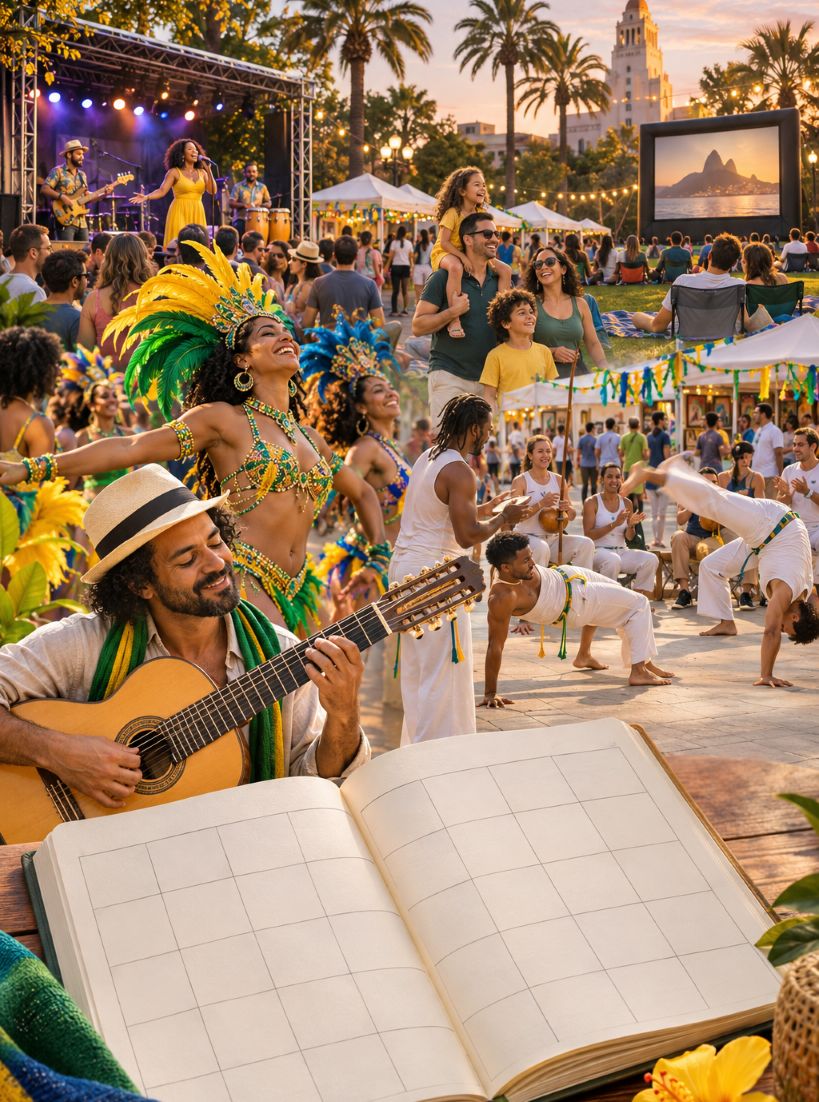
amandu Costa will bring the richness of Brazilian instrumental music to Southern California with concerts in San Diego on December 2 and Los Angeles on December 4, 2026.
Compositions such as “Mariana,” one of his earliest works for seven-string guitar, and “Vento Sul” reveal different sides of that identity: lyrical sensitivity, rhythmic sophistication and a sense of movement that can shift from intimate to exhilarating within seconds. Costa’s international reputation grew further through Brasileirinho, Mika Kaurismäki’s 2005 documentary about choro. He has since performed worldwide and collaborated with major artists including Gilberto Gil, Toquinho, João Bosco, Bobby McFerrin and accordionist Richard Galliano. In 2021, Toquinho e Yamandu Costa – Bachianinha received the Latin Grammy for Best Instrumental Album.
Yet awards alone cannot explain his appeal. What makes Costa exceptional is the feeling that every performance is being created in the moment. His mastery is precise, but his music remains spontaneous, physical and deeply human. Yamandu Costa performs in San Diego on Dec 2, and L.A on Dec 4. For details about these concerts – and more Brazilian music, dance, cultural celebrations and festivals across SoCal – visit the Soul Brasil Calendar, updated twice weekly with both ticketed and free events.
FAQ – Frequently Asked Questions
Who is Yamandu Costa?
Yamandu Costa is a Brazilian guitarist, composer and arranger internationally recognized for his extraordinary command of the seven-string guitar. Born in Passo Fundo, Rio Grande do Sul, he combines Brazilian and South American musical traditions with improvisation and exceptional technique.
What kind of guitar does Yamandu Costa play?
Costa’s principal instrument is the Brazilian seven-string acoustic guitar, known in Portuguese as the violão de sete cordas. Its additional bass string allows him to create deep bass lines while simultaneously playing chords, melodies and improvised passages.
What musical styles influence Yamandu Costa?
His music incorporates choro, samba, bossa nova, milonga, tango, chamamé, jazz and classical influences. His sound reflects both Brazil’s national musical heritage and the cultural traditions shared by southern Brazil, Argentina and Uruguay.
What are some of Yamandu Costa’s best-known compositions?
Among his most recognized works are “Mariana,” one of his early compositions for seven-string guitar, and “Vento Sul.” Both pieces demonstrate his ability to combine technical complexity, rhythmic energy and emotional sensitivity.
When did Yamandu Costa begin playing guitar?
He began studying guitar at age seven with his father, musician Algacir Costa. During his childhood and adolescence, Yamandu followed an intensive practice routine and later refined his technique with Argentine guitarist Lúcio Yanel.
Did Yamandu Costa leave traditional school to study music?
Yes. Around age 11 or 12, Costa and his father decided that he would leave conventional schooling while traveling with his musical family. His father established a disciplined routine that allowed him to dedicate much of his time to studying and playing music.
Has Yamandu Costa won a Latin Grammy?
Yes. In 2021, the album Toquinho e Yamandu Costa – Bachianinha, recorded with legendary Brazilian musician Toquinho, won the Latin Grammy Award for Best Instrumental Album.
When will Yamandu Costa perform in Southern California?
Yamandu Costa is scheduled to perform at the Joan B. Kroc Theatre in San Diego on Wednesday, December 2, 2026, and at the First Congregational Church of Los Angeles on Friday, December 4, 2026. Both concerts begin at 7:30 p.m.