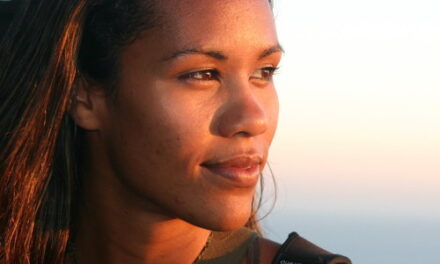
Monica Netherly, based in San Diego, balances a career in the pharmaceutical industry with her passion for samba and Capoeira Angola. Through movement and culture, she reconnects with her African heritage while promoting health and social impact.
By Lindenberg Junior
Monica Netherly combines a career in public health with her passion for samba and Capoeira Angola.
Born in Southern Virginia, Monica Netherly has lived in San Diego, California, since childhood.
She works as a research assistant in the pharmaceutical industry, while also dedicating her free time to her passion for dance as a professional passista, specializing in samba no pé.
A Lifelong Connection to Physical Activity
Monica has always been involved in physically demanding activities, including:
- Dance
- Soccer
- Track and field
At the age of 14, she began dancing folkloric styles from Spain, Mexico, and the Caribbean, continuing until her undergraduate studies at San Diego State University.
After completing her degree, she returned to dance—this time with even more purpose.
Samba and the Discovery of Capoeira Angola
Monica deepened her connection to Brazilian culture by studying samba batucada with Maria Lane, where she learned the foundations of samba.
It was during this period that she was introduced to Capoeira Angola, through her boyfriend:
“I thought it would be a one-time class, but the more I went, the more I wanted to learn—its history, rituals, traditions, and connection to Africa.”
This marked the beginning of a deeper cultural and personal journey.
Reconnecting with African Heritage
For Monica, Capoeira Angola represents more than a physical practice—it is a spiritual and cultural bridge.
As a Black woman in the United States, she reflects on the historical disconnection caused by slavery:
“Capoeira Angola allows me to reconnect with my past through songs and praises to my ancestors, teachers, elders, and creator.”
She values the ritualistic and ancestral aspects of this ancient Afro-Brazilian art form.
Discipline, Training, and Personal Growth
Monica trains regularly:
- 2–3 times per week in San Diego
- Additional training in Los Angeles every other weekend
She is connected to the Capoeira Angola Center in Los Angeles, guided by Mestre João Grande, a renowned master and student of Mestre Pastinha.
Through Capoeira, she has developed key values:
Patience, humility, determination, and confidence
“Capoeira Angola is not just movement—it’s skill, strategy, and life lessons.”
Health, Purpose, and Social Impact
Beyond dance and culture, Monica is also deeply committed to public health and social causes.
She holds a Master of Public Health and works as a Health & Safety Professional, supporting nonprofit organizations focused on:
- Environmental racism
- Water quality
- Health in low-income communities
Her life reflects a powerful intersection of science, culture, and social responsibility.
Philosophy of Happiness
When asked about happiness, Monica shares a grounded and practical perspective:
“Being happy is living a productive life, not stressing about things I cannot change, and staying true to myself.”
Her advice is simple and direct:
“Don’t stress, eat well, exercise, be humble, and live one day at a time.”
Quick Facts About Monica Netherly
- Born in: Southern Virginia, USA
- Living in: San Diego, California
- Profession: Research assistant & Health & Safety Professional
- Education: Master of Public Health
- Dance Style: Samba no pé (passista)
- Other Practice: Capoeira Angola
- Causes: Environmental health & social justice
FAQ – Frequently Asked Questions
1. Who is Monica Netherly?
She is a research assistant, public health professional, and samba dancer based in San Diego.
2. What is her connection to Brazilian culture?
She practices samba and Capoeira Angola, deeply engaging with Afro-Brazilian traditions.
3. How did she start Capoeira Angola?
She was introduced to it by her boyfriend and developed a strong interest over time.
4. What does Capoeira mean to her?
It represents a connection to African heritage, spirituality, and personal growth.
5. What does she do professionally?
She works in public health, supporting environmental and social causes in underserved communities.