A journey into Brazil’s rich musical culture through the visionary work of Hermeto Pascoal, exploring his unique approach to improvisation, creativity, and sound as a universal language. The narrative follows a personal experience at a Brazilian music workshop that reveals how Brazilian rhythms, spontaneity, and cultural fusion shape world music.
By Rebecca Kleinmann

Hermeto Pascoal is a Brazilian musical genius who turns everyday sounds into extraordinary compositions. Photo by Aline Morena
Picture a man who looks like a wizard—long white hair, a huge frizzy white beard, pale skin—writing music symbols directly on a wall with a marker. He hums while working, without referencing any instrument, as if composing a stream-of-consciousness in sound.
That man is Hermeto Pascoal, one of the most extraordinary composers, improvisers, and musical innovators across all genres.
During a trip to Brazil at Chacará Riacho Doce near Ubatuba, I had the privilege of observing his creative universe up close.
A Life Built Through Sound
Born in 1936 in Alagoas, Brazil, and albino, Hermeto Pascoal was unable to play outdoors as a child. Instead, he spent his time indoors practicing accordion—an instrument given by his father.
Over time, he became a multi-instrumentalist, composer, arranger, and improviser. And when we say multi-instrumentalist, it is literal:
He plays piano, flutes, drums, accordion, glass bottles, water, bottle caps—and even turns the audience itself into part of the music.
He has even chased pigs on stage, transforming chaos into performance.
Music Without Boundaries
Hermeto’s compositions blend playful, child-like melodies with complex harmonic structures that rival the most intricate classical traditions.
His music is deeply rooted in Brazilian genres such as:
- Baião
- Choro
- Samba
- Experimental odd-meter rhythms of Brazilian cultural expression
His improvisations are not spontaneous additions—they are compositions in real time, always evolving into unexpected musical journeys.
The Journey to the Workshop
The path to the workshop was an adventure in itself. I sold a flute, organized a fundraising concert, secured a visa, and traveled across multiple countries.
After getting stranded in Panama City, missing the only daily bus from Rio, and riding crowded local buses, I finally arrived at the remote location near Ubatuba just in time for dinner.
A Community of Musical Masters
At the workshop, I was welcomed by remarkable musicians and educators:
- Jovino Santos Neto, who played with Hermeto for 15 years in his legendary ensemble
- O Grupo, known for intensive rehearsals and groundbreaking compositions
- Dennis Broughton, co-creator of the Ubatuba Brazil Camp
- Mestre Marcelo, leader of the capoeira program
- Jorge Alabe and musicians from international Brazil camps
The environment was immersive, collaborative, and deeply rooted in Brazilian cultural exchange.
Learning Through Improvisation
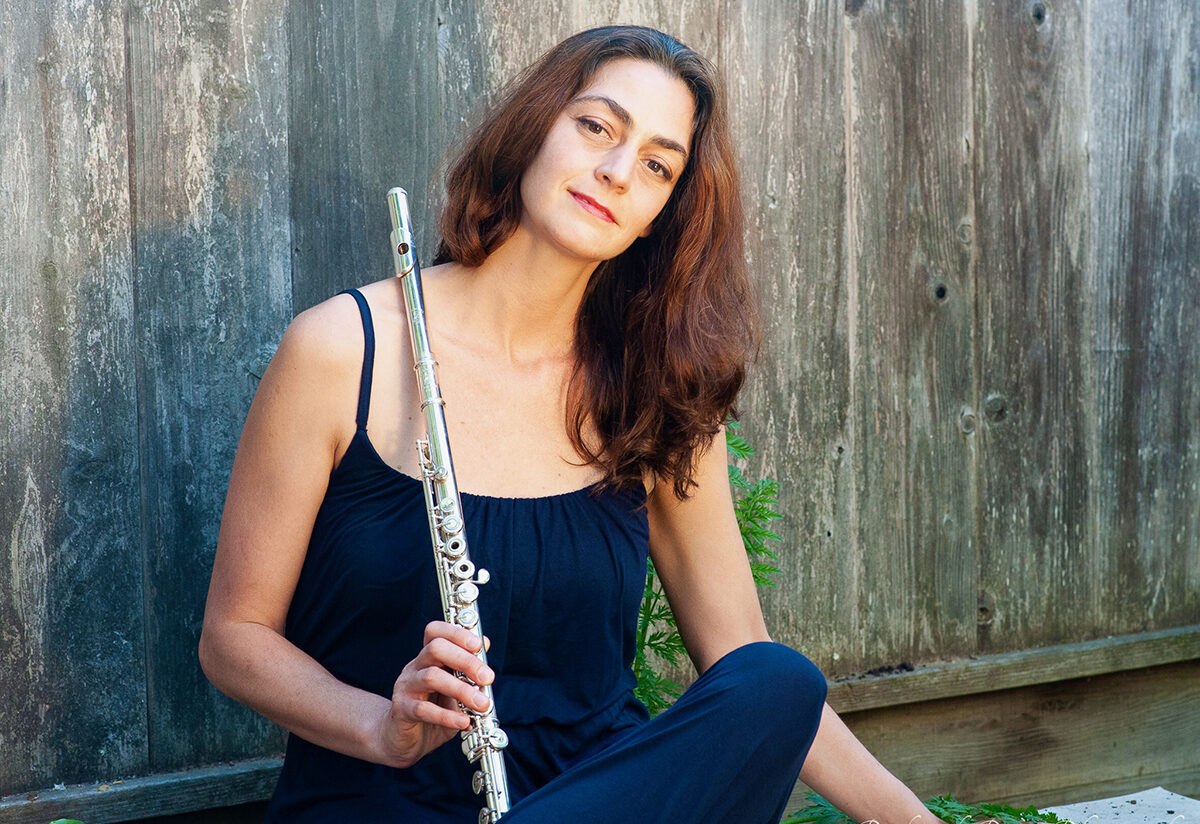
Musician Rebecca Kleinmann, photographed by Briana Waters.
Classes with Hermeto were unpredictable and inspiring. He taught music by ear, created spontaneous arrangements, and encouraged musicians to explore freely.
The ensemble included guitars, winds, mandolins, bass, drums, and percussion—forming a vibrant collective sound guided by intuition rather than strict notation.
Jovino Santos Neto often translated Hermeto’s humor and guided participants through his complex compositions.
Philosophy of Sound: “Everything is Music”
Hermeto’s worldview is simple yet profound:
“Som é Tudo” — Everything is sound.
He believes there are no wrong notes—only musical directions waiting to be transformed.
This philosophy mirrors the idea that mistakes can evolve into beauty depending on what follows them.
A Living Legacy of Brazilian Music
During the workshop, I met musicians deeply influenced by Hermeto’s legacy:
- Carlos Malta
- Gabriel Grossi
- Paulo Moura
- Itibere Family Orchestra
These artists carry forward a tradition rooted in improvisation, cultural depth, and joyful virtuosity.
A Personal Encounter with Genius
One memorable moment happened during a visit to Hermeto’s home in Curitiba.
He gifted me two Brazilian flutes and composed music dedicated to me:
- “Rebecca, welcome to our home”
- “Real intuition is like this”
Later, when an embarrassing moment occurred during travel, Hermeto transformed it into music on the spot—turning discomfort into laughter through improvisation.
The Power of Brazilian Musical Expression

Hermeto Pascoal doesn’t just play instruments—he expands what we define as an instrument
Brazilian music here is not just performance—it is philosophy, community, and storytelling.
Through Hermeto Pascoal and his musical lineage, we see how sound becomes life itself, constantly evolving, playful, and deeply human.
* Rebecca Kleinmann is an American musician from Santa Barbara, California and has traveled a couple times to Brazil for studying and research. Her music has a strong influence of Brazilian music including chorinho and bossa nova – www.rebeccakleinmann.com. For more info about the California Brazil Camp – www.calbrazilcamp.com
FAQ – Frequently Asked Questions
1. Who is Hermeto Pascoal?
Hermeto Pascoal is a Brazilian composer and multi-instrumentalist known for transforming everyday sounds into complex musical compositions.
2. What makes Hermeto Pascoal’s music unique?
He blends Brazilian genres like samba and choro with improvisation, creating music that is both highly complex and spontaneously expressive.
3. What is Hermeto Pascoal’s philosophy about music?
He believes “everything is sound,” meaning any noise or object can become part of musical expression.
4. Who are some musicians influenced by him?
Artists like Carlos Malta and Gabriel Grossi continue his legacy.
5. What is “O Grupo”?
O Grupo was Hermeto’s famous ensemble known for intensive rehearsals and groundbreaking Brazilian compositions.