Americans traveling to Brazil should check their routine vaccinations, review CDC health recommendations for their specific destination and consider travel insurance before departure. Depending on the itinerary, travelers may also need to take precautions against yellow fever, malaria, mosquito-borne diseases, food- and water-related illnesses and other health risks.

Brazil currently does not require international travelers to present proof of vaccination for entry into the country.
For Americans planning a trip to Brazil, health preparation should begin several weeks before departure.
The Brazilian Ministry of Health recommends that travelers consult a healthcare professional four to eight weeks before a trip, particularly to review their itinerary, identify potential health risks and determine which vaccines or preventive measures may be appropriate. Travelers who take prescription medication should also bring enough medication for the entire trip, preferably in their carry-on luggage, along with the prescription and original packaging.
The CDC also recommends checking its Brazil Traveler View for the most current health notices, vaccine recommendations and destination-specific precautions before traveling. As of the latest CDC guidance, Brazil is listed at Level 1: Practice Usual Precautions.
Travelers should remember that health recommendations can vary significantly depending on whether they are visiting major cities, rural areas, the Amazon region or multiple states during the same trip.
Are Vaccines Required to Enter Brazil?
Brazil currently does not require international travelers to present proof of vaccination for entry into the country. However, the Brazilian Ministry of Health recommends that international tourists arrive with their routine vaccinations up to date, particularly vaccines against yellow fever, polio, measles, rubella, diphtheria and tetanus.
The CDC also recommends that international travelers be fully vaccinated against measles, particularly because measles cases have been increasing in several countries.
This means that even when a vaccine is not an entry requirement, it may still be strongly recommended for health protection.
Yellow Fever Vaccine: Does an American Traveler Need It?
This is one of the most important health considerations for Americans planning a trip to Brazil.
The yellow fever vaccine is not required for entry into Brazil, according to the CDC’s current traveler guidance. However, the CDC recommends the vaccine for travelers aged 9 months or older visiting several Brazilian states and destinations.
The CDC currently recommends yellow fever vaccination for travelers visiting Acre, Amapá, Amazonas, the Federal District (including Brasília), Espírito Santo, Goiás, Maranhão, Mato Grosso, Mato Grosso do Sul, Minas Gerais, Pará, Paraná, Piauí, Rio de Janeiro (including Rio de Janeiro city and coastal islands), Rio Grande do Sul, Rondônia, Roraima, Santa Catarina, São Paulo (including São Paulo city and coastal islands), Tocantins, designated areas of Bahia, and Iguaçu Falls.
The CDC says vaccination is not recommended for trips limited to areas including Fortaleza and Recife.
Because recommendations can change, travelers should check the CDC and Brazilian health authorities shortly before departure.
How Far in Advance Should You Get the Yellow Fever Vaccine?
Brazil’s Ministry of Health recommends receiving the yellow fever vaccine at least 10 days before traveling to an area where vaccination is recommended.
For international travel, a yellow fever vaccination certificate can also be required by countries visited during a trip or transit, depending on their rules.
The Brazilian government notes that the International Certificate of Vaccination or Prophylaxis (ICVP/CIVP) for yellow fever has lifetime validity, with the certificate becoming valid 10 days after vaccination.
What Other Health Risks Should Americans Know About?
Brazil is a large country, and health risks can vary considerably by region.
Mosquito-Borne Diseases
Travelers should take precautions against mosquito and other insect bites.
Depending on the destination, travelers may encounter diseases including dengue, yellow fever, malaria, Zika and Oropouche.
The CDC currently recommends prescription medication to prevent malaria for travelers visiting certain areas of Brazil, particularly:
- All areas of Acre, Amapá, Amazonas, Rondônia and Roraima
- Parts of Maranhão, Mato Grosso and Pará
Malaria is rare in the capitals of Maranhão, Mato Grosso and Pará, according to the CDC.
The CDC also currently lists Oropouche among the health issues travelers should be aware of in the Americas, noting that the virus is primarily spread by infected biting midges and mosquitoes.
Travelers can reduce mosquito exposure by using insect repellent, wearing long sleeves and pants when appropriate, and following destination-specific recommendations.
What About Food and Drinking Water in Brazil?
The original advice to be cautious with drinking water remains important, but it is better to avoid treating all Brazilian tap water as universally unsafe.
Water quality can vary depending on the destination and local infrastructure. The CDC recommends that travelers avoid tap water in places where its safety is uncertain and use factory-sealed bottled water or properly treated water instead. Water used for brushing teeth, making ice or preparing food should also be considered.
Travelers should also take precautions with food.
The CDC recommends choosing food that is thoroughly cooked and served hot, being careful with raw vegetables and fruits that cannot be washed or peeled safely, and avoiding ice when the safety of the water source is uncertain.
In practical terms, Americans visiting Brazil should pay particular attention to local water quality, especially when traveling outside major urban centers or to places where they are unfamiliar with the local infrastructure.
Is Medical Care Available in Brazil?
The standard of medical care can vary considerably throughout Brazil.

Foreign tourists who experience health problems can seek care through Brazil’s public emergency-care network, the SUS
Major cities such as São Paulo and Rio de Janeiro have large hospitals and private medical facilities with sophisticated services. However, access to English-speaking medical professionals may be more limited outside major tourist and business centers.
For this reason, Americans traveling to Brazil should consider purchasing travel health insurance that provides coverage in Brazil, particularly if they are traveling with children, have existing medical needs or plan to visit remote areas.
Travelers should also carry important medical information, including prescriptions and details about allergies or medical conditions. Brazil’s Ministry of Health recommends carrying identification and, when possible, medical information in both English and Portuguese.
Can Americans Use Brazil’s Public Health System?
Yes. This is an important point that was not accurately stated in the original version.
Brazil’s public healthcare system, the Sistema Único de Saúde (SUS), provides free public health services. The Brazilian Ministry of Health specifically states that foreign tourists who experience health problems can seek care through the SUS emergency-care network.
This does not mean Americans should travel without insurance.
Brazil does not have a reciprocal healthcare agreement with the United States that provides Americans with the same type of cross-border healthcare arrangement available under certain agreements with countries such as Portugal, Italy and Cape Verde.
Travel insurance remains a sensible precaution for Americans because it can help cover private medical treatment, hospitalization, evacuation and other expenses depending on the policy.
What Number Should You Call in a Medical Emergency in Brazil?
If you experience a medical emergency in Brazil, call SAMU at 192.
SAMU is Brazil’s Mobile Emergency Medical Service. The service operates 24 hours a day, seven days a week, and the call is free from local landlines and mobile phones. It provides emergency assistance for medical, traumatic, pediatric, surgical, obstetric and other urgent situations.
In addition to SAMU, Brazil has UPA 24h emergency-care units, which provide around-the-clock care for urgent medical conditions and can refer patients to hospitals when necessary.
Because Brazil is a large country, travelers should identify the nearest hospital or emergency facility when staying in remote destinations rather than relying only on a specific hospital recommendation from an older travel guide.
What Should Travelers Pack for a Healthier Trip?
Before leaving the United States, consider packing:
- Prescription medications for the entire trip
- A copy of your prescriptions
- Important medical records or information
- Travel health insurance information
- Insect repellent
- Sunscreen
- Any medications recommended by your healthcare provider
- Basic health and first-aid supplies
- A list of emergency contacts
The CDC’s Brazil travel packing list also recommends travelers discuss their individual needs with a healthcare provider and bring extra supplies in case travel plans are delayed.
Final Tips for Americans Traveling to Brazil
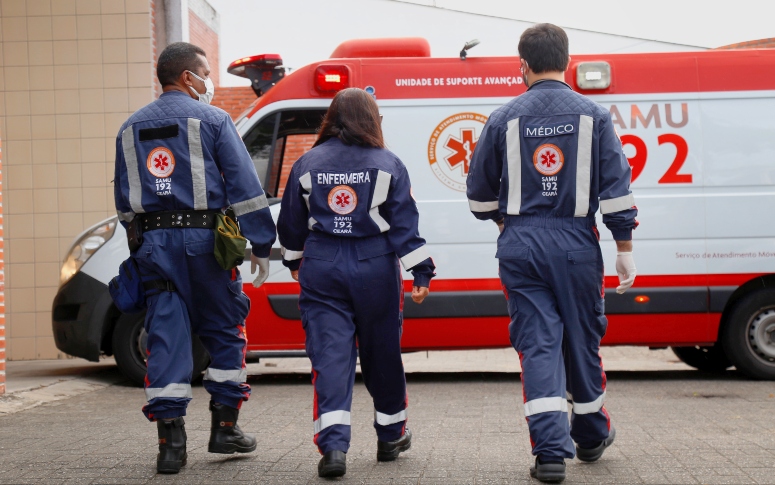
If you experience a medical emergency in Brazil, call SAMU at 192. Foto: Tatiana Fortes
Brazil offers a wide range of destinations, from major cities and beaches to the Amazon and remote rural areas. Because health risks differ from one region to another, there is no single checklist that applies equally to every traveler.
The best strategy is to check your routine vaccinations, review the CDC’s current Brazil guidance, discuss your itinerary with your healthcare provider and purchase appropriate travel insurance before leaving the United States.
And remember: health recommendations can change. Check the CDC and Brazilian health authorities shortly before your departure for the most current information.
Frequently Asked Questions About Traveling to Brazil
1. Do Americans need vaccines to travel to Brazil?
Brazil currently does not require proof of vaccination for entry. However, the Brazilian Ministry of Health recommends that international travelers keep routine vaccinations up to date, including vaccines against measles, polio, yellow fever, diphtheria and tetanus. Additional vaccines may be recommended depending on the traveler’s itinerary and health history.
2. Do Americans need a yellow fever vaccine for Brazil?
Not for entry into Brazil. However, the CDC recommends yellow fever vaccination for travelers visiting several Brazilian states and destinations, including parts of the Amazon, Brasília, Rio de Janeiro, São Paulo, Minas Gerais and Iguaçu Falls. The vaccine is not recommended for trips limited to destinations such as Fortaleza and Recife.
3. Can American tourists use Brazil’s public healthcare system?
Yes. Foreign tourists who experience health problems can seek care through Brazil’s public emergency-care network, the SUS. Public health services are free, but Americans should still consider travel health insurance because there is no general reciprocal healthcare agreement between Brazil and the United States.
4. What is the emergency number for an ambulance in Brazil?
Call 192 for SAMU, Brazil’s free 24-hour emergency medical service. SAMU provides pre-hospital emergency assistance and can dispatch appropriate medical vehicles and teams depending on the situation.
5. Is it safe to drink tap water in Brazil?
Water quality varies by location. When the safety of local tap water is uncertain, travelers should choose factory-sealed bottled water or properly treated water. The same precaution applies to water used for brushing teeth and ice made from potentially unsafe water.