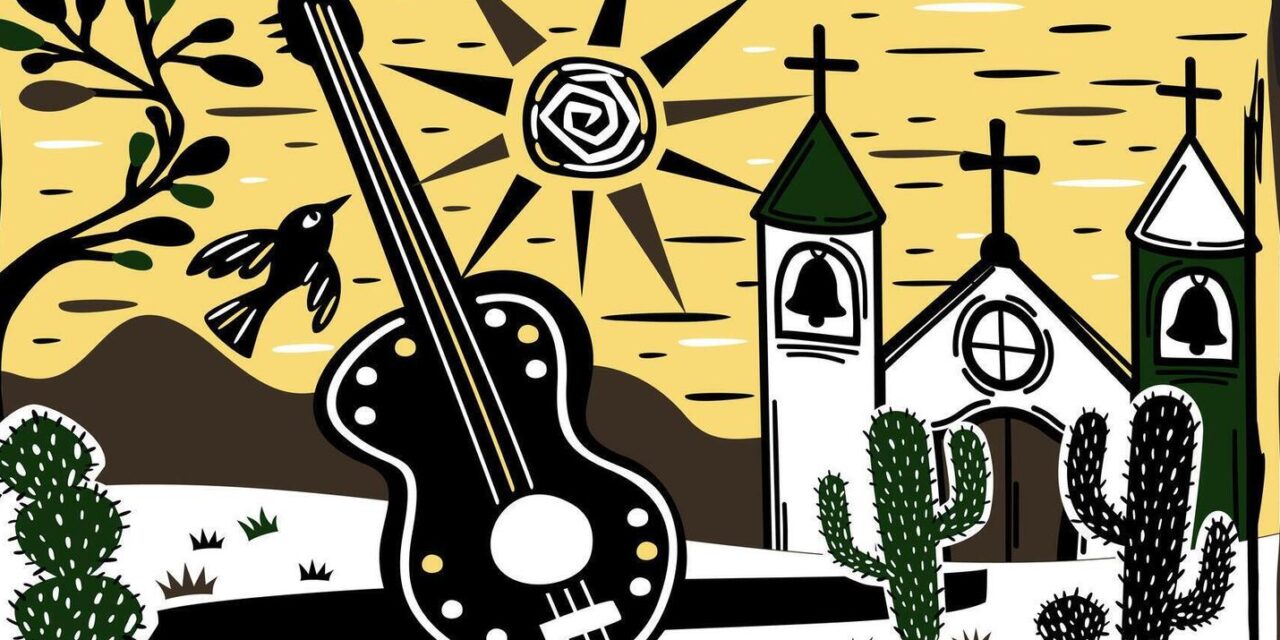
Brazilian literatura de cordel, a popular literary tradition rooted in the country’s Northeast, is preserved in one of the world’s largest collections at the U.S. Library of Congress. The collection contains more than 12,000 chapbooks dating from 1930 to the present, while a separate digital web archive preserves websites and online content dedicated to cordel.
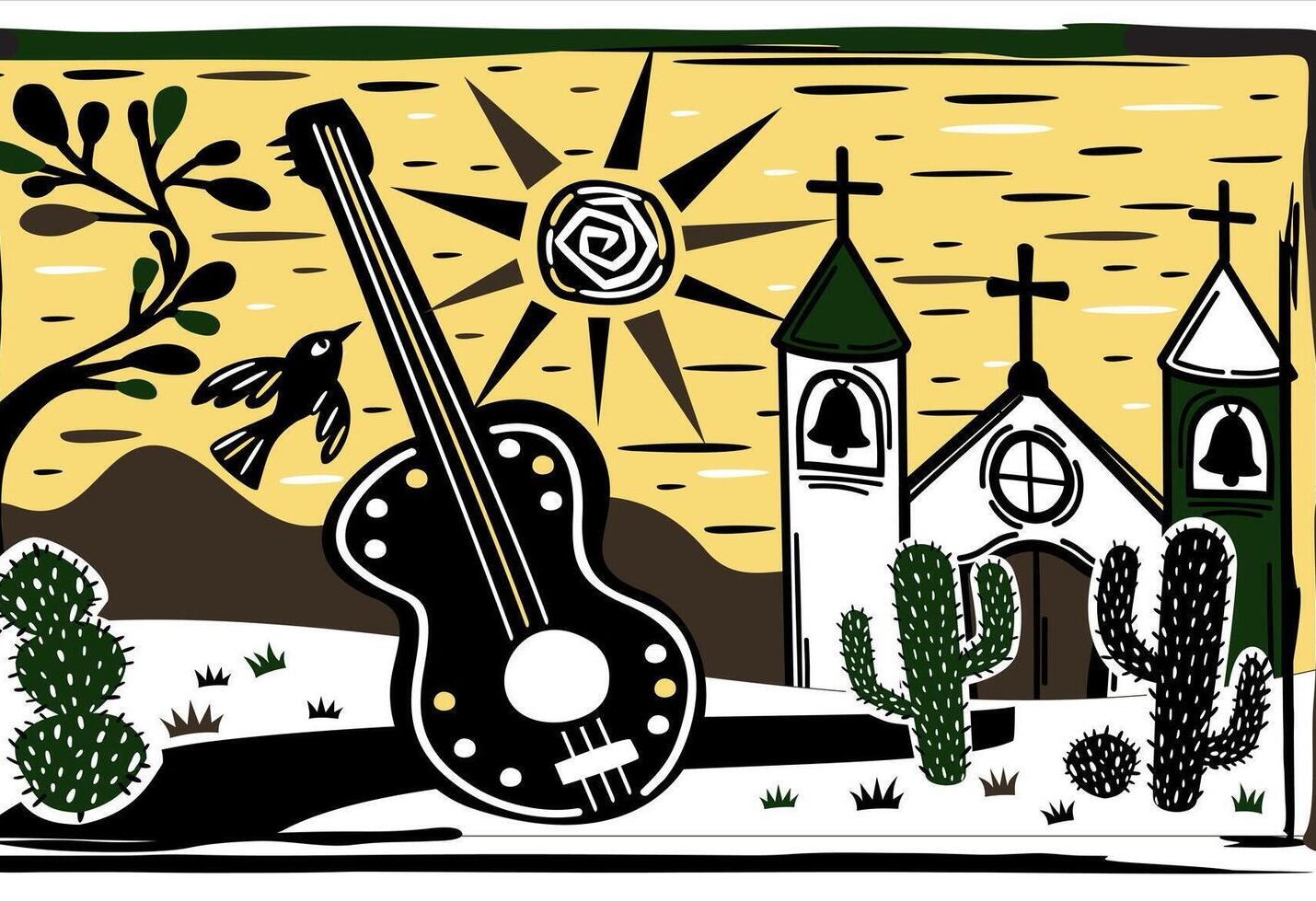
The cultural heart of Brazil’s Cordel literature, deeply influenced by the northeast’s diverse heritage and storytelling traditions
Researchers, students and fans of Brazilian chapbooks — known in Portuguese as literatura de cordel — have access to an extensive collection of resources through the U.S. Library of Congress.
Through its Office in Rio de Janeiro and the American Folklife Center, the Library has developed one of the largest collections of Brazilian cordel in the world. The current Library of Congress research guide identifies the Literatura de cordel Brazilian chapbook collection, 1930–2023, as an open collection containing more than 12,000 chapbooks.
It is important to note that the collection is not made up entirely of fully digitized books available for online reading. Many of the physical chapbooks are available for research through the American Folklife Center, while the Library also maintains the Brazil Cordel Literature Web Archive, which preserves websites, blogs, full-text cordel, audio and video related to the tradition.
The Library’s web archive currently includes 30 archived websites, documenting the contemporary digital presence of Brazilian cordel and its role as a form of grassroots communication, education and entertainment.
A collection with roots in the 1970s
The collection was established in the 1970s after the Library of Congress acquired material from scholar Sol Biderman, whose interest in the cordel tradition began while he was studying and collecting Brazilian folk literature. The Library has continued expanding the collection through the acquisition efforts of its Rio de Janeiro Office.
The Library’s current records show that the collection covers chapbooks dating from 1930 to the present, making it an important source for studying how Brazilian popular literature has evolved over generations.
The collection has been used to examine grassroots perceptions of Brazilian history, politics, religion, humor, folklore, romance and popular culture. Cordel is particularly valuable to researchers because it often documents subjects and perspectives that may receive less attention in conventional historical or literary sources.
What is Brazilian literatura de cordel?
Literatura de cordel, sometimes translated as “string literature,” consists of small popular books or pamphlets combining poetry, prose and visual art. Traditionally, cordelistas — the poets who create cordel — displayed their publications on strings at markets and fairs, which helped give the genre its name.
Traditional chapbooks were commonly produced as a single sheet of paper folded into an 8-page or 16-page leaflet, known as a folheto. Covers were often decorated with woodcut illustrations, although photographs, lithographs, collages and other forms of artwork later became common.
Cordelists also traditionally recited their poems to audiences. Today, the tradition continues both in physical markets and through the internet, where cordel has found new ways to circulate.
Stories about politics, religion, romance and everyday life
Cordel chapbooks can cover a remarkably wide range of subjects. Their poems have commented on current events, politics, unusual news stories, saints and supernatural phenomena, folk heroes, bandits, romance, sexuality, obituaries and elegies. Some works are written as lyrics intended to be sung.
The genre has also been used as an accessible way to communicate information about public health and education. The Library of Congress notes that cordel pamphlets have addressed health concerns, including dengue fever, while other materials have been used to discuss vaccines, HIV, safety and other issues.
Because cordel frequently responds to contemporary events, it can function almost like a popular newspaper, capturing how ordinary people interpret political, social and historical developments.
The strong influence of Brazil’s Northeast
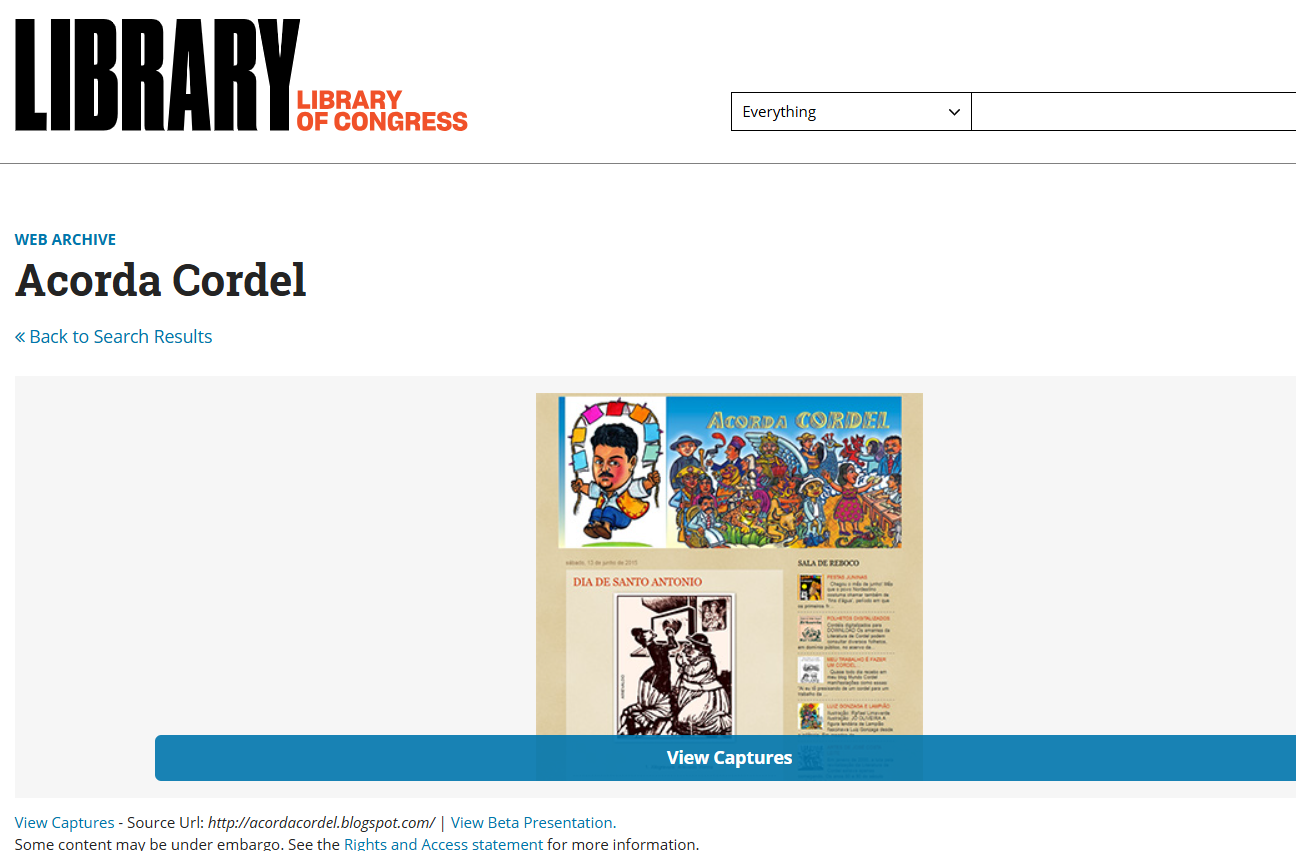
The Library of Congress’s online archive, offering access to thousands of Cordel chapbooks and preserving Brazil’s cultural history
Although cordel is now found throughout Brazil, the tradition became especially established in the Northeast, including Pernambuco, Ceará, Alagoas, Paraíba, Piauí and Bahia. The genre reflects the cultural diversity and historical experiences of these states, incorporating African and Indigenous influences into a tradition that arrived from Europe.
The literature has addressed subjects ranging from poverty and violence to drought, politics, religion, heroism, environmental destruction and the concerns of everyday life.
The connection between cordel and the Northeast remains particularly strong. Local poets have traditionally sold their work directly at street markets, fairs and other public spaces, maintaining a close relationship between the author, the audience and the community.
From European oral traditions to Brazilian popular literature
The origins of cordel can be traced to European traditions of oral poetry and storytelling. Medieval troubadours and minstrels transmitted poems and stories orally across Europe. As written communication became more widespread, these traditions were increasingly recorded in written form and reproduced in small chapbooks, frequently featuring woodblock illustrations.
The tradition was brought to Brazil by the Portuguese in the 16th century. It eventually took particularly strong root in the Northeast, where African and Indigenous cultural influences became integrated into the form.
In Brazil, cordel developed into more than a form of entertainment. It became a popular vehicle for storytelling, news, social commentary, education and expressions of community identity.
How the Library of Congress continues to expand the collection
The Library of Congress’s Rio de Janeiro Office continues to acquire Brazilian publications, including cordel literature, through purchases, exchanges, donations, book fairs and acquisition trips. The office’s mission includes collecting and cataloging intellectual works from Brazil and other countries in the region for the benefit of Congress and the international scholarly community.
The Library’s Cooperative Acquisitions Program has also offered Brazilian chapbooks since 2012. Its current information says participating institutions can receive packages containing approximately 70 to 80 cordel items, acquired from different sources and states in Brazil.
Earlier Library of Congress documentation described the Rio Office and the Hispanic Division as adding approximately 300 to 600 chapbooks annually, including material acquired during field trips to northeastern and northern Brazil, at book fairs and through visits to cordelistas and cordel associations.
Cordel in the digital age
The preservation of cordel has expanded beyond physical pamphlets. The Library of Congress maintains the Brazil Cordel Literature Web Archive, which preserves online sources connected to the tradition.
The archive includes websites and blogs containing cordel texts, information about cordel-related events, and audio and video recordings of repentistas, or improvisational performers.
Individual archived websites can also contain educational material about the history and techniques of cordel. For example, the Library’s archived Cordel do Brasil collection includes material teaching how to compose cordel and discussing the history of Brazilian cordel.
This digital preservation is particularly significant because it allows researchers to study not only historic printed chapbooks but also how the tradition has adapted to websites and other forms of digital communication.
How to access the Library of Congress cordel collection
People interested in researching Brazilian cordel can begin through the Library of Congress’s online resources and catalog. The American Folklife Center’s current research guide identifies the collection as AFC 1970/002 and states that it contains more than 12,000 chapbooks dating from 1930 to the present.
The Library also says that its collection of more than 12,000 cordel books can be viewed in person by request. Researchers can search the Library Catalog using the collection number AFC 1970/002, although some access restrictions may apply because portions of the collection are stored off-site.
For online research, visitors can explore the Library’s Brazil Cordel Literature Web Archive and its broader Brazilian chapbook resources. Copyright restrictions may apply to archived materials, so users should check the rights and access information before reproducing or distributing content.
Why the collection matters to Brazilians in the United States
For Brazilians living in the United States, the Library of Congress collection offers a unique way to explore an important part of Brazil’s cultural heritage without being physically in the country.
Cordel connects literature, music, visual arts, history and everyday life. Its stories preserve regional voices and show how Brazilian communities have used popular literature to interpret major events, social changes and cultural traditions.
The collection also demonstrates how Brazilian culture has crossed borders: a literary tradition deeply associated with the Northeast is now preserved and made available for international research through one of the world’s major libraries.
FAQ – Frequently Asked Questions
1. What is Brazilian literatura de cordel?
Literatura de cordel is a Brazilian popular literary tradition combining poetry, storytelling and visual art, especially in Northeast Brazil.
2. How many cordel chapbooks does the Library of Congress have?
The collection has more than 12,000 chapbooks, dating from 1930 to the present.
3. Can I read all the cordel books online?
No. Not all 12,000+ chapbooks are digitized. The Library also maintains a digital archive of cordel-related websites and online materials.
4. Where did Brazilian cordel originate?
Cordel has European roots and was brought to Brazil by the Portuguese in the 16th century. It later incorporated African and Indigenous influences, particularly in Northeast Brazil.
5. How can I research Brazilian cordel at the Library of Congress?
Researchers can search the catalog using AFC 1970/002, consult the Brazilian chapbook research guide, explore the digital web archive or request access to physical materials.