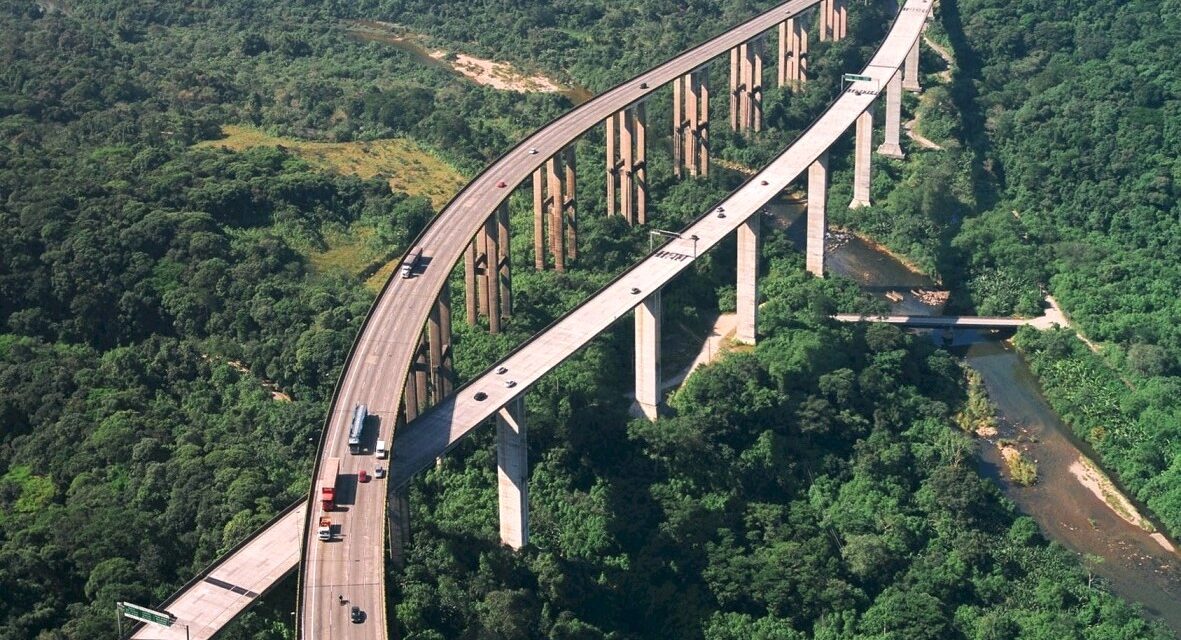
Rodovia dos Imigrantes is a 58.5 km highway in São Paulo, Brazil, connecting the city of São Paulo to Atlantic coastal destinations like Santos and Guarujá. Featuring 44 viaducts, 7 bridges, and 11 tunnels across the Serra do Mar rainforest, it is considered one of Brazil’s most ambitious highway engineering achievements.
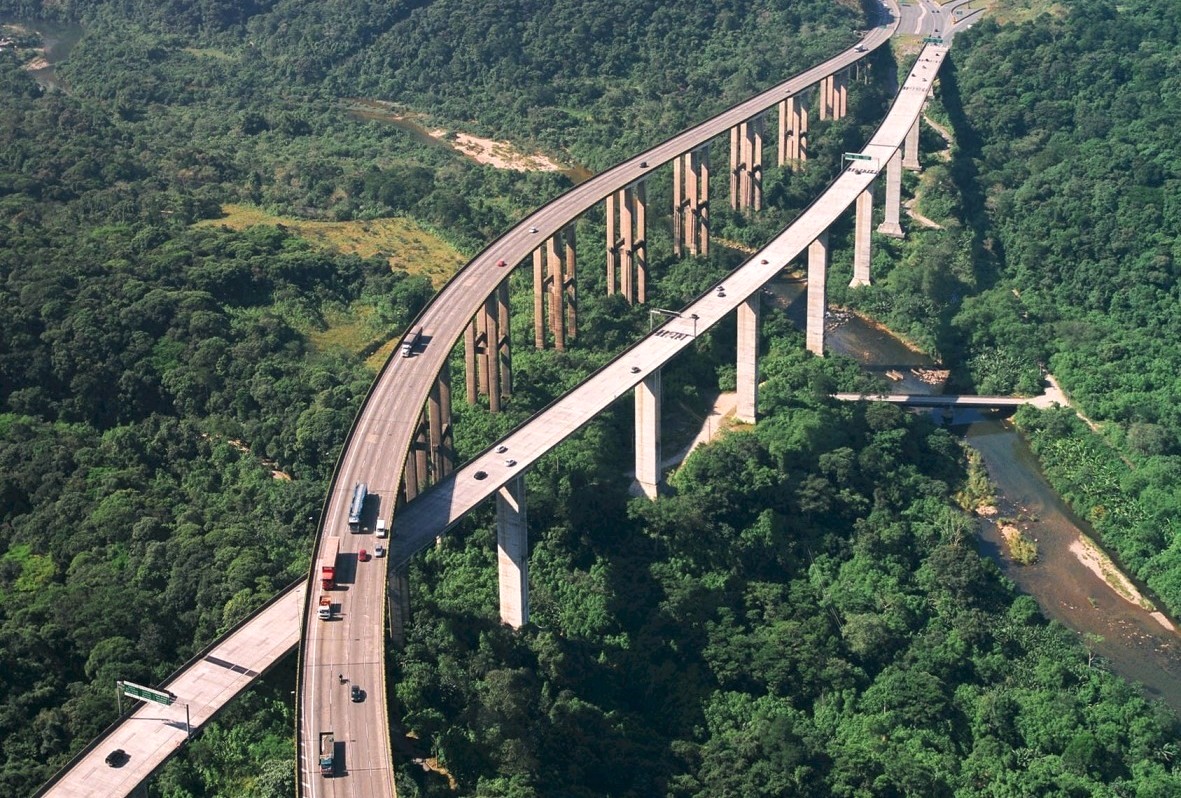 If you’re flying into São Paulo and planning a beach escape to the Atlantic, chances are you’ll travel one of the most impressive highways in South America: the Rodovia dos Imigrantes.
Stretching 58.5 km (36 miles) from Brazil’s largest metropolis to the sparkling coastline near São Vicente and Praia Grande, this highway is more than just a road — it’s a breathtaking feat of tropical engineering carved into the dramatic slopes of the Serra do Mar.
For American travelers used to scenic drives like California’s Pacific Coast Highway or Colorado’s mountain passes, Rodovia dos Imigrantes delivers a surprisingly cinematic ride through lush Atlantic rainforest — with world-class infrastructure to match.
What Is Rodovia dos Imigrantes?
Rodovia dos Imigrantes is a major highway in the state of São Paulo that connects the capital city directly to Brazil’s southeastern Atlantic coast.
It runs parallel to the historic Rodovia Anchieta, but today it carries even more traffic — especially on weekends when city residents head to the beaches.
Key Stats:
-
Length: 58.5 km (36 miles)
-
44 viaducts
-
7 bridges
-
11 tunnels
-
Six-lane elevated sections
-
One of the busiest highways in Brazil
Originally inaugurated in 1974, the highway was built to relieve traffic congestion on Anchieta. Over the decades, it has evolved into a showcase of modern Brazilian infrastructure.
A Masterpiece Over the Serra do Mar
The true drama of Rodovia dos Imigrantes begins as it descends the steep slopes of the Serra do Mar, the dramatic escarpment that separates the São Paulo plateau from the Atlantic lowlands.
This mountain range is covered by the Mata Atlântica, one of the most biodiverse and endangered tropical forests in the world.
To preserve this fragile ecosystem while maintaining traffic efficiency, engineers constructed:
-
Exceptionally long tunnels drilled through rock
-
High-strutting viaducts suspended above rainforest canopy
-
Elevated six-lane bridges that appear to “float” over the forest
The recent expansion of the highway is considered one of Brazil’s most audacious highway engineering achievements — balancing environmental preservation with high-capacity mobility.
For U.S. travelers, imagine the scale of the Eisenhower Tunnel in Colorado combined with the environmental sensitivity of a protected national forest — all within a tropical setting.
Why It Matters for Travelers
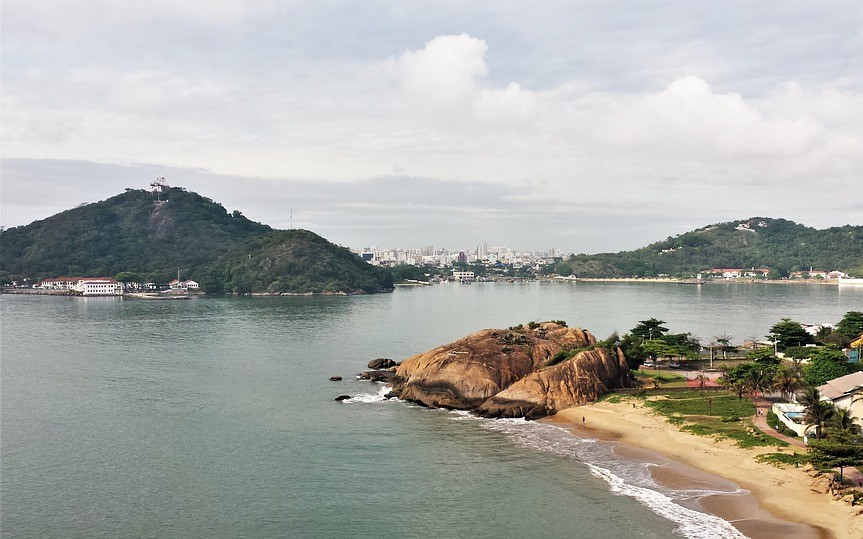
For American visitors heading to Brazil’s coast, this highway is more than infrastructure — it’s the gateway to some of the country’s most popular beach destinations:
-
Santos – Brazil’s largest port city, famous for its long beachfront garden promenade
-
Guarujá – Upscale beaches and weekend retreats
-
Bertioga – Gateway to the northern coast
-
Mongaguá and Itanhaém – Popular southern coast escapes
Because Rodovia dos Imigrantes was built with higher engineering standards than Anchieta, it allows higher speed limits and a more direct route to these destinations — which explains why it is now the busier highway.
On summer weekends and holidays, traffic can be intense, as millions of Paulistanos head to the beach.
Engineering Highlights That Impress International Visitors
From a global infrastructure perspective, Rodovia dos Imigrantes stands out because:
-
It integrates large-scale construction into protected rainforest terrain
-
It uses long tunnels to reduce environmental impact
-
It relies on elevated viaduct systems rather than extensive deforestation
-
It was expanded to handle Brazil’s growing urban population
-
It remains one of the most heavily trafficked corridors in the country
Few highways in tropical regions combine environmental sensitivity, structural complexity, and heavy usage at this scale.
Travel Tips for U.S. Visitors
If you plan to use Rodovia dos Imigrantes during your Brazil trip:
- Avoid peak Friday evenings and Sunday afternoons
- Expect tolls (carry Brazilian reais or electronic payment options)
- Watch weather conditions — fog can occur in the Serra do Mar
- Consider early departures during summer and holiday seasons
The drive itself can be part of your travel experience — especially during clear weather when the descent offers dramatic forest and coastal views.
* For airfare from the United States to Brazil or Latin America, customized travel packages, alternative accommodations, as well as travel planning consultation please visit our travel agent page or contact Magali da Silva directly by phone or whatsapp: 1(323)428-1963.
FAQ – Frequently Asked Questions
Where is Rodovia dos Imigrantes located?
It is in the state of São Paulo, Brazil, connecting the city of São Paulo to the Atlantic coast.
How long is Rodovia dos Imigrantes?
The highway is 58.5 kilometers (about 36 miles) long.
Why was Rodovia dos Imigrantes built?
It was inaugurated in 1974 to reduce congestion on Rodovia Anchieta and improve access to the coast.
Is it safe for tourists to drive?
Yes. It is a modern, well-maintained highway, though traffic can be heavy on weekends and holidays.
What makes it an engineering marvel?
Its 44 viaducts, 7 bridges, and 11 tunnels — many suspended over tropical rainforest terrain — make it one of Brazil’s most complex highway systems.